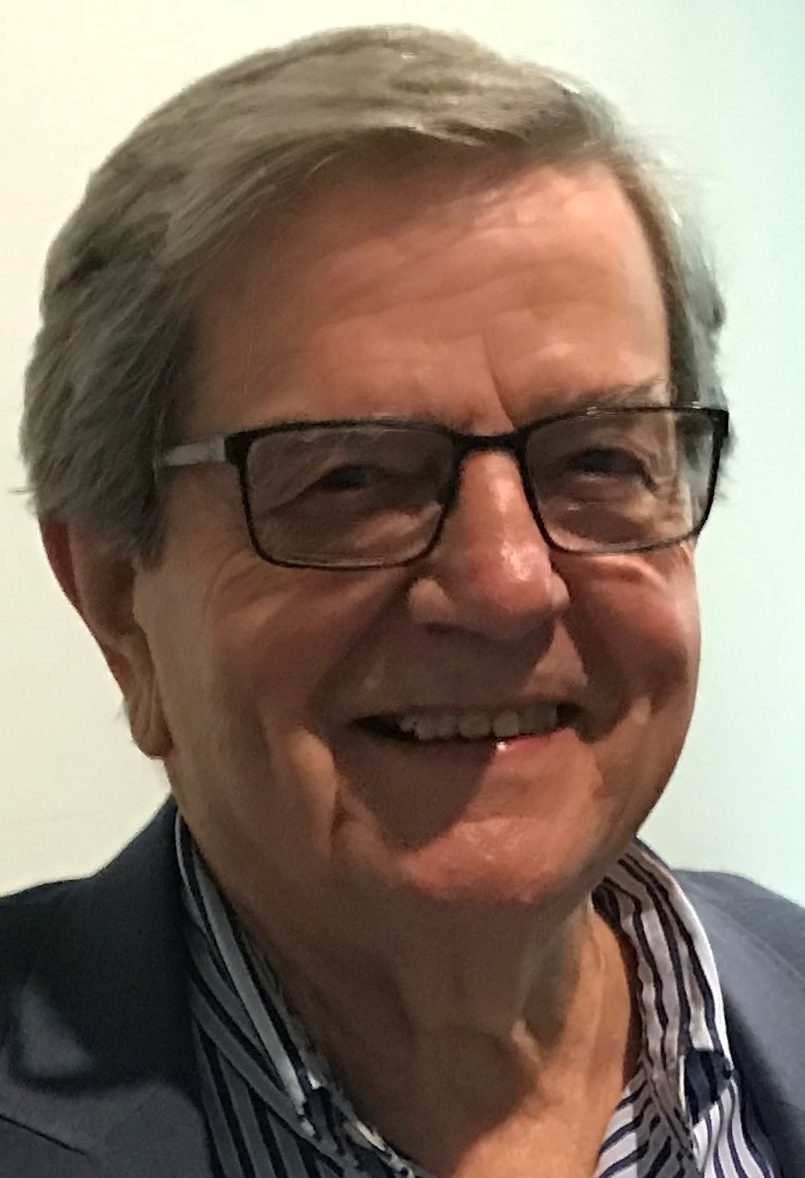
“What could be fairer and more reasonable than constitutionally acknowledging the totally unique role played by First Australians for 65,000 years,” writes former journalist and reader ERIC HUNTER, of Cook.
THANKFULLY, Michael Boyce (CN March 2) was articulate and civil in his approach, unlike others across the media who seem obsessed with pejorative laden misinformation about the Voice.
There’s not enough space to cover Michael’s specific queries (I believe some, such as indigenous identity, are irrelevant to the discussion). I’m happy to discuss them separately, but I will deal here with the more critical overall picture as I (and others, more expert), see it.
We might briefly re-visit the background. In 2015, the Turnbull government charged the Referendum Council to consult with indigenous Australians over what was felt needed to give adequate constitutional recognition (the Coalition obviously thought then it was a reasonable proposition).
In 2017, following two years of Australia-wide community consultations, a representative indigenous group of 250 was invited to gather at Uluru to thrash out a considered overall response. It resulted in the “Uluru Statement From the Heart”.
And Turnbull’s reaction? Peremptory rejection with him presenting the big, never substantiated lie: “The Voice will simply be in danger of becoming the third chamber of government”.
The coming referendum is about one thing only: do we want indigenous Australia acknowledged in the constitution with the parliament obligated simply to listen on matters affecting them (the legislated vehicle will be known as the Aboriginal and Torres Strait Islander Voice).
The proposed three-point amendment is straightforward and all we have to do is answer yes or no to the important moral question that has been hanging over us for the past 120 years.
What could be fairer and more reasonable than constitutionally acknowledging the totally unique role played by First Australians for 65,000 years, added to by the past 240 years of now well-documented denial, illegal discrimination and criminal brutality imposed with the complicity of the British Colonial Office, colonial and post-colonial local governments and, if we’re honest, white Australia generally?
Any argument that such acknowledgement opens the way for other groups to seek similar “advantage” doesn’t stand up to scrutiny.
The peak body for Australia’s ethnic community organisations has, for instance, stated very clearly it is not relevant for its members to seek similar recognition but fully supports the “Uluru Statement”.
Following the implementation of the amendment, the parliament would debate the structural and operational processes surrounding the advisory Voice before legislating its implementation. That will be the time for discussion about the “details”.
Besides, the constitution does not deal in “detail”. It is concerned only with setting the principle. For example, Part V, Sec.51 lists 40 matters ranging from defence to weights and measures, but none of them do anything more than briefly describe the “what”( sometimes with just one word). The “how” isn’t mentioned, let alone prescribed. This is how the constitution works, thus enabling a capacity for later legislative changes to be made should circumstances warrant.
Meanwhile, the integrity of the enshrined principle is preserved and can only be changed with difficulty (Sec 128). The same parliamentary-led processes would apply for the Makarrata (truth telling and treaty).

Will it work? We can never be totally sure with politically-based processes but there are safeguards, so can there be any doubt we have an obligation to try?
Furthermore, can the doubters guarantee that voting “no” would result in significant betterment in the lives of indigenous Australians?
Additionally, many well-established organisations strongly support the Voice, indeed the full “Uluru Statement”, including, but not limited to, the Business Council of Australia , BHP, the AMA, the Australian Law Council, the ACTU, many big corporates and much of academia. Heads of every State and Territory government have also added their signatures. What, therefore, do the dissenters know that the very impressive list of supporters across the spectrum apparently don’t?
To conclude, former chief justice of the High Court Murray Gleeson says: “An indigenous Voice to Parliament is not only a worthwhile project, but one that is consistent with the nature of the constitution and the values that underpin it.”
Fellow former chief justice Robert French, addressing a recent high-level legal symposium, said: “The Voice is a big idea but not a complicated one. It is low risk for a high return. The high return is found in the act of recognition, historical fairness and practical benefit to law-makers, governments, the Australian people and Australia’s First Peoples. It rests upon the historical status of Aboriginal and Torres Strait Islanders as Australia’s indigenous people. It does not rest upon race”.
There’s much more in French’s comprehensive address including that it would be highly unlikely that the Voice would be judiciable. Both chief justices were noted for their legal conservatism, certainly not given to any “risky” interpretations.
What more is needed before we apply our much vaunted “fair go”?
Eric Hunter worked 20 years in journalism for ABC television and radio and is a former long-term journalism lecturer at the University of Canberra.
“CityNews” welcomes all opinions on the Voice to parliament to editor@citynews.com.au
News all day, every day at CityNewsQBN.com.au.


Leave a Reply