Craft / [Un]-Common Ground, Paul Davis and Jacqueline Clayton. Canberra Potters, until 30 July. Reviewed by KERRY-ANNE COUSINS
Paul Davis and Jacqueline Clayton are the 2026 artists-in-residence at Canberra Potters.
They both have studios in a large former agricultural research building near Rutherglen in Victoria. Although partners in life and colleagues their work practice is very different. Nevertheless the exhibition works well because the work of these two artists engages the viewer differently. Both artists source their clay and glazes using local materials. Davis’ ceramics have at their heart, the experience he has gained from his long engagement with Japan and his subsequent later years of experimentation and discovery. Clayton also studied in Japan but her porcelain ceramics with their soft muted glazes and her black and white decorated vessels have a stronger graphic component informed by her rural childhood and engagement with the botanical world.
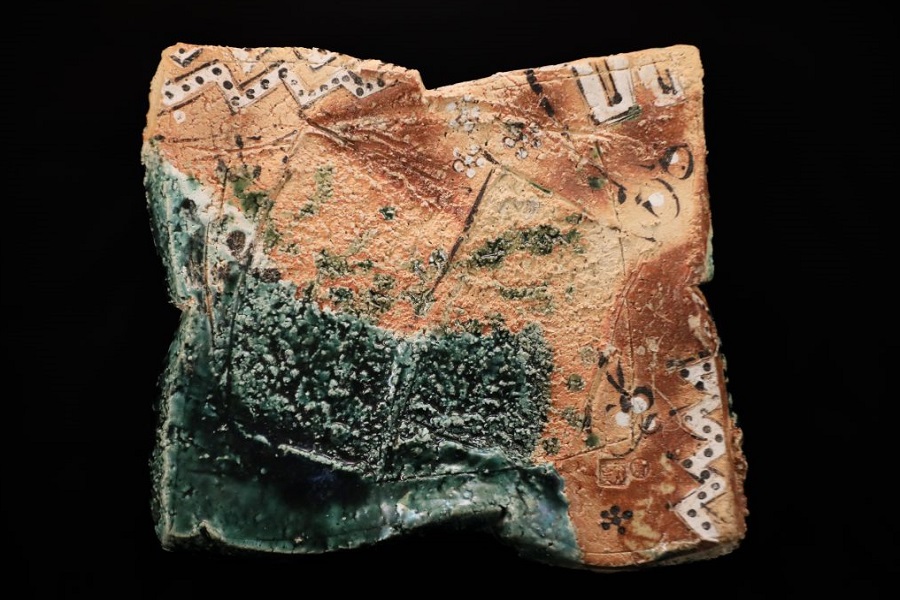
Davis’ ceramics are sculptural with a material quality that is strong and powerful – resonant of the clay that they are crafted from. It is hard to look at an example of Davis work without thinking of the earth from which it was made. Apart from large tubular vessels there are tea bowls, sweet bowls, platters and slab forms where clay is pulled and coaxed into strong sculptural statements. Calligraphic designs and other markings ornament these forms and a strong milky glaze made from locally source rice grass and other ash glazes is poured over their forms emphasising their organic nature and tactile quality.
In large black clay platter, the quality of its shiny surfaces are so alive and tactile you want to dig your fingers into its surface. The series of tea bowls with their beautiful and traditional Japanese glazes and the refined tea containers testify to the deep inspiration that the Japanese aesthetic tradition has had on Davis’ ceramic practice.
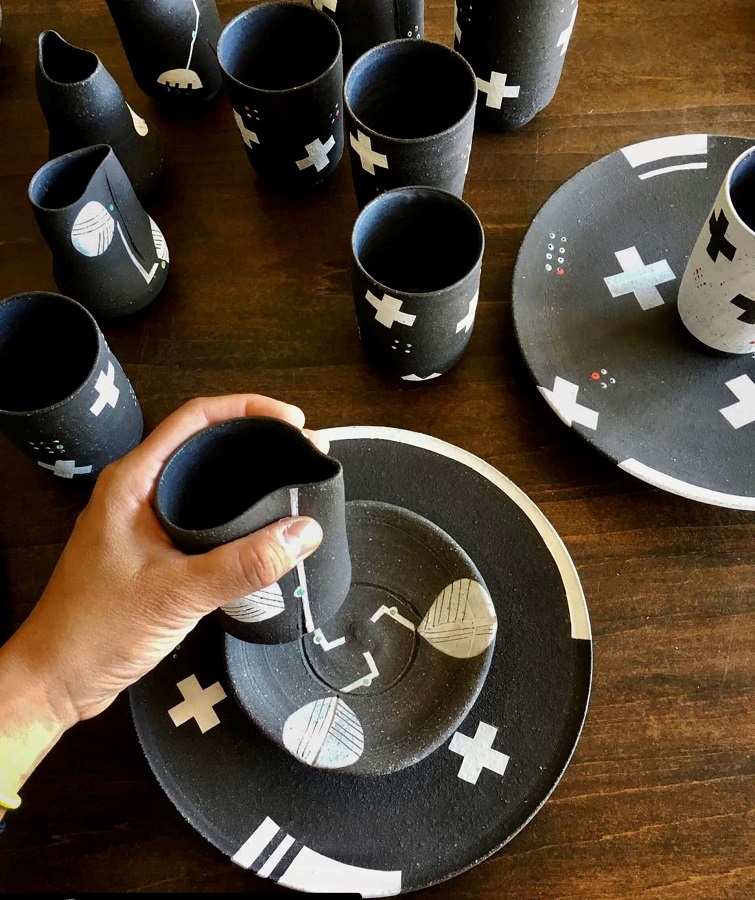
Clayton’s work has an elegant refinement evident in the series of soft blue glazed vases and platters with their decoration that has a botanical origin. In Arbour #7 the pale blue glaze is decorated with fine lines in a darker blue and colour inlay called goshu. Clayton’s other series of ceramics demonstrate a striking use of white slip on black clay. The bold patterns echo both organic and geometric shapes. In Garden #10, one of Clayton’s most engaging works, a black vase is ornamented with a design of white leaves that echoes beautifully its rounded form. Clayton’s Wall Piece,Garden#10 with its three wall hung platters held together visually by a graphic linear design, enhances this significant exhibition.
News all day, every day at CityNewsQBN.com.au.



Leave a Reply