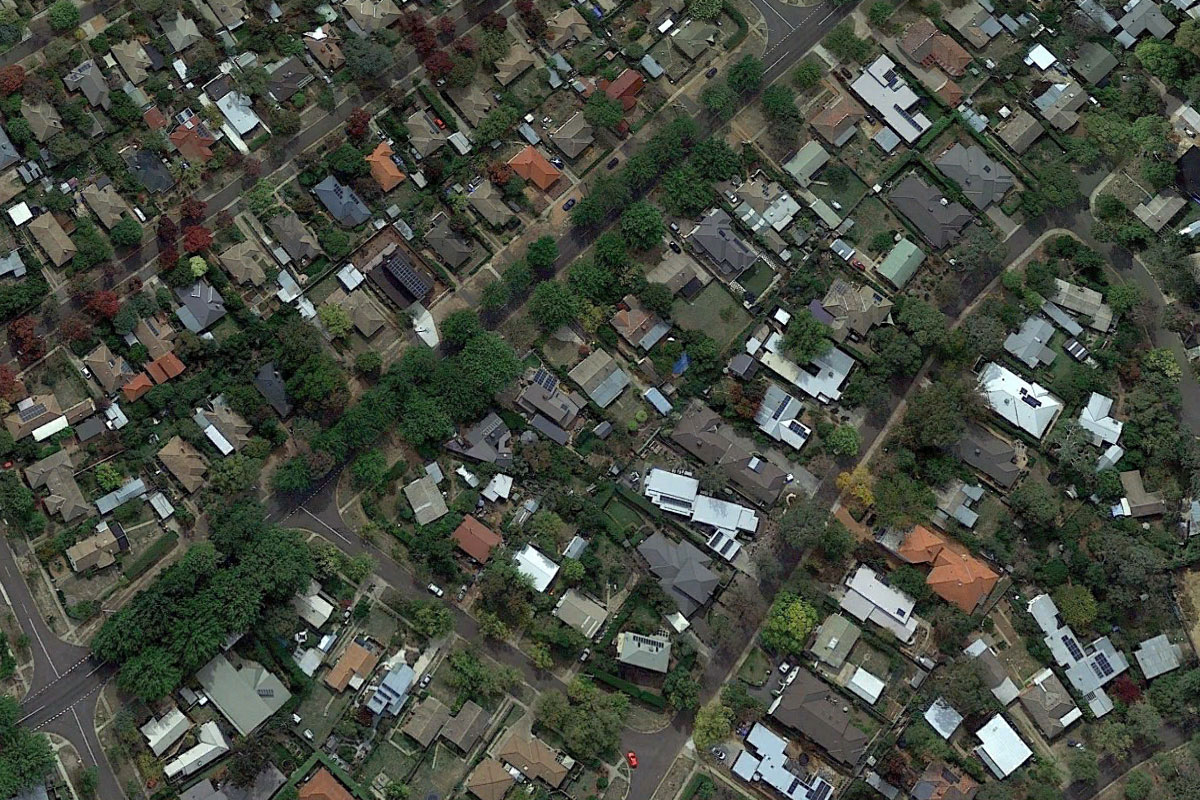
“Steel and Barr are now also hell bent on destroying the most quintessential suburban streetscape fabric of the majority of Canberra’s established middle-ring suburbs.”
“Minister Steel specifically stated in his announcement that the government is looking at making changes to the existing taxation regime arrangements for property,” says letter writer RON EDGECOMBE.
Planning Minister Steel’s announcement that the Barr government will fully adopt the radical RZ1 reforms for new housing developments will go down in ACT history as the day when Canberra lost its most desirable characteristic as the bush capital of Australia.
Write to editor@citynews.com.au
Not content with destroying the future financial prosperity of Canberrans through the need to cover the burgeoning increasing debt, deficit and interest payments in the ACT budget (as so tellingly exposed in the searing Stanhope/Ahmed forensic assessments in numerous CN articles), and the destruction of Canberra’s main thoroughfare historic and cherished public streetscape through the construction of light rail phase 2A and 2B, Steel and Barr are now also hell bent on destroying the most quintessential suburban streetscape fabric of the majority of Canberra’s established middle-ring suburbs.
Existing RZ1 home owners should be under no illusions that these changes will not substantially financially impact them. There is no way, given its critical budgetary situation, that the Barr/Steel government will implement the RZ1 reforms in a budget-neutral manner.
The government will obviously intend to maximise revenue yields from the RZ1 redevelopments.
This will be like the Mr Fluffy redevelopment scheme, but this time on steroids. Minister Steel specifically stated in his announcement that the government is looking at making changes to the existing taxation regime arrangements for property.
This is presumably to ensure that prospective developers are not discouraged to purchase RZ1 blocks, through changes to the existing lease variation charges.
It will not be the developers who will lose financially with these changes; and, of course, the other principal client in this business transaction will be the existing home owner.
One might reasonably assume that existing land valuations and household rates for all RZ1 home owners will be substantially increased, (over and above the annual increases to the existing levels imposed by Barr’s 2012 revised taxation policy framework).
ACT Opposition Leader Mark Parton has indicated his in-principle endorsement of the government’s RZ1 policy changes, subject to necessary guidelines and standards being established to ensure that the existing streetscape and amenity of middle-ring suburbs is not affected.
The government is due to conclude community consultation and respond to the existing Legislative Assembly inquiry examining these reforms by July.
I would encourage all Canberrans who still have any concerns about these proposed reforms to contact or lobby their local Assembly members to ensure that the best outcome is obtained for their own existing suburbs from these landmark changes.
Ron Edgecombe, Evatt
Why do Greens want to increase emissions?
Construction of light rail stage 2B is expected to cause a 100,000 tonnes of greenhouse emissions.
The government expects that Stage 2B will result in an extra 12 million kilometres of annual car travel. Assuming that all cars are zero emissions by 2050, that will increase emissions by a total of about 20,000 tonnes.
On the plus side, stage 2 will reduce emissions from Canberra’s buses by about one quarter. All of our buses will be zero emissions by 2040. By then, stage 2 will have reduced bus emissions by about 60,000 tonnes.
So the net impact of light rail stage 2 will be an increase of about 60,000 tonnes of greenhouse emissions, compared with keeping Adelaide Avenue’s faster transit lanes.
The ACT Greens have made a reasonable call for a dedicated bus lane to Belconnen. But why do they want to increase greenhouse emissions by faster extension of light rail to Woden and then to Mawson?
Leon Arundell, Downer
Who’s for a nuclear dump next door?
Can I assume that those advocating for nuclear power would be happy to host a nuclear waste dump in their neighbourhood?
I didn’t think so, either. Nimbyism combined with an inclination to push the problem on to others (traditionally the indigenous) speaks ill of those people. Nuclear is just another shortcut for which others will pay.
Bob Howden, via email
Let’s not be fooled again
Ian Pilsner (letters, CN May 21) agrees government responses to energy issues should be based on evidence.
It is consequently puzzling that he supports nuclear energy despite an absence of a sound basis for its adoption in Australia, especially now, when batteries can provide baseload power.
Perhaps he has been misled by misinformation from the fossil-fuel industry, which by prolonging the use of coal, benefits economically from slowing the adoption of solar and wind technologies.
There are multiple reasons why nuclear energy is unlikely to be a solution to our future energy needs. They include:
(a) Analyses by CSIRO and the Australian Energy Market Operator have found renewables to be the cheapest option for new electricity generation;
(b) CSIRO also estimated nuclear couldn’t play a role in Australia’s energy grid for at least 15 years; real responses to worsening climate change are needed now;
(c) Unresolved safely (e.g. Chernobyl and Fukushima), waste storage and water requirement issues;
(d) Nuclear power stations often take longer to build and have cost blow outs, as demonstrated by the UK’s Hinkley Point where construction is running 14 years late and costs are three times more than initially estimated;
(e) While small modular reactors have been proposed, none are operating commercially; and
(f) There is no certainty that the skilled workforce needed to build a large-scale nuclear reactor can be trained or obtained.
It is therefore hard to see a rational government adopting nuclear energy.
We have been fooled before as demonstrated by the development of inland rail, Snowy 2.0, the Alice Springs-to-Darwin railway, Canberra light rail, despite analyses indicating they would perform poorly.
Too many advocates of nuclear energy are boosters of the fossil-fuel industry. Let’s not be fooled again.
Mike Quirk, Garran
Canberra Raiders, name’s the game
Sports clubs have quirky names for their teams, most relating to their locations, for example, Manly Sea Eagles, Cronulla Sharks and Redcliffe Dolphins – all very beachy. Melbourne Storm – “variable” weather, and North Queensland Cowboys – “regional” Queenslanders.
Now to the Canberra Raiders. This club shares locale with both the federal and ACT governments, both are prodigious “raiders” of our bank balances and assets. Aptly named.
Rosemary Harrison, via email
Do ADHD offenders get an easier time in court?
Should we fear people diagnosed with ADHD? Recent comments and decisions in the ACT Supreme Court seem to imply that message.
Last month there were media reports of two separate incidents where the same presiding judge downplayed the criminal culpability of each offender for the reasons they had ADHD.
In the first case two men were assaulted and repeatedly punched by a 19-year-old man in a nightclub. One victim required surgery for serious injuries to his face and a metal plate having to be inserted. And what was the punishment? The offender was issued with a suspended prison sentence after the court determined that a diagnosis of ADHD and “provisional autism” had a direct impact on the offender’s “impulse control” and provided some “some context” for the crimes.
In the second case, a female teenager at the time (now aged 20) had created a sophisticated drug-dealing enterprise which the judge described as “grave offending”.
But during sentencing, he took into account “that the girl had been previously diagnosed with ADHD, but was not receiving treatment at the time of the crimes”.
More astonishing was that the judge found that “while the drug dealer knew her actions were wrong, a combination of youth and untreated ADHD meant that she did not fully appreciate the harm her crimes could cause to herself and others”. And the punishment? Another suspended prison sentence.
I am surprised and astonished that a diagnosis of ADHD can be the reason that some criminals are given lighter sentences.
Tony Falla, Ngunnawal
Vested interests always leave a trail
Michael Moore rightly concludes that “political donations are a blight on any democracy” (“Pauline’s political donation blight in plane sight”, CN May 15).
Via the “sexy” plane and millions in donations, One Nation is clearly beholden to the influence of Gina Rinehart. Likewise, both the Liberal and Labor parties remain tied to donations and lobbying from the gambling and fossil-fuel industries.
Why else are we not seeing meaningful gambling-advertising reform from the Albanese government, or policies that would genuinely reduce Australia’s climate-polluting coal and gas exports? Follow the money. Vested interests always leave a trail.
Josephine Shevchenko, Rivett
Pay as much tax as you can, Ian!
Letter writer Ian De Landelles (CN May 21) complains about the tax treatment of superannuation. Dick Smith (businessman and aviator) made similar observations a few years ago.
I don’t know whether Dick and Mr De Landelles have an accountant but, if they do, they might review their relationship.
It is my understanding that fulfilling age and condition of release aspects, they are free to take all their money out of superannuation.
So, Mr De Landelles, close your superannuation and pay as much tax as you possibly can!
I am sure Mr De Landelles will write again when he has taken action to maximise his tax payable.
Greg Jeffs, via email
Careful, senator, what you wish for
It appears that Senator David Pocock has commenced a campaign to have every seat in the House of Representatives occupied by an independent.
Speaking on Insiders, Pocock expressed a desire for high-profile, local-community independents to campaign in all 150 House of Representative seats across the country.
Following that to its logical conclusion, should the respective campaigns be successful, all vestiges of the existing parties would be eliminated.
The consequence of this would be utter legislative chaos.
As we have recently observed, even long-standing coalitions between parties are not necessarily stable.
Imagine if there were to be 150 independents, each with their own agenda, all lobbying each other for support of their individual projects.
It would make “herding cats” seem like child’s play.
I would urge Senator Pocock to be careful about what he’s wishing for.
Ian De Landelles, McMasters Beach, NSW
One Nation is a vote for chaos
Your recent article with polling showing One Nation has greater primary support than Labor is disturbing (“One Nation’s polling could herald messy hung parliament”, citynews.com.au, May 23).
Do people really think Pauline Hanson and Barnaby Joyce have the capacity to develop credible policies?
Does Australia really want an opposition even more divisive and climate denying?
Sure, voters are disappointed with the major parties, especially the Coalition, but how does voting for an unstable, unproven party with a history of imploding and dismissing climate science make it better?
There are alternative pathways. One is meeting, talking and pressuring major party MPs to listen to the community and lift their game. It takes time and is beyond many.
Another is to vote for an intelligent, hard-working, community independent or a Green. Senator David Pocock is a fine example of the former. There are several Greens and other independents who are smart, informed and committed with the runs on the board. A vote for One Nation is a vote for chaos.
Ray Peck, Hawthorn, Victoria
There’s bad news and bad news
My apologies for being the carrier of bad news, but for those just waking, the message is in the ACT we are going broke. The Barr government is central to this catastrophic failing.
There are many reasons, but the main one has to be the massive debt load we are carrying and the crippling amounts being blown in meeting loan obligations. It’s a reckless diversion of scarce funds showing immaturity in professional judgment.
The other bad news is the Liberal Party, our gatekeepers, appear to be asleep at the wheel, leaving us to fend for ourselves.
In regard to leadership, yesterday’s media men are thought to be challenged even though they might be sincere and trying hard.
John Lawrence via e-mail
When do we ask: where does it stop?
The ACT Government will soon announce plans to kill thousands of kangaroos as part of its annual cull. But kangaroos are no longer the only native wildlife in the firing line.
Wombats may soon be reclassified as a “controlled native species”, opening the door to lethal management, while dingoes are already being aerially shot and baited.
At what point do we ask: where does it stop?
Canberra proudly calls itself the Bush Capital – a city supposedly committed to protecting nature and living alongside wildlife. But is the increasing use of culling, baiting and shooting really what residents expect from a place that values its natural heritage?
Before reaching for lethal control, governments should be investing more seriously in non-lethal solutions, coexistence strategies and habitat management.
Our native wildlife should not face an ever-growing list of reasons to be killed. Is this truly the legacy we want for the Bush Capital?
Whitney Anders Richardson, via email
Kindness to animals, kindness to others?
In a world of increasing aggression, greater kindness is needed. Why can’t we take steps to object to cruelty to animals?
Perhaps we should start by being accountable for exposed cruelty enacted on our wildlife during the annual Canberra “humane kangaroo cull”. Doesn’t kindness to animals translate to kindness to others?
Ilona Crabb, via email
‘Hidden’ greenhouse gas emissions
A new report from non-profit Changing Markets Foundation says that the huge amounts of greenhouse gas emissions produced by meat and dairy are being kept off the climate agenda due to “hidden” partnerships with international climate bodies.
The report states that, although climate change is a real threat to food security, the narrative of groups such as COP30 is reframed and exploited by meat and dairy industry corporations to justify the continued growth of animal agriculture.
Scientists agree that we cannot stay close to a 1.5°C temperature increase, as stipulated by the Paris Agreement, if we do not significantly cut methane emissions and reduce consumption of animal products – yet both are projected to increase.
This matters even more in Australia, with meteorologists predicting a “super El Niño” developing this year and into 2027. This is likely to produce severe droughts, extreme temperatures, and the risk of catastrophic bushfires.
In Australia, cattle and sheep farming accounts for about 70 per cent of Australian agricultural emissions, largely from methane (CH₄) emitted from enteric fermentation.
These animals are all unique, feeling individuals, who suffer horrendous cruelty that includes branding, dehorning and castration without anaesthesia.
The best way to combat disastrous climate change, and the accompanying suffering, is with your knife and fork – by switching to vegan meals.
Dr Desmond Bellamy, PETA Australia, Sydney
Little’s changed, it’s the same old story
In the CityNews, May14, my letter “Seriously, we need better people to represent us” was printed. Fortuitously (perhaps), our local paper printed supporting information on May 19 referring to an article it printed on May 19 1991 that shows little has changed in 35 years.
Opinion polls at that time showed that out of then 12 members of the Legislative Assembly, only Labor leader Rosemary Follett escaped a dismal rating being scored as “nearly mediocre” by voters. On a scale of 1 for very bad to 5 for very good she achieved 2.95.
The Chief Minister at the time, Trevor Kaine, was even worse at 2.21 and Deputy Chief Minister Bernard Collaery was 2.06 with 68 per cent of respondents criticising his work.
So, as I said in my letter, we really need better representation in the ACT as we are definitely not getting value for money from the bulk of our current representatives at either local or federal level.
What we need are more people like Senator Pocock, Fiona Carrick, Tom Emerson and Jessie Price who have community concerns, rather than party politics, at heart.
Ric Hingee, Duffy
‘Co-ordinating’ calls Bridget to Tassie
Some recent expenditure record revelations about former “sports rorts” minister Senator Bridget McKenzie show that she continued to play a deft financial gain game that effectively topped up her well-above-average parliamentary salary while a minister, and then as shadow minister after the 2022 election.
She managed to dredge up two sets of apparently inflexible yet necessary work tasks that coincided with two family weekend commitments in Tasmania and so travelled there at taxpayers’ expense. The timeframes for her son’s engagement party and later his wedding would have been known about for quite some time beforehand.
Work tasks offered as justification for the 2023 trip to Tasmania over the wedding weekend were “co-ordinating a national media announcement and holding a press conference”.
Presumably she was unable to efficiently manage this particular “multi-state campaign” media work to “expose Labor’s budget cuts to infrastructure” from her home state of Victoria where she also has access to staff.
Senator McKenzie’s senior Coalition colleague, shadow treasurer Tim Wilson, publicly questioned the optics of her use of public funds for the flights booked around the private family events. Will this senator continue to excuse or bluff her way along the expenditure record pathways she chooses to create for herself?
Sue Dyer, Downer
Batteries ‘essential’ piece of puzzle
I’m pleased Fiona Colin (letters, CN April 30) agrees with me that attempting to power a steelworks with “green” hydrogen is impractical.
Unfortunately, CSIRO GenCost Reports have a record of distorting engineering facts to suit their taxpayer-funded story in 2023-24 claiming that nuclear power is “too expensive”, choosing to sample just one particular project of one particular reactor design (a novel design), of one particular scale (small) in one country (the US) that was never built and subsequently abandoned. Politicians swallowed that furphy!
Fiona overlooks how batteries rely on relatively slow, cold-chemical reactions to store and release energy, orders of magnitude slower than combustion reactions.
Smelting iron ore to pig-iron, converting pig-iron to steel or heating steel billets to roll-forming temperature requires substantial and rapid energy release, currently available from metallurgical coke (from metallurgical coal) and coke-oven or natural gas.
Even should banks of batteries together store sufficient energy, transmitting it at sufficiently high amperage for extended periods through their internal and connective networks is likely to be problematic due to electrical resistance.
Using such battery banks to produce hydrogen for combustion energy ignores the low thermal content of hydrogen at atmospheric pressure. Hydrogen would require additional substantial energy-consuming high pressure and cryogenic storage to produce a sufficient volume of the gas to smelt or melt iron.
In addition, battery electrolytes and electrodes degenerate from their moment of commission, and with each and every charge and discharge cycle. Battery lives are significantly shorter than those of combustion energy systems, and run flat, as all car owners know!
"The selection of our judiciary is quaint. The community might reasonably expect that applicants demonstrate a capacity to write a decision prior to appointment. That doesn’t happen." HUGH SELBY has some ideas to speed up slow judgments.
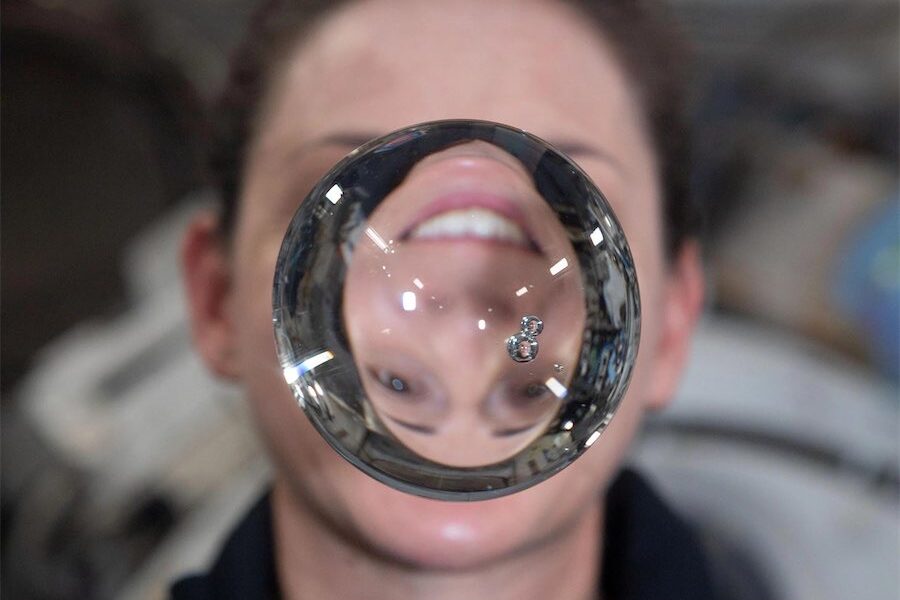
"After weeks or months in orbit, astronauts experience dramatic but short-lived symptoms. Many describe an overwhelming heaviness, as if their arms and legs are made of lead." Whimsy columnist CLIVE WILLIAMS looks at weightlessness.
"Disappointingly, the latest data reveals, again, that the ACT is not a high-performing jurisdiction when it comes to closing the gap," writes indigenous advocate JULIE TONGS.




Leave a Reply