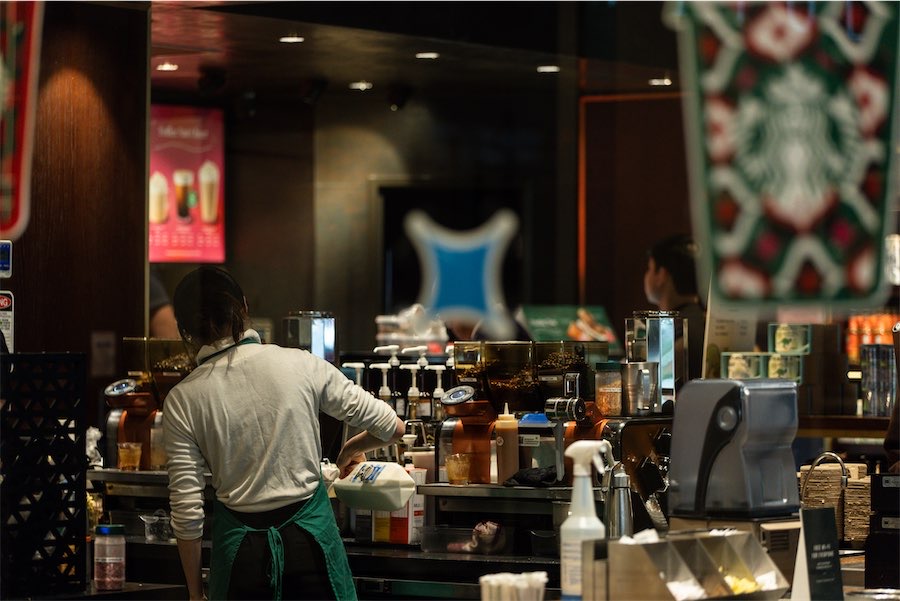
Industrial relations lawyer RICHARD CALVER signals rising food and wine prices as employers in hospitality grapple with the ACT Government’s complex portable long service leave scheme.
The ACT Government’s portable long service leave scheme, which currently covers only workers in the contract cleaning industry, will be expanded to eligible employees in hairdressing and beauty, and accommodation and food services from July 1.

For food and beverage outlets in particular, the scheme introduces a significant administrative change to how long service leave liabilities are managed and funded.
Portable long service leave differs from traditional long service leave because the entitlement accrues based on time spent working within a covered industry rather than with a single employer.
It rewards service in that industry rather than loyalty to a single employer.
Under the ACT model, the benefit is administered centrally by a statutory authority known as ACT Leave. Employers pay a levy into the scheme and ACT Leave later pays the long service leave benefit when a worker becomes eligible.
There are quite complex transitional arrangements that I won’t deal with but about which affected employers should get advice. In essence, eligibility under the traditional method of accumulating long service leave does not remove or replace eligibility under the portable scheme. Employers may have obligations under both frameworks, depending on the worker’s service history and industry coverage.
The services industry scheme formally started in 2025 but wider coverage was delayed by the government for hospitality, accommodation and food services in response to economic pressures in the hospitality sector.
Despite no evidence for a resurgence in the sector, businesses should register by July 1 at the latest and start contributing for eligible workers once the scheme commences on that date.
Businesses that have not submitted a registration form by August 1may face compliance risks and potential enforcement action.
Under the scheme, employees accrue 6.06 weeks of portable long service leave after seven years of recorded service in the industry, and 0.867 weeks for each additional year thereafter.
At the nub of the scheme is the fact the service is able to be accumulated at an industry level, allowing workers to continue to accumulate service when they move between different employers within the relevant industries in the ACT.
This design purportedly reflects the highly mobile nature of hospitality employment, where workers frequently change employers and may otherwise never qualify for long service leave under conventional schemes. Whether or not it adds to retention in the hospitality industry is yet to be seen.
For food and beverage outlets, the most immediate effect is financial. Employers must pay a levy of 1.07 per cent of the gross ordinary wages of covered employees into the portable scheme. For some employers, particularly small cafés and restaurants operating on thin margins, the levy represents a burdensome additional payroll cost.
Increased costs are likely to be passed on to consumers through higher menu and wine list prices.
Administrative obligations will increase and stand as a further business cost. Hospitality employers must register their business and employees with ACT Leave, submit quarterly returns reporting wages and service (with minor exceptions), and pay the required levy based on that reporting.
The scheme applies broadly to full-time, part-time, casual employees and apprentices, although employers do not pay the levy for apprentices once the training contract has been provided to ACT Leave.
If a worker leaves the hospitality industry or another covered industry before reaching an entitlement, employers are not entitled to a refund of levy contributions paid for that worker. Contributions remain in the scheme to fund future entitlements.
But a worker can continue to build an entitlement as long as they continue to work within any of the industries within the one scheme. So, for the services industry scheme, this means contract cleaning, hairdressing, beauty, accommodation and food services. They cannot however go to the building and construction industry scheme and take their entitlement with them.
From the perspective of those concerned with the welfare of hospitality workers, the scheme is designed to address structural features of the sector such as high turnover, casualisation and multiple short-term jobs. Workers who move between restaurants, bars or hotels will still accumulate industry service toward long service leave, something that often does not occur under traditional employer-based systems. Supporters argue that this may improve workforce retention and help recognise hospitality as a long-term career rather than temporary work. But the outcome of the scheme will be a tale to be told.
“One of the great mistakes is to judge policies and programs by their intentions rather than their results.” –Milton Friedman
News all day, every day at CityNewsQBN.com.au.




Leave a Reply