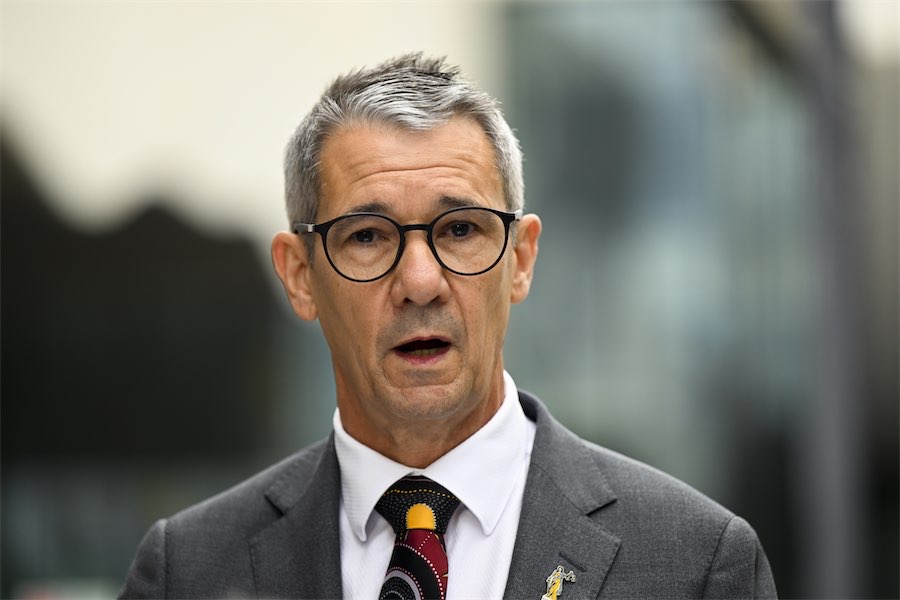
“There is no good reason in 2026 to allow directors of public prosecutions to be less accountable than anyone else for their conduct and their decisions. The present ‘non-accountability’ brings our criminal justice system into disrepute.” HUGH SELBY explains why…
There’s an anomaly in the accountability we expect of powerful, well paid, holders of statutory offices: our directors of public prosecutions (DPPs) have near carte blanche.

Australian judges and magistrates are held to account by appellate process and, in some jurisdictions, judicial commissions that investigate their conduct.
The NSW Judicial Commission investigated and criticised the actions of District Court judges who had made inappropriate in court remarks critical of the NSW prosecutions office (ODPP) in taking some sexual assault matters to trial.
The High Court retained an independent investigator to examine allegations of inappropriate conduct towards former judge’s associates by a justice who had retired some years before the allegations were made.
The decisions and processes of other independent statutory office holders, such as the ACT inIntegrity commissioner, can be reviewed in the courts. An attempt to argue that the integrity commissioner’s report was immune from such review on the grounds that it was protected as a parliamentary document failed.
We should all be grateful for that result. That the integrity commission even mounted the argument that it, of all bodies, should be immune, is a salutary reminder that any of us can lose the plot.
A review process for alleged mistakes by some office holders are the Inspector positions who assess complaints about such bodies as the National Anti-corruption Commission (NACC), and in NSW the ICAC and the Law Enforcement Conduct Commission (which handles complaints made against NSW police).
The NACC inspector was critical of the NACC decision not to investigate the Robodebt scandal as a follow up to the Royal Commission findings.
If courts, police conduct and anti-corruption bodies have independent conduct review mechanisms why are our DPPs immune?
The ‘special’ independence of our DPPs
DPPs were established from the early 1980s to remove prosecution decision making from the attorney-general.
However, the attorney-general retains a discretion to prosecute. An example is that when the Queensland DPP declined to prosecute a police officer for a 2004 death in custody on Palm Island, the attorney-general took over the case. In 2007 a jury acquitted the police officer.
These days DPP appointments are likely to be for a fixed, non-renewable term. An incumbent often accepts a judicial appointment at the end of that term.
A decision by a DPP to prosecute or not prosecute is not reviewable in the courts. The High Court made that clear in Maxwell v The Queen (1996) 184 CLR 501.
That may not seem important unless and until one is a victim of a crime and wants the perpetrator prosecuted.
If the DPP declines to prosecute, then the victim must take their chances with a civil claim for damages.
It is also important to anyone who is falsely accused. They do not want to be put to the time, expense, stress and reputational damage that is part and parcel of going to trial.
In the absence of any other review mechanism DPP’s are a law unto themselves.
The consequences are “interesting”.
Recently the sorry saga of former ACT DPP, Shane Drumgold SC, was again in the news when the Australian Press Council decided that The Australian newspaper had misreported the results of his litigation following the adverse Sofronoff findings against him.
The decision of the press council was so at odds with both the clear findings of a Supreme Court review of the Sofronoff findings that upheld nearly all of those findings, and independent legal advice from two eminent barristers, that it must be labelled perverse. Whether the council ever takes steps to review their own errors remains to be seen.
That Drumgold was called to account for his actions when conducting the case against Bruce Lehrmann was his own doing. He had called for an inquiry into what he saw – wrongly, as it turned out – as improper conduct by the police investigating Brittany Higgins’ allegations of rape.
Such an inquiry would not have looked at his conduct. However, the ACT Government chose to set up a more wide-ranging inquiry that looked not only at police actions, but those of others, including Drumgold.
Also of interest is that, despite the seriousness of the misconduct identified by Sofronoff, no professional disciplinary action was taken against Drumgold.
That may reflect section 33A of the ACT’s Director of Public Prosecutions Act which says:
“No action, suit or proceeding lies against a person who is or has been—
- the director…
in relation to an act done or omitted to be done in good faith in the exercise or purported exercise of a power, or the performance or purported performance of a function or duty, of the director under this Act.”
However, that is not the end of the matter because Drumgold now works as a barrister. This means that he has been accepted as of good character by whatever bar associations to which he pays dues.
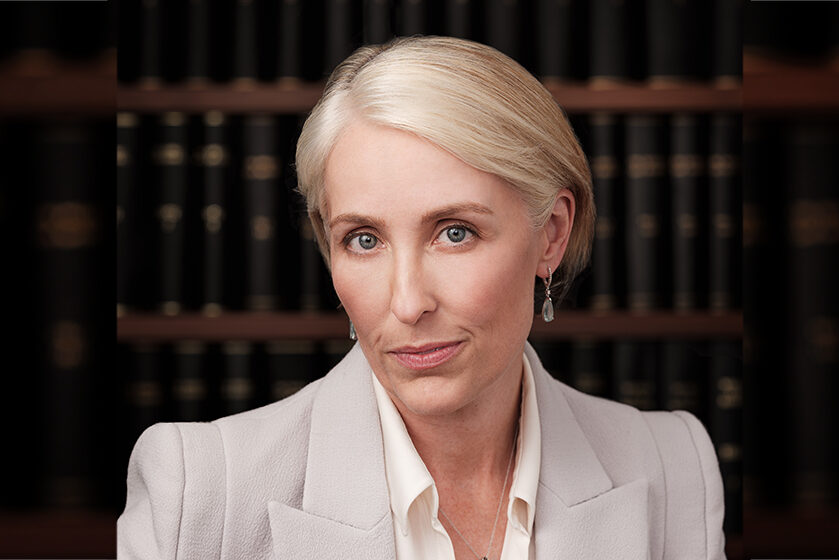
I wish him well, just as I wish the present NSW DPP, Sally Dowling SC, all the best in her post-DPP career. Yes, for now she remains DPP, notwithstanding the substantial embarrassment of being present in body, if not in spirit, at an ODPP office meeting that endorsed a radio show attack upon NSW District Court judge Penelope Wass.
Things get worse because it was reported recently that Dowling intends to use the submission that Judge Wass made to the NSW Parliament (in which her honour criticises Dowling) to argue that Judge Wass can’t continue to hear a part-heard, judge-alone trial for historic sex offences in which the office of the DPP is a party.
The reason? Because, says the DPP, the judge’s submissions create an apprehension of bias.
The Court of Appeal made it clear that its decision was not a comment in any way upon the merits of the DPP’s application that Judge Wass recuse herself from the further hearing of the criminal case before her.
We now have the sorry spectacle of a DPP planning to try to quarantine a respected judge who has lots of experience in criminal trials from hearing any more.
That this is the likely intent flows from the fact that Dowling has not been reported as being the prosecutor in this particular case. And, if she was, she could be replaced by another crown prosecutor.
We must wait to see how a dispute between Dowling as the DPP office holder and a sitting judge leads to an inference that her honour would be, or would be seen to be, possibly biased against any crown prosecutor who appeared in her court.
What makes it even stranger is the degree of autonomy usually vested in experienced crown prosecutors.
At first blush, and again on the second, this is a circus that is as depressing as it is entertaining.
At least some of this saga might have been avoided if the DPP was subject to an independent oversight body. Parliament is not fit for this purpose, just as it is not a suitable body to oversight errant judges. It needs help. Recognising those limitations has led to judicial commissions that can investigate judicial conduct and make recommendations as to outcomes, including to parliament if dismissal is warranted.
Under down under
Tasmania doesn’t have either a judicial commission or an oversight body for its ODPP. The lack of a judicial commission created an unseemly public spectacle when Supreme Court Judge Gregory Geason, appointed by a premier at whose wedding he had been best man, had to resign in late 2024 after being convicted of domestic violence offences.
That resignation was much delayed, but he drew full pay to do nothing for far too long.
The lack of any oversight over the Tasmanian DPP has had alarming results. In late 2013, the then DPP Tim Ellis SC was suspended. A young woman driving on her side of the road was killed when the car he was driving went to her side of the road for a considerable distance and collided with her car. Weather conditions were good. His car was mechanically sound.
The young woman was not at fault.
Although many expected he would face a jury trial in the Supreme Court for culpable driving causing death, he was charged with the summary offence of “causing death by negligent driving”.
That charging decision was interesting to those who thought that the DPP of all people would have wanted a jury trial to demonstrate his faith in the system.
Independent oversight would have ensured widespread support for whatever charge was laid.
He was convicted by a magistrate. He lost his appeal in the Supreme Court and received a four-month suspended jail sentence. His appointment was then terminated by the Governor of Tasmania. Like Drumgold, he continued thereafter to work as a barrister.
Those responsible for maintaining the reputation of the Tasmanian legal profession said that his conviction was not a reason to deny his good character.

His successor as DPP, Daryl Coates SC, has fought hard and, to date, successfully to maintain the conviction of Sue Neill-Fraser for the murder on Australia Day 2009 of her partner Bob Chappell on their yacht, Four Winds.
Ellis was the prosecutor at that 2010 trial.
Along the way Coates threatened contempt of court proceedings when it was pointed out that the trial court had been misled by errors made within the prosecution team.
The threat was empty, but so too were the options to take the issue any further. Had there been independent oversight, the Neill-Fraser saga might have concluded years ago.
Instead, there will be calls in the Tasmanian Legislative Council for a Royal Commission into her conviction later this month.
One aspect of the case for such an inquiry is the mounting body of evidence – obtained as a result of recent Freedom of Information requests – that before Neill-Fraser’s unsuccessful appeal in 2021, relevant scientific material obtained by Tasmania Police, seemingly at the request of the ODPP, was not disclosed to Neill-Fraser’s legal team or the appeal court. If this claim is made out then the ODPP is in breach of its disclosure obligations.
A vital question will be: Did the police disclose the information that they received from interstate and overseas laboratories to the ODPP or not? If they did then the DPP needs to explain. If they didn’t then the police need to explain.
In either case, the current refusal by police to release the scientific advice is a strong indicator that those who received it knew, and know now, that the conviction of Ms Neill-Fraser is unsafe.
DPPs and their staff are as certain as the rest of us to make errors in their assessment of facts and in their approach to decision making.
It is a travesty to maintain the fiction that a trial will fix the problems. Trials are adversarial, not inquisitorial accounting. They are expensive and time consuming.
Problems with ODPP processes and DPP decisions should be addressed in a timely, cost-effective way by an independent, open process that is both quick and thorough.
There is no good reason in 2026 to allow DPPs to be less accountable than anyone else for their conduct and their decisions.
The present “non-accountability” brings our criminal justice system into disrepute.
Hugh Selby is the CityNews legal columnist and a former barrister.
News all day, every day at CityNewsQBN.com.au.





Leave a Reply