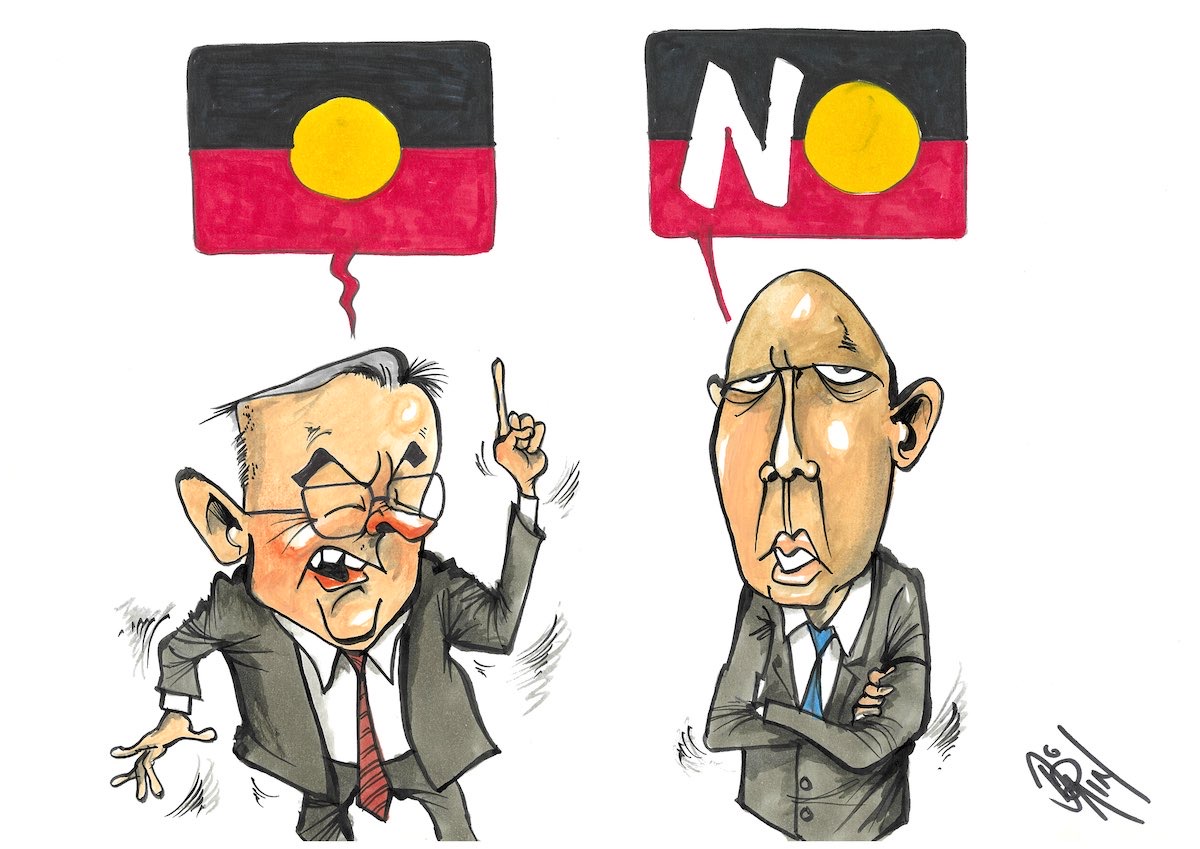
“Are we not entitled to know why the billions of dollars spent rectifying Aboriginal disadvantage has failed before being asked to spend billions more?” asks reader MICHAEL BOYLE, of Chapman.
ON March 2, “CityNews” published questions from me to help clarify issues surrounding the Voice. So far the questions have not been answered.
The Uluru Statement, from which the Voice emanated, also advocates for a treaty/treaties, truth talking and an unspecified form of sovereignty. It is reasonable to see constitutional acceptance of the Voice as preparing the way for treaties and sovereignty that may have their own constitutional implications separating the Aboriginal communities from mainstream Australia.
While being pushed by activists as a logical progression to compensate Aborigines for past wrongs, the debate on those issues has barely surfaced. There is a strong argument that all matters flowing from the Uluru Statement should be addressed as a “package”, not singly.
Arguments over the Voice have become increasingly heated, even vituperative, and highly emotional on the “Yes” side, whose disagreements over the nature of the Voice between activists and proponents remain unresolved, confusing further how a constitutional Voice would operate.
The Voice, once added to the constitution, would decide its own priorities and how it would function.
In organising the operation of the Voice the parliament/executive may make administrative decisions based on the advice from the Voice, but the functions of the Voice would be protected by the constitution. At present there is neither knowledge nor decision on how the Voice will be organised to perform its yet unspecified functions.
Given the range of Aboriginal interests and concerns across Australia, dissent from the view of the Voice across some communities is inevitable. Presumably, those opposed to the advice of the Voice will have the same rights as everyone else to make their views known and have them processed by parliament and the executive in the same manner as would be accorded to the Voice.
If this is the case, why does the Voice become a constitutional necessity, unless advice from the Voice is to take precedence over all other advice on indigenous concerns including those Aborigines who present dissenting views? What the rest of us think may not be a consideration.
A major appeal of the “Yes” case is for Australians to do the right thing, get on the right side of history, protect our international reputation and remedy the wrongs of the past. These emotional appeals might have weight if they reflected the whole story.
Australians for generations have done the right thing as legislatures, institutions and individuals sought to overcome identified forms of disadvantage intended to “close the gap”. The allegations in the Uluru statement do not reflect the situation of today.
Any successful attempt at permanently overcoming Aboriginal disadvantage must be based, firstly, on a realistic appreciation of the cause of the problems, and secondly, a practical appreciation of what can be done to overcome them.
The Voice campaign is strong on emotional, rhetorical assertions presenting a one-sided picture, but less enthused about debating material inimical to its argument. This, plus the extended agenda of the Uluru Statement that is very much to the fore in the minds of “Yes” activists, has damaged the “Yes” case significantly.
In these circumstances the procession of public figures endorsing the Voice is as likely to increase peoples’ doubts about the Voice as it is to reassure them.
There are other factors that cause doubts about the veracity of the “Yes” case. The question of who qualifies as an Aboriginal is becoming an issue following the inexplicable rise in the indigenous population revealed in the last census.
Attempts to inculcate the referendum with an ambience of guilt flowing from deeds long past as though the current situation concerns only Aborigines and Celtic-Anglo-Saxons is dubious, especially as Australian citizens of today come from all over the world and are sympathetic to the plight of those Aborigines still disadvantaged. They are not associated with the persecution of the Aborigines yet they will, as far as equal representation to parliament is concerned, experience discrimination.
In the present circumstances, where there is continuing, legitimate doubt over so many core issues of the referendum, it is commonsense to vote “No”, even if only to send the proposal for the Voice and all its implications back to the drawing board.
Are we not entitled to know why the billions of dollars spent rectifying Aboriginal disadvantage has failed before being asked to spend billions more? Ironically, the activists already have a powerful voice.
Julius Caesar, more than 2000 years ago, said it best in the Catiline conspiracy when he told the Senate: “All men who decide on difficult issues ought to free themselves from the influence of hatred, friendship, anger and pity. For when these intervene the mind cannot readily judge the truth, and no-one has ever served his emotions and his best interests simultaneously”.
The principle is as true now as it was then.
“CityNews” welcomes all opinions. Respectful letters to editor@citynews.com.au, please.
News all day, every day at CityNewsQBN.com.au.




Leave a Reply