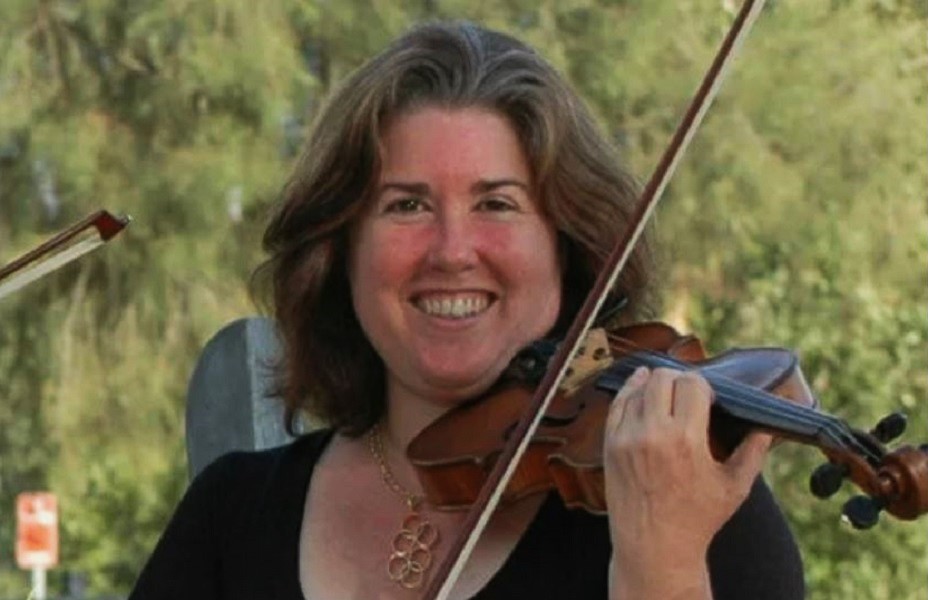
Music / Southern Sun, Northern Lights, Musica da Camera, Holy Covenant Anglican Church, Cook. November 14. Reviewed by DAVID WHITBREAD
Stand and deliver. Canberra’s 16-strong Musica da Camera mostly stood to play, bringing that standing energy to musical director Lauren Davis’s promise of a program of “many, many moods”.
The energetic arpeggios and quirky trills of CPE Bach’s Third Sinfonia opened this delightful concert of music for string orchestra.
Bach’s son’s Sinfonia requires a seamless transition of mood and style between its first and second movements. It was achieved here, providing a dramatic change of mood, volume and tempo. Clear direction and responsive strings.
Cellos and bass provided a solid foundation throughout this work. The second Adagio movement has pleasing solid accented chords across the ensemble and a sweet melody floats above on first violins.
The third movement is a sprightly dance with triplet figures that were mostly handled well. While there were occasional pitching disagreements in fast passages, this was a strong opening.
Paul Lewis’s English Suite for String Orchestra is very much in the English pastoral tradition. Its opening march is a lovely mid-20th-century lyrical country walk. The more complex harmonies using divisi and occasional double-stopping were refreshing after the comparative harmonic restraint of the Bach.
The second movement Meditation using muted strings started with a lovely rich vibrato tone. Nice solos from violin leader John Dobson and viola Paul Whitbread (no relation) opened and closed out the movement respectively.
The later dancelike movements, Jig and Jaunt, again captured that travelling feeling. They were propelled by pizzicato, glissandi and tremolo, and smooth time changes from march to waltz. Delicious.
An unexpected and rare treat followed. Respighi’s Il Tramonto (The Sunset) for alto and string orchestra. Guest alto Maartje Sevenster provided her pure Baroque voice, soaring smoothly above the orchestra. Her diction was clear and the often tricky intervals she had to sing, true in pitch.
The work is more modern and discordant than you would expect. Given it was written in 1914, and Respighi was yet to have the phenomenal success of his Pines and Fountains of Rome and his Ancient Airs and Dances, it is very much shaped by Shelley’s poetry, though it exhibits Respighi’s harmonic complexity and melodic counterpoint.
Initially the ensemble was ragged and less confident. About a third of the way through, when the romantic tension was building, the work hit its stride. The lovely chords in the tomb were evocative. And the final lament moving.
The first of Adam Carse’s Two Sketches for string orchestra was clearly saving the best to last. Again, muting the whole ensemble shifted the tonality here. Opening with a wonderful viola section solo – all three playing gloriously as one. Later the movement had a wonderful full strength loud passage, but still with muted strings. Decadently rich.
This is quite lovely, quintessentially English pastoral music, with decorative triplet lines weaving through. And was the finest playing of the afternoon.
It felt fresh, despite being presented at the Proms in 1924.
Of course, all good things must come to an end, and in the second sketch, Davis maintained a good speed for Carse’s dance-like melody. Here second violins were also given a busy semiquaver repeated ground and handled it with aplomb.
News all day, every day at CityNewsQBN.com.au.



Leave a Reply