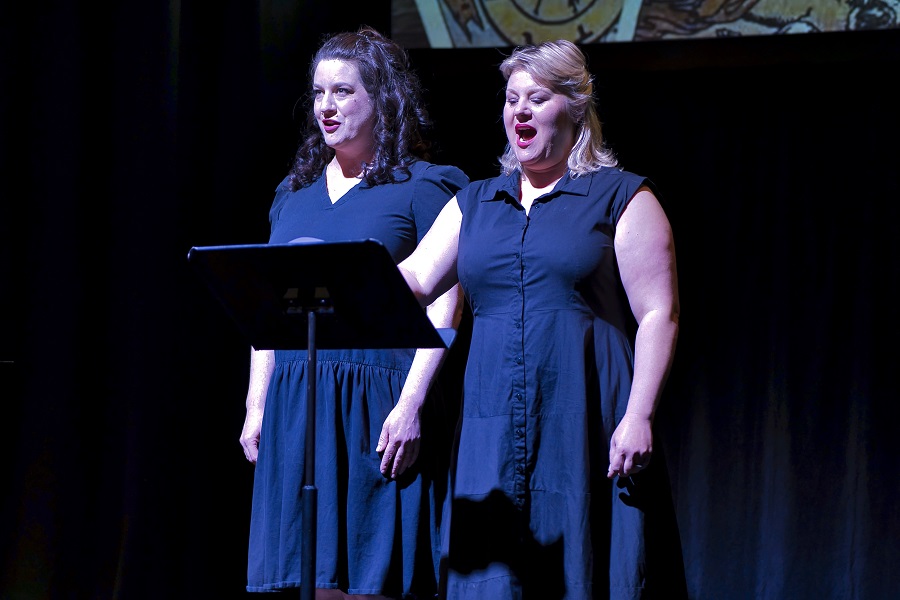
 Photo: Nathan Smith
Music / The Heroines, National Opera. At The Street Theatre, October 4. Reviewed by MICHAEL WILSON.
Opera can be complicated. All those different characters, the exotic settings, the implausible plot lines. And usually sung in languages other than English.
So making opera accessible – especially to new audiences – is a strategic conundrum in itself.
This show was the anticipated bookend to the National Opera’s similar show The Dons, staged in June at The Street Theatre, focusing on opera’s male leads and characters.
Exploring “the power and depth of opera’s most unforgettable women”, the National Opera’s The Heroines described itself as “a carefully curated sequence of fully staged scenes that highlight the resilience, defiance, and sacrifice of these iconic characters”.
The program focused on lead female characters from a sensible, manageable selection of well-known and lesser-known operas: from Carmen (Bizet) to La Gioconda (Ponchielli) to Tosca (Puccini) to the opera made properly famous by Joan Sutherland herself, Lucia di Lammermoor (Donizetti).
In focusing exclusively on opera’s characters and their stories, framed under broad themes such as manipulation, weakness, betrayal, sacrifice and courage, the program and background information projected upon the screen behind the stage didn’t detail the arias and choruses being performed. Even the composers were barely mentioned, if at all.
This may not have mattered for opera aficionados, but could have been flummoxing for viewers new to the art form.
That said, there was some very competent singing on display, including renditions of some of the canon’s most daunting arias and ensembles.
Emma Mauch, Sonia Anfiloff and Alira Prideaux were especially fine in their respective soprano roles, and acted out the dramatic scenes convincingly.
Wayne Miller (tenor) and Sitiveni Talei (baritone) played their supporting male characters very nicely too, but the National Opera Chorus didn’t get much stage time until the end of the show with the closing scene of Lucia.
Vivienne Winther and Kathleen Loh on piano were both extremely proficient, and Dan Phillips was an unobtrusive but important anchor as music director and conductor.
Wisely, Phillips left soloists and pianists largely to themselves, but stepped into the spotlight for the chorus numbers and the more complex ensembles.
Especially when contrasted with the National Opera’s sibling show The Dons, this production threw up the other persistent dilemma for the operatic tradition, at least up until the 20th century: while lead male and female characters are often equally dramatic, and have equally glorious music to sing, the power dynamics are so obviously divergent.
Specifically, it is about levels of control the lead characters have in their life circumstances. The men might be heroes or rogues or villains or fools (or a bit of each): but they call the shots in the story line.
Opera’s women – even the fiery and assertive Carmen – are invariably consigned to living out the consequences of decisions made by men, and the expectations of an unforgiving society.
While some of this is down to the realities of history and culture, are these the stories that future audiences will still want to hear?
News all day, every day at CityNewsQBN.com.au.


Leave a Reply