Music / Trauerode, Canberra Bach Ensemble. At St Christopher’s Cathedral, October 3. Reviewed by HELEN MUSA.
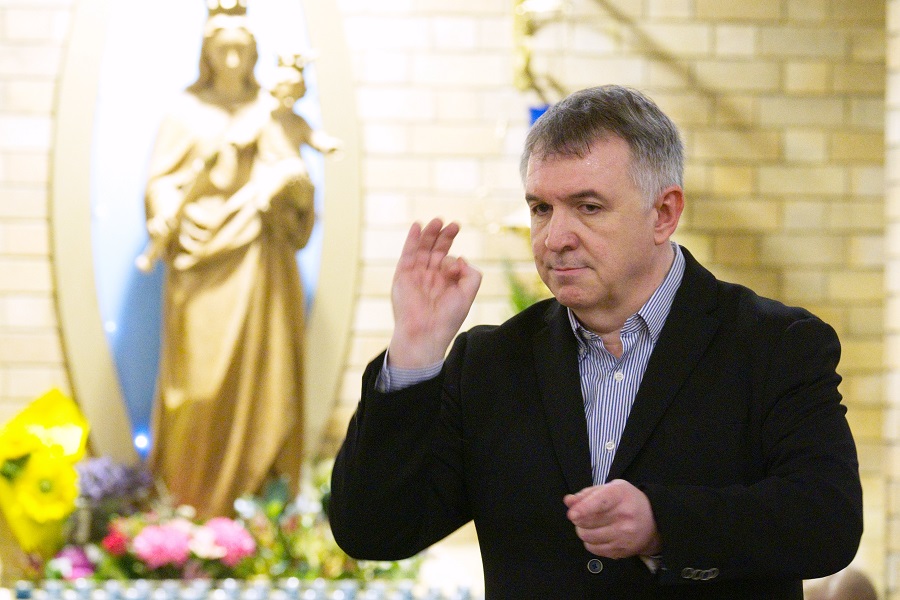
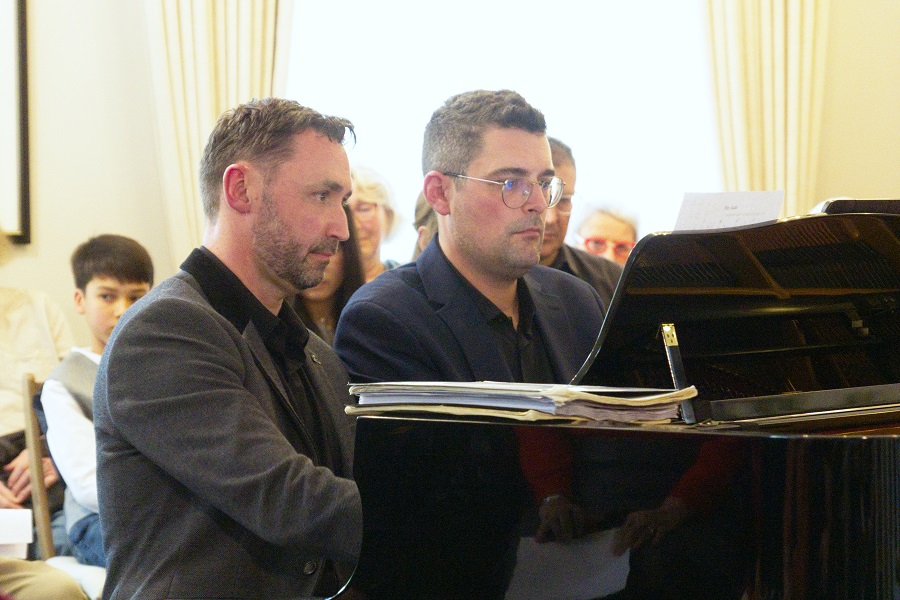
This exceptionally complicated concert, as even the director Andrew Köll admitted, took place against the background of a violent electrical storm.
But those who braved the elements to attend Canberra Bach Ensemble’s Trauerode were in for electricity of an entirely different kind.
For even though Köll’s attempt at an electrical pun about acting as a conductor may have fallen flat, the music did not.
Canberra Bach Ensemble, it must first be noted, has become exceptionally sophisticated in its mode of presentation, so that individual soloists, choristers and specialised musicians float in and out of the action seamlessly, appearing so quickly from the sidelines that you’re often not aware they are present.
This allows, even in the recesses of St Christopher’s, a sense of focus on each part of the works being presented.
In this concert, the tone was funereal, with the French word Tombeau (literally “tomb”, but in music a funeral eulogy) to the fore. But this was deceptive, because the music spoke not of death and silence but of action and lives worth celebrating.
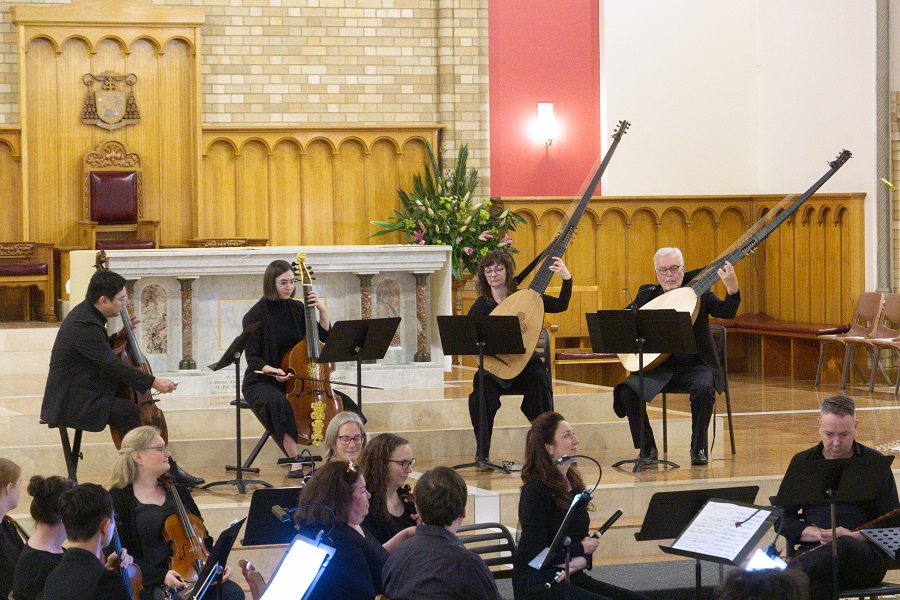
Curiously, the evening began not with Johann Sebastian Bach at all, but with Tombeau pour Monsieur Lully by Marin Marais, a singular work mourning the composer and dancer Jean-Baptiste Lully, featuring two of Australia’s top exponents of the viole da gamba, Shaun Ng and Ruby Brailler, with Tommie Andersson and Samantha Cohen on the long-necked, lute-like theorbo.
This gently melancholy work in B minor was a clever way of setting up for a work to be heard later in the evening in the same key.
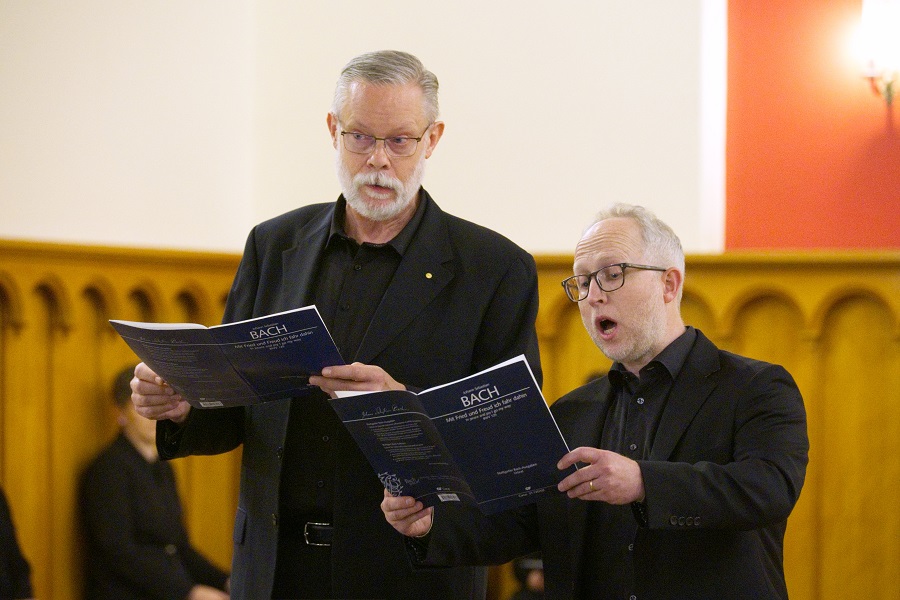
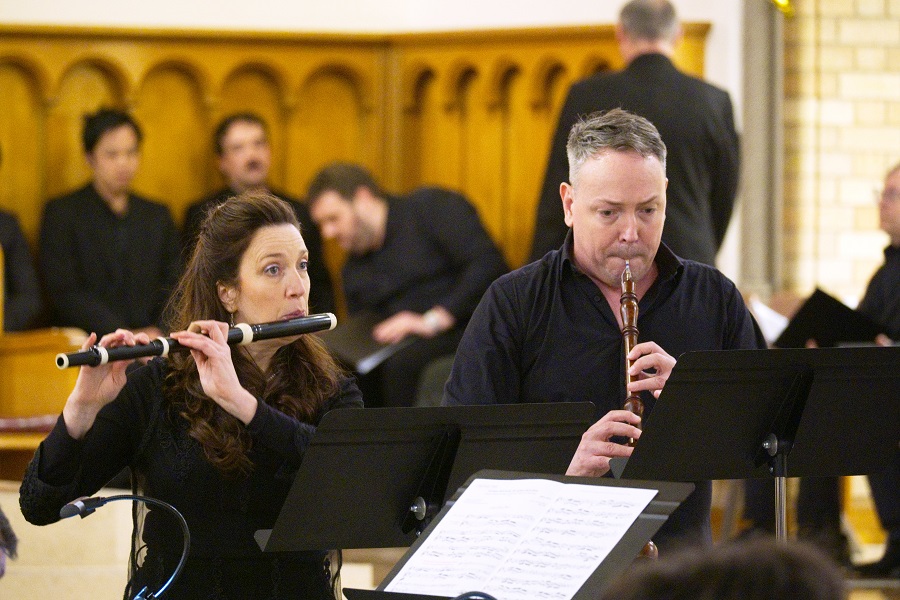
After this quiet but exquisite opening, it was time for the human voice to assert itself in Ich lasse dich nicht, also in B minor, but this time with the appearance of guest tenor Timothy Reynolds and Canberra bass Andrew Fysh, portraying Jacob’s biblical battle with a mysterious figure, first performed in 1727 at a memorial service. Here Sally Walker’s flauto traverso and Aaron Reichelt’s oboe d’amore underpinned the vocal battle between the two soloists.
Growing in drama, there followed the cantata Mit Fried und Freud ich fahr dahin, BWV 125, based on a Martin Luther hymn, which saw the full vocal chorus join the instrumentalists for a lively, driving account of salvation, with alto Maartje Sevenster and bass Fysh performing the arias and recitative.
There followed a remarkable rendition of Ich armer Mensch, ich Sündenknecht (I, wretched man, a servant to sin), Bach’s only extant solo cantata for tenor, performed with perfect articulation by Reynolds, whose ringing voice, along with Walker’s flauto traverso, resounded to the rafters.
The first half was completed with Ich lasse dich nicht, BWV 1165, formerly attributed to Johann Christoph Bach, in which, to the evident delight of the audience, the choir was split in two so that one choir answered the other.
After the interval it was time for the main work of the evening, Trauerode, a funeral ode for Christiane Eberhardine, wife of August II the Strong, the Elector of Saxony and King of Poland, with words by Johann Christoph Gottsched.
Beginning with the words Laß, Fürstin, laß noch einen Strahl (Let, Princess, let still one more glance), this cantata saw the assembled might of the Canberra Bach Ensemble chorus, the four soloists, transverse flutes, oboes d’amore, violas da gamba and theorbo. This rarely performed work, partially reworked in the St Mark’s Passion, was nothing short of thrilling.
A highlight for me was the second recitative, in which the flutes and oboes replicate the text’s quivering sound of bells. After a delicate introduction by the flute and oboe, Reynolds’ tenor aria asserted itself with force and clarity as he proclaimed the transfiguration of the dead queen.
The ensemble’s chorus completed the evening with its powerful assertion, “Queen, you do not die”, in a cantata notable for its absence of religious content.
News all day, every day at CityNewsQBN.com.au.


Leave a Reply