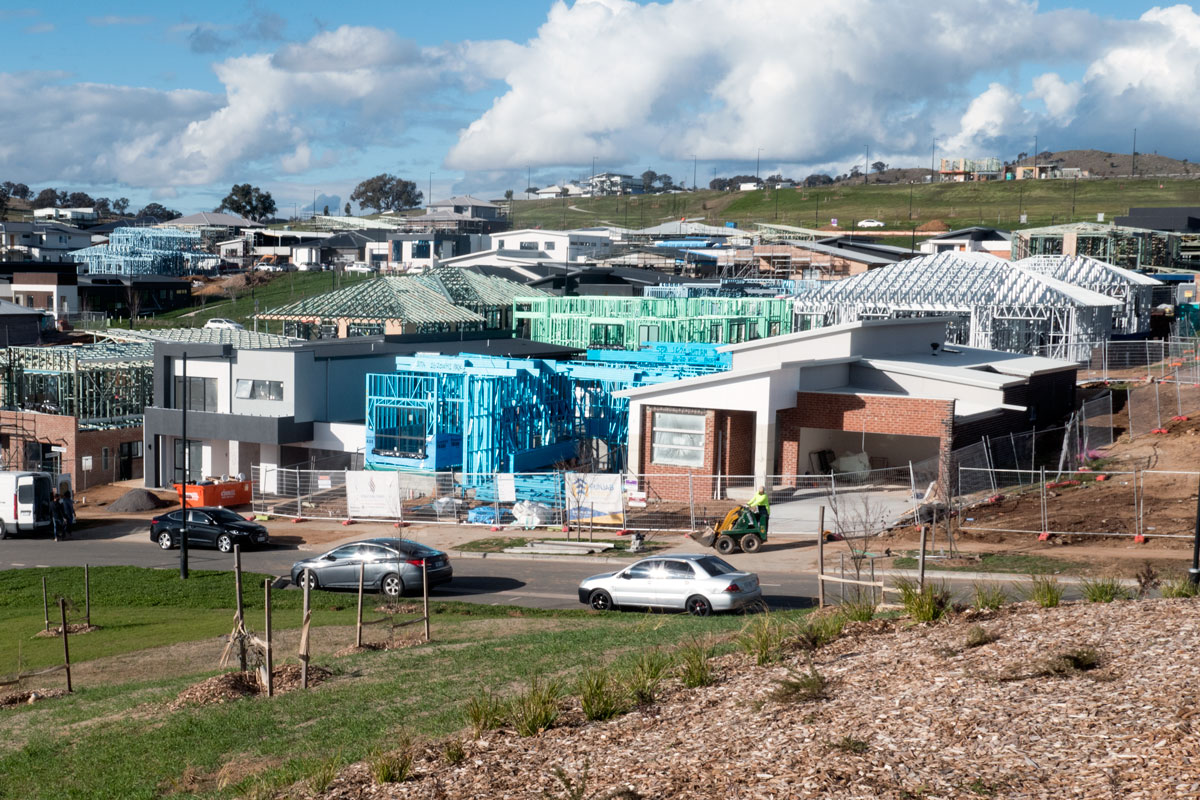
The ACT Government is a landowner, developer and also the regulator. So we’d be entitled to expect an adequate supply of appropriately priced land for the full range of housing choices. But there isn’t, say JON STANHOPE & KHALID AHMED.
At our recent presentation to the ANU’s Capitalist Studies Network, we concentrated on housing unaffordability in Canberra.
While the promotional thrust of the event was pitched in the context of the western world, it is indisputable the decline in housing affordability over the past 15 years is also a national and international problem.
Housing markets in the western world – and in Australia – have failed to deliver affordable outcomes for an increasing proportion of the population seeking to enter as owners or even to sustain rental tenancies without experiencing significant financial stress.
However, we need to reject the common disclaimer “we are in the same boat”, when it comes to assessing the situation in Canberra or comparing it with the rest of Australia.
The ACT Government is in a unique position – it has total control over the housing market through its ownership of land and its regulatory and planning powers. Unlike the states, in the ACTthere is no disjoint between state and local government planning policies and powers.
In the ACT, every new dwelling available to a family is delivered through the ACT Government’s release of the land on which it is built and/or its planning approvals.
The ACT Government is a landowner as well as a developer and is also the regulator. Therefore, we’re entitled to expect there would be an adequate supply of appropriately priced land for the full range of housing choices.
Public and community housing – together called social housing – play an important role in ensuring equitable and affordable outcomes. However, both critically rely on the government’s investment and regulatory policies.
So, how has the ACT Government exercised its powers and control over land supply?
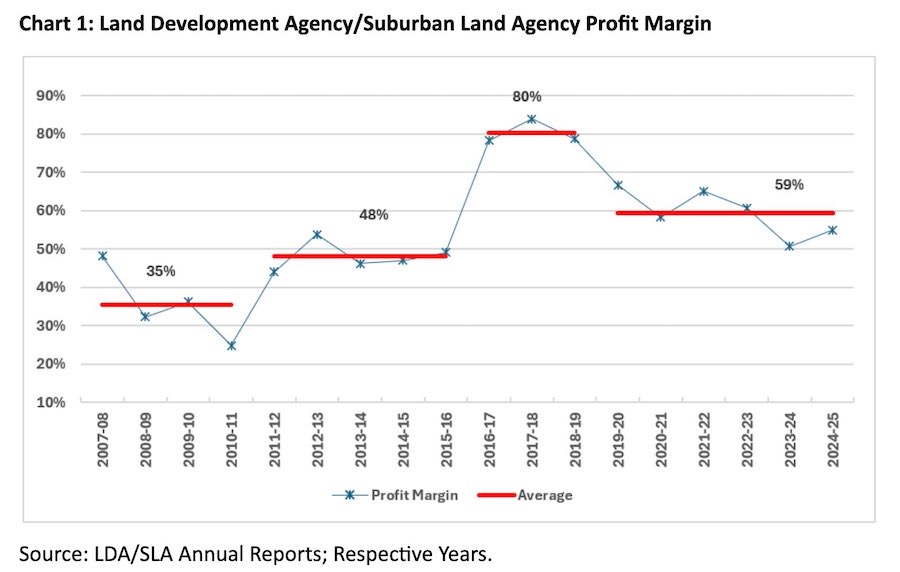
It has increased its profit margin from an average of 35 per cent to 48 per cent and then to 80 per cent (Chart 1). The profit margin has averaged 59 per cent over the past five years because, in the main, a large proportion of potential buyers have either been excluded from the market or, in despair, moved across the ACT border into NSW.
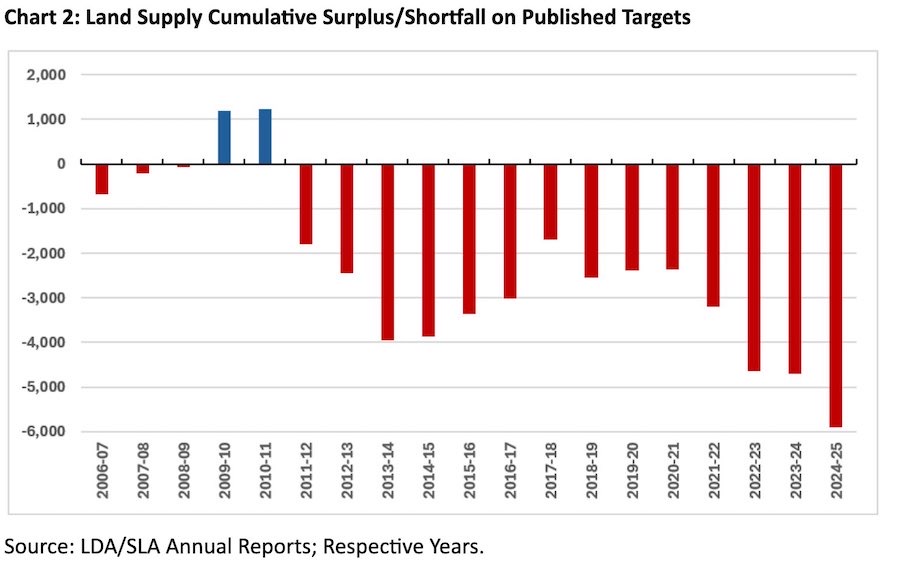
A progressive shortfall in land supply, equivalent to almost two years, has endured for many years. That is against the ACT Government’s own published targets, despite the annual targets being worryingly low in the first place.
The ACT Government has also taken a deliberate decision to cut the supply of stand-alone sites for houses. Land supply for stand-alone houses was cut from 51 per cent of the total in 2012-13 to a mere 9 per cent in 2014-15.
In that year, only 329 blocks of land were released despite a clear majority of Canberrans wanting to live in detached housing.
The detailed report prepared by Winton Sustainable Research Strategies – at the behest of the ACT Government – revealed that 91 per cent of Canberrans’ first and preferred choice was a separate dwelling, ie a house, on a block between 499sqm and 1050sqm.
Recently, there has been much excitement within the government and the media over the acquisition of the 243-hectare CSIRO site in Belconnen for $380 million.
An obvious question, following the acquisition is: how much the government expects to make out of this purchase? The 3000 households who eventually settle there will almost certainly be collectively charged that $380 million plus infrastructure costs plus an amount to ensure a healthy ACT Government profit.
The CSIRO purchase effectively confirms that the government has chosen to extract monopoly rents through its control of land supply. It is, without doubt, a speculator in this market.
Renters haven’t fared any better than homebuyers
We should not, therefore, be surprised at the outcomes. House prices have in a relatively short timeframe more than doubled and a median-priced house now costs almost eight annual median incomes – a relative doubling of debt and interest costs.
Renters, notably, have not fared any better than homebuyers. Land tax, which the government agreed, over a decade ago, to abolish has increased by 10 per cent a year on average due to the increase in house prices as well as tax rates.
The government has collected $1.725 billion since declaring that this tax is inequitable and would therefore be abolished. In a supply constrained market, rather than encouraging landlords to sell, the tax is passed on to renters – an outcome notably opposite to that which the Greens claimed when they promulgated the increase when in government.
Unsurprisingly, the ACT currently has the highest levels of rental stress in Australia.
In addition to this, local policies on the provision of public housing are regressive and difficult to explain, particularly for a self-professed progressive government.
- For instance, 1288 public housing dwellings were sold off by the ACT Government with the proceeds directed to a fund for light rail. Eight years later and the stock shortfall is yet to be fully replaced.
- In that period there has been a 26 per cent decline in housing stock in the ACT relative to the population since 2012.
Community Housing Canberra (CHC), before it was unceremoniously abolished by Labor and the Greens, was a nationally admired housing model across Australia.
Notably the ACT Government not only abandoned Community Housing Canberra it also raided its assets. For example:
- The MOU that provided CHC access to land without having to bid in the open market against cashed up developers and speculators was cancelled.
- CHC’s finance facility was called in, without explanation or reason – despite there being no problems of governance or management or with its finances. As the organisation was unable to immediately return a $63 million loan, the government callously claimed its entire housing stock and around $1 million in cash. In doing so, the government also abandoned the housing targets that CHC had committed to, most notably 1000 dwellings for affordable purchase and rental. per cent
However, on a more positive note, just imagine how grim the housing market would be for working-class families if we weren’t such a caring progressive community.
Jon Stanhope is a former chief minister of the ACT and Dr Khalid Ahmed a former senior ACT Treasury official.
News all day, every day at CityNewsQBN.com.au.




Leave a Reply