Art for art’s sake, not for artificial intelligence
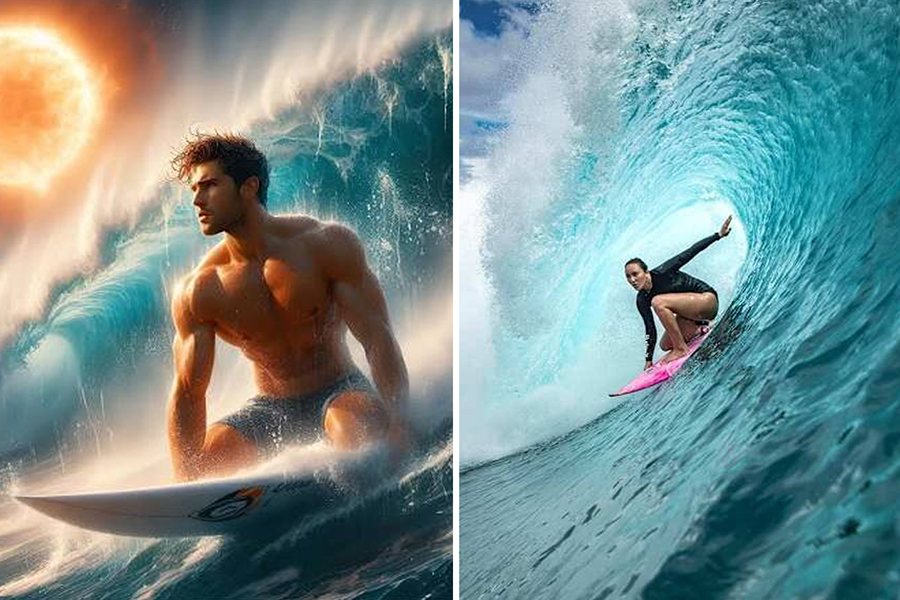
At left is the image of a surfer generated by AI, which is highly Eurocentric and based around an entirely masculine perspective. But the photo, at right, is probably more like what we’d see at the beach.
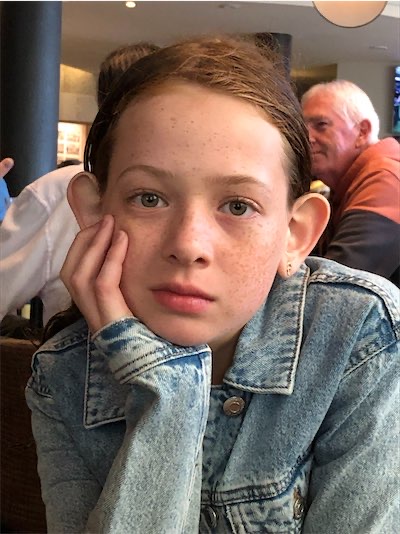
As part of her service project for the International Baccalaureate Middle Years Program, ADELAIDE O’KEEFE, a year 9 student at Canberra Girls Grammar, has written a column on how artificial intelligence can affect the art community
Have you ever noticed that everything at the local shops is made of plastic?
Young writer Adelaide O’Keefe.
Yes, plastic, the cheap, versatile replacement for more traditional materials like wood and metal. It’s rapidly becoming an even more highly used material in everyday life, manufacturers producing on average more than 380 million tonnes of the artificial substance a year.
At record pace, the mass-produced material has saved our wallets and at the same time has been filling the oceans and skies with harmful pollution.
This is exactly what the incorporation of artificial intelligence into our lives has done.
Generative AI is fundamentally the same as plastic. Yes, it may not be a tangible object, but it is versatile, inexpensive and highly convenient for all purposes.
However, the effects of this seemingly helpful artificial mind are more negative than most people might think.
AI generation is one of the art community’s most relevant problems, and has been the cause of multiple lawsuits and complaints from professional and amateur artists. Like plastic, AI can be harmful as well as handy.
To dive deeper, I conducted a survey of female, private middle-school students to understand how this problem can affect amateurs and how the current generation understands it.
From the results, I discovered that more than 80 per cent of students had seen AI generated art in media, the most common form being through social media (TikTok or Instagram) with 40 per cent occurrence rate in my data.
This fact led me to do some further research and I discovered that social media platforms (the most prominent example being Reddit) are legally allowed to use our art and posted media.
Every single thing we post can and will be used to train an AI model. As well as being a huge ethical issue, this can be morally harming to individual artists.
Imagine you’re a young, aspiring artist who likes posting pieces on Reddit to gain feedback from others, knowing that your artwork can legally be copied and used to create stereotypes in generative AI.
The next time you open Reddit, you could find that hundreds more artists have virtually posted copies of your art piece, down to major similarities in art style and character.
All across the world, thousands of artists are watching something that took hours of their time and effort being recreated with the click of a button. Now, anyone can create their artwork without breaking a sweat.
AI is also known to appropriate art, creating stereotypes. If you were to prompt “Generate me a picture of a surfer” into ChatGPT it would give me something like the photo on the left.
As you can see, the image that the AI model came up with is highly Eurocentric and based around an entirely masculine perspective.
But if I were to go to the beach and look for surfers, the picture on the right is probably more like what I would see.
Women have always been less represented by men in areas such as sports and business and, as shown, AI has taken this to the next level. To train AI models, creators enter certain images and texts, from which AI notices patterns and interprets them as “rules”.
These “rules” come into being when the AI model searches images for recurring elements, including race and gender bias.
Instead of “Anyone can be a surfer if they put their mind to it”, AI decides that “A surfer must be an attractive, muscular white man”.
This leads to underrepresentation of certain groups in the world and false beliefs about different kinds of people.
Also, AI is such a general part of life that people start believing this is what people and things should look like, making us vulnerable to ideas of perceived self imperfection. And in the current world, especially in teens, mental health and self care is a large issue we need to recognise.
I’m not saying that using AI to generate images is fundamentally bad. If you’re short on time, materials or generally just not very good at creating art, generating AI can be a very smart idea. It’s quick, easy and versatile. It has everything human art has – except for heart and soul.
By creating art through AI, we lose its greatest ability – to connect with people.
For centuries, art has been a worldwide communication method. It’s one of the only things that is universally interpreted in that it brings people together.
AI is a machine. A mindless machine that creates based on stereotypes, patterns and mathematics. And it’s becoming such an imminent problem that some day, traditional artists could be out of the job.
So next time you use AI to create an artwork, just remember how those traditional artists are thinking. They’ve spent hours upon hours infusing their soul into their work – and you’ve just recreated it crudely in 30 seconds.
So, what can you do? Well, go to a gallery. Go to an art teacher or a friend who creates for a hobby. Take a moment to look at their work – let the emotions in it wash over you. Appreciate their work. And maybe, just maybe, you could even make their day.
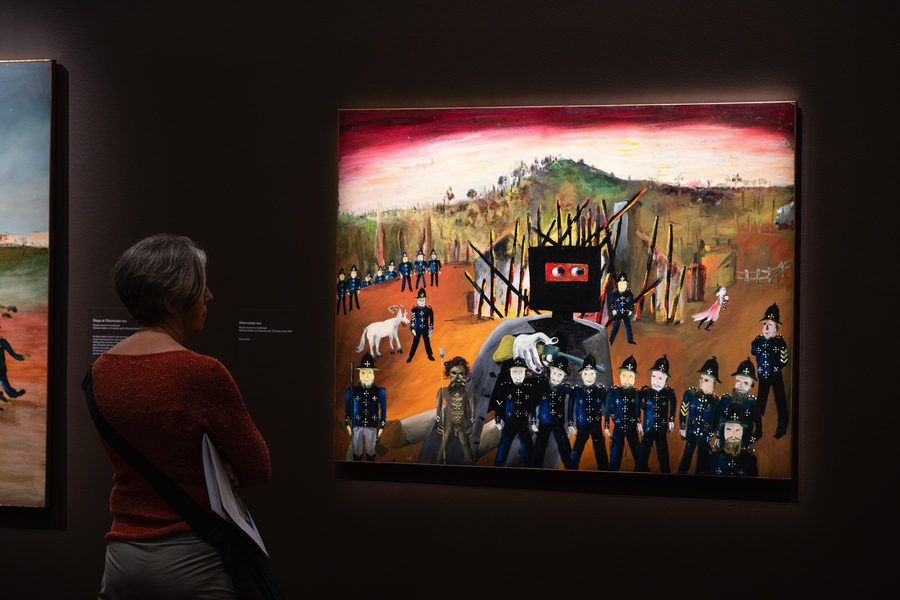
An exhibition of the work of one of Australia's most famous painters, Sidney Nolan, explores the darker aspects of the nation's history, its curator says.
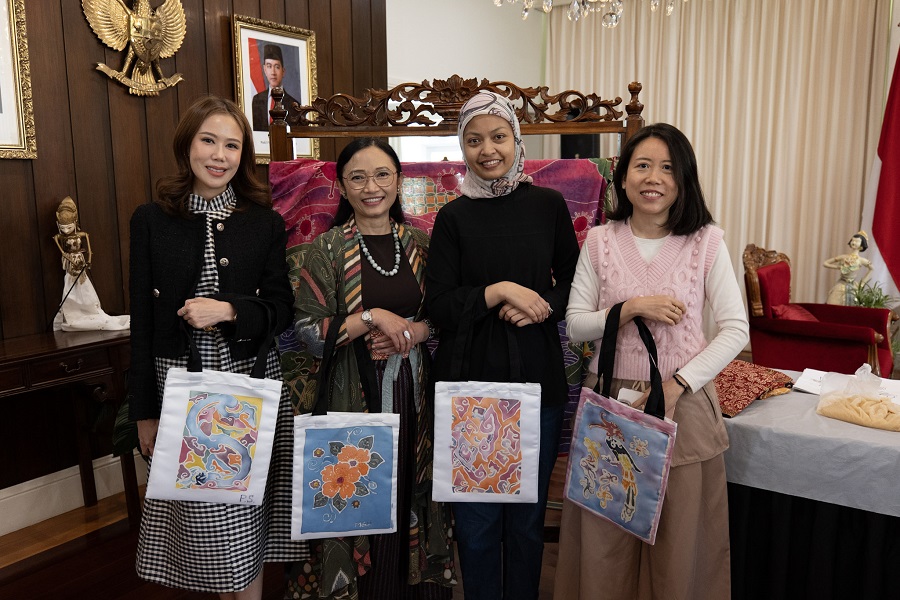
Tamarind seeds, butter and water are putting a new spin on an ancient textile technique as Canberra joins Indonesia's National Batik Day celebrations, writes arts editor HELEN MUSA.


Leave a Reply