By Ethan James in Hobart
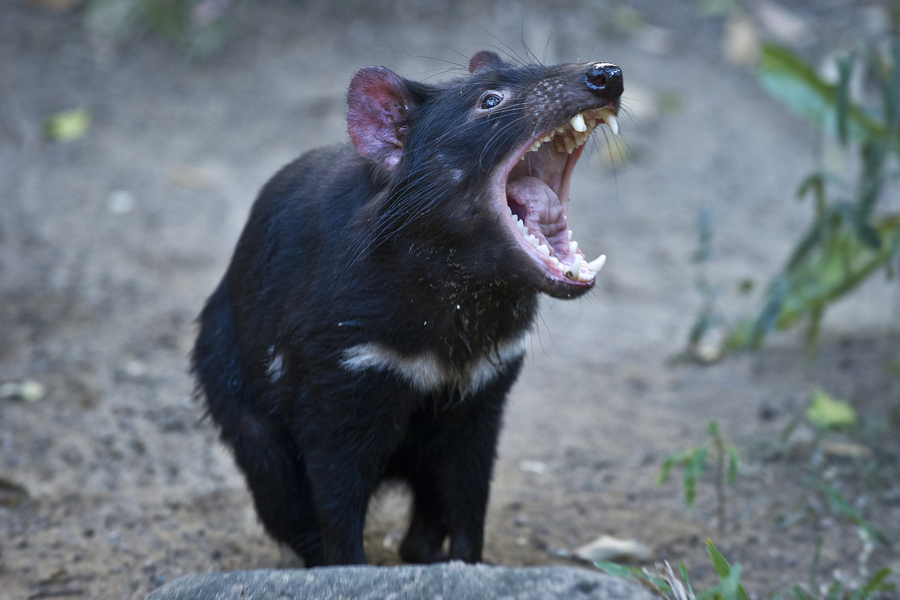
Could genetically editing the Tasmanian devil make the species resistant to a devastating deadly facial tumour?
It’s a question scientists hope to answer as part of a partnership between the University of Tasmania and American biosciences company Colossal.
The facial tumour, a type of transmissible cancer, was first detected in devils in the mid-1990s and has cut the population by about 80 per cent.
Work is progressing on a vaccine, with trials on captive devils expected to start by the end of 2026.
University of Tasmania professor Andrew Files says devils have a mutated gene that might make the carnivorous marsupial more susceptible to cancers.
“If it turns out this gene is associated with either forming new cancers in devils, or could potentially make them resistant to the current transmissible cancers, then that could have a huge conservation benefit,” he told AAP.
“We don’t know what this gene does in devils but now we’ve got the partnership to figure it out.”
If the gene, which exists in devils and no other mammals, is found to increase the species’ risk of cancer, Prof Files says it could potentially then be edited out.
Colossal Australia’s chief biology officer Andrew Pask says the gene of a closely related species, such as the fat-tailed dunnart, could be inserted in its place.
Techniques and technology used as part of Colossal’s project to “bring back” the extinct Tasmanian tiger could be utilised to tinker the devils’ genetic make-up.
However, any potential release of a genetically altered devil in the wild would be up to a decade away and done in a staggered and very controlled fashion, Prof Pask said.
“Initially you wouldn’t take your genetically modified animal and just release it into Tasmania,” he said.
“You would have it in a very large captive area, you would study them over a number of years.
“Make sure everything about them is normal and make sure they’re disease resistant and then you would release them.
“We’d want to make sure there would be no unintended consequences.”
The partnership has the backing of Bonorong Wildlife Sanctuary and the Tasmania Thylacine Advisory Committee – a community group assembled to guide Colossal’s work.
“We’ve cared for hundreds of devils as this horrific plague rages on,” sanctuary director Greg Irons said.
“Anything that gives our devils a real path back deserves our full support.”
Colossal is also helping work on the vaccine and will contribute towards a fat-tailed dunnart colony in Hobart to boost testing efforts.
There was no clear time frame on getting the vaccine, which will be delivered in baits via special devil-recognising dispensers, out into the wild, Prof Files said.
News all day, every day at CityNewsQBN.com.au.



Leave a Reply