When will the minister get police to police their own?
The ACT police watch house in Civic… the alleged primary attacker, a sergeant, was not charged with any offences, and has since left the AFP.
Letter writer JANINE HASKINS has been following the case of a violent assault of an Aboriginal man, allegedly by police, and wonders why the police minister isn’t demanding answers.
Over recent weeks, I have been reading, thanks to the ABC, about a violent assault against an Aboriginal man in March 2024 (known as “Shane” in the court documents), by officers at the ACT Police Watch House.
Write to editor@citynews.com.au
Following Shane’s arrest, he was taken to the watch house where he was stripped naked and, I believe, unlawfully strip searched, with a female police officer witnessing the incident.
Apart from those acts, it is reported that he was also subject to vicious assaults by several officers.
I’ve seen nothing that suggests Shane had acted in any way to require the use of force or being strip searched.
An identified police officer “blew the whistle” and an investigation confirmed police misconduct.
The alleged primary attacker, a sergeant, was not charged with any offences, and has since left the AFP.
So, one has to ask, “Why have criminal charges not been laid?”, not just against the former police officer, but also against those others who took part.
Why is Police Minister Marisa Paterson silent about the appalling behaviour of these ACT police officers? There needs to be accountability for the actions by the police officers involved before the community loses complete faith in ACT Policing.
I’m waiting; three plus years is too long to realise justice. Dr Paterson.
Janine Haskins, Cook
Facts that go over the heads of Barr fans
I write about the waste of taxpayer’s money by the Barr Government and the more than a decade of deficits he has imposed on us.
As an economist, what worries me is that the forecast deficit for 2026-27 is now $612 million or 6 per cent of the budget which is $234 million more than that forecast in the last budget.
More importantly, for those areas starved of funds such as health and education, we will now have to pay an extra $175 million on interest on the debt instead of on those more important issues.
So let’s look at how Barr’s debt has been going. The gross interest expense has risen from less than $200 million per annum or 3-3.5 per cent of total revenue in the latter years of 2010s, to $519 million or 6.2 per cent of total revenues in 2025 and is projected to increase to over $1 billion or 9.8 per cent of total revenues by 2028.
In a period of cost of living pressures, our chief minister has been imploring people to spend more in Canberra, while at the same time reducing our spending power by increasing taxes and charges, rates, registration costs as well as lazy, regressive charges such as the Fire and Emergency Services Levy and the Safer Families Levy.
CityNews columnists Jon Stanhope and Khalid Ahmed have raised these financial issues numerous times, but it appears that the economics escape those electorates supporting Barr and Steel.
The same would apply to Saul Eslake’s report to the Legislative Assembly (The Fiscal Sustainably of the ACT) which shows that the ACT has incurred larger than average cash deficits since 2022-23 and is forecast to continue doing so through 2026-27 and the ACT general government net debt is larger, as a percentage of Gross State Product, than the all-states-and-territories average since 2015-16 and will continue to widen through to to 2026-27. No wonder our credit rating was reduced by S&P Global which increases interest on the debt.
No doubt these facts, including those by published Stanhope/Ahmed, will go over the heads of the Barr supporters, and perhaps those Barr-supporting electorates should get some private tuition in economics and financial management from Saul Eslake.
I would love it if the taxes and charges in those electorates could be increased by more than those in other electorates who do not support Barr and his cronies, as compensation for the increases the rest of us taxpayers are forced to pay.
The cosy podcast interview provided the prime minister with three clear opportunities to shut down an unnecessary topic of quicksand-laden conversation and he chose not to.
The debacle was made worse afterwards by the usual inner-cabinet ministers lining up to dish out deflecting blather and lamely grasp at bland snippets of Labor policy positions as cover up for obvious leadership deficits.
And our local federal Labor representatives kept their heads down as usual.
After the PM’s apology, some short sharp honest opinions and reactions should have been offered up by at least a few in the large army of female government members.
Such views would have been appreciated more by half the population that the PM conveniently forgot about while presumably trying to show he is “a man of the people”, and also by those looking for more evidence of integrity and honesty from a government that normally prefers to govern and communicate from a strict media management and poll-driven cocoon.
Hopefully, our Labor representatives will at least deliver some sharp words of advice to their boss on behalf of their head-shaking constituents, and mention use of such feedback processes in their online newsletters.
This big fail in public relations and communications certainly raises questions in the minds of taxpayers about the purpose and value of the many highly paid media and engagement advisers, manipulators and controllers in the PM’s office.
Sue Dyer, Downer
Come to the court and watch me whinge
I nominate myself for Canberra’s Whinger in Chief.
I whinge about the need to invest more in healthy walking and cycling, and about Canberrans having one of the world’s highest per capita carbon footprints.
I whinge about a so-called Conservation Council that said: “Canberrans are proud we are leaders when it comes to climate action,” that told me in 2023 that it expelled me from its transport working group because I argued in the CityNews for bus rapid transit, that lost its first court case against me, and that recently admitted to the court that the original reason it expelled me was that I had told some people that (as Pedal Power confirmed) a constitution change had made Pedal Power ineligible to remain as a council member. The council subsequently reversed that change to its constitution.
I invite CityNews readers to watch me whinge in the Magistrates Court on August 21, when case WPO 70 of 2025 resumes.
Leon Arundell, Downer
The risk of taking Trump at his word
Herman van de Brug (letters, CN July 2) was taking Donald Trump at his word when Trump said Israel destroys a whole apartment to kill one militant.
As we know, Trump is very prone to hyperbole and often doesn’t intend to be taken literally. This is one of those times.
Israel has demonstrated that when it targets a single person in an apartment block, it hits only the room the target is in.
It may demolish a whole building when there are multiple targets, or when it is a terrorist headquarters or office complex, like the buildings it demolished in Beirut, or totally permeated with military infrastructure and booby traps, like much of Gaza.
These attacks are proportionate and legal under international law, especially as Israel regularly evacuates civilians before such attacks.
Of course, if the terrorists didn’t illegally embed themselves among the civilian population, as Herman acknowledges they do, vastly fewer civilians would be killed.
Alan Shroot, Forrest
Say you won’t and move on, Pauline
If Senator Pauline Hanson doesn’t think that a Welcome to or Acknowledgement of Country is appropriate, then fine, she could’ve just not done one.
Why try to demonise it? Why not just state a One Nation government wouldn’t support it and move on?
Mark Rendall, Duffy
It’s land that’s crippling affordability
An analysis of house prices in new estates reveals that it’s the retail land component that’s crippling affordability.
Profits are massive. Blocks are family-unfriendly. Trees and soil profiles go. Local authorities won’t challenge the situation, because rates are their main income source.
“Up-zoning” existing suburbs is not about precipitating housing affordability, but the latest form of rates maximisation. Land developers and local governments chant “it’s the market” – theirs.
Time for the Commonwealth to comprehensively nationalise the (compulsory if necessary) acquisition, and responsible planning and development of new suburban and satellite-town land, to maintain supply, to sell good-sized blocks only to bona fide owner-occupiers at the verifiable cost plus a small margin reflecting the block’s characteristics, to provide assistance to proven negative equity sufferers for a time, and to replace rates with a modest GST increase, with distribution extended to local governments.
Jack Kershaw, Kambah
Newer wood heaters not the answer
As Canberra endures another winter, the wood-heating industry has launched its latest campaign claiming the best way to reduce residential wood smoke pollution is for households to spend thousands of dollars upgrading to newer wood heaters.
Emissions testing for new wood heaters is conducted by industry engineers in controlled conditions, not in people’s homes. These tests do not reflect everyday use.
Australian and international research has found that even modern, “low-emission” wood heaters can produce significant pollution once installed.
The industry also points to a town in Denmark where it claims wood-smoke pollution was reduced by an average of 40 per cent after residents upgraded their heaters. However, Denmark also offers an important warning.
The Danish Consumer Ombudsman recently ruled that marketing wood heaters, firewood and pellets as environmentally friendly or carbon neutral was misleading.
Despite Denmark’s strict environmental certification standards, the ombudsman noted that certified wood heaters still emit “environmentally harmful particles” and warned that marketing must not give consumers the impression that burning wood in a certified heater is less harmful than it really is.
Perhaps Canberrans should follow this lead and recognise that reducing neighbourhood wood-smoke pollution requires more than replacing old polluting heaters with newer ones.
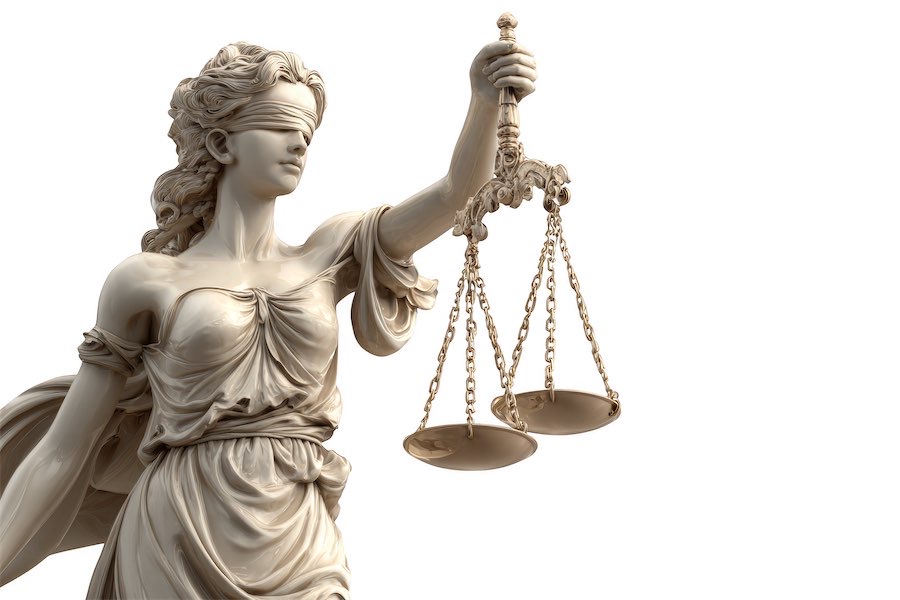
"The selection of our judiciary is quaint. The community might reasonably expect that applicants demonstrate a capacity to write a decision prior to appointment. That doesn’t happen." HUGH SELBY has some ideas to speed up slow judgments.
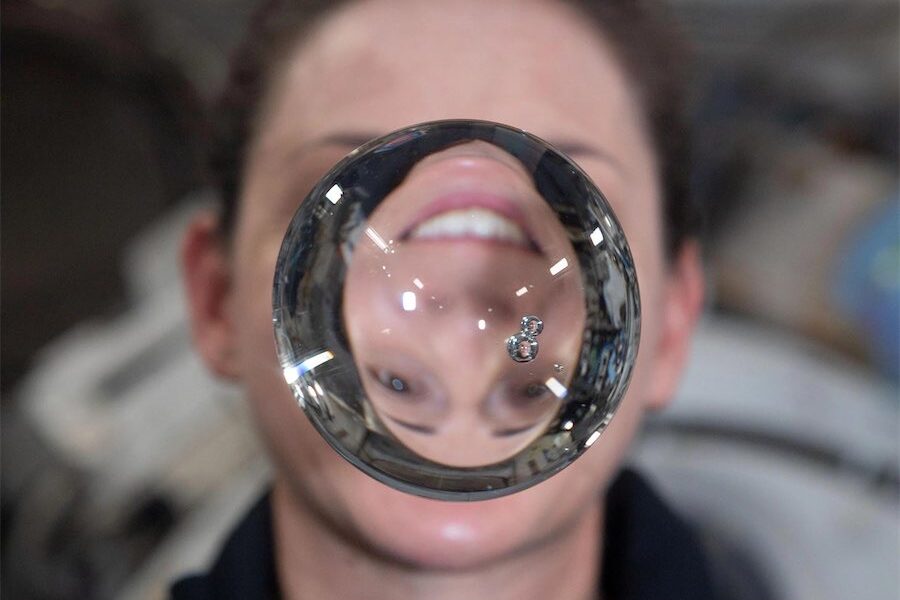
"After weeks or months in orbit, astronauts experience dramatic but short-lived symptoms. Many describe an overwhelming heaviness, as if their arms and legs are made of lead." Whimsy columnist CLIVE WILLIAMS looks at weightlessness.
"Disappointingly, the latest data reveals, again, that the ACT is not a high-performing jurisdiction when it comes to closing the gap," writes indigenous advocate JULIE TONGS.




Leave a Reply