“When community life weakens, the national mood becomes scratchier. Transactions need guarding. Relationships need checking. More public argument takes place through suspicion rather than trust. Problems that could have been solved around a table are left to harden,” writes ANDREW LEIGH.
In 1864, two Australian ships were wrecked on Auckland Island, south of New Zealand. Each crew faced the same cold, isolation, hunger and fear.

The Invercauld, wrecked on the north west of the island, fractured. Captain George Dalgarno treated survival as every man for himself. The strong abandoned the weak. A year later, only three of the 25 crew were still alive.
The Grafton, wrecked on the south east, became a community. Captain Thomas Musgrave and his four sailors built a hut, shared food, cared for one another and even fashioned a chess set. After 18 months, they sailed hundreds of kilometres in search of rescue. Every sailor lived.
Same island, different social contract.
Economists spend plenty of time talking about capital: roads, machines, diplomas and degrees. Yet there is also social capital, the invisible infrastructure of a country. These are the questions of whether people trust one another, join together, volunteer through organisations or feel responsible for more than themselves.
When social capital is strong, people solve problems more easily. Businesses transact on a handshake rather than a 100-page legal contract. Governments can make difficult decisions with more patience from the public. Those in need have someone to call when the cancer diagnosis comes, the house floods, the job vanishes.
When community life weakens, the national mood becomes scratchier. Transactions need guarding. Relationships need checking. More public argument takes place through suspicion rather than trust. Problems that could have been solved around a table are left to harden.
When common ground shrinks, divisive politics moves in. Populism casts democracy as a permanent struggle between “us” and “them”. It needs scapegoats to keep the engine running. Like their right-wing populist counterparts overseas, One Nation demonise immigrants and international institutions, spreading the falsehood that Australia would be stronger as an isolated monoculture. The rise of populism is no accident. It has grown alongside a media environment in which more people get their news from social feeds built to reward heat over light, where outrage dominates thoughtfulness.
Australia remains, by global standards, a generous and cohesive country. Yet our civic life has thinned. Over recent decades, participation in associations, religious congregations, unions, organised sport and community groups has fallen. The Australian Bureau of Statistics’ latest General Social Survey shows that from 2019 to 2025 the share of Australians who agreed that most people can be trusted fell from 55 per cent to 50 per cent. Formal volunteering through an organisation fell from 30 per cent to 23 per cent. Involvement in social groups fell from 51 per cent to 45 per cent.
Charities and non-profits are often where an Australian first learns that citizenship involves being there for other people. It might be the neighbourhood house where a new migrant finds her first job. It might be the community legal centre that helps a tenant keep a roof over their head. It might be the food relief charity that sees hardship before the statistics catch up. It might be the local footy club that teaches a teenager to referee the under-10s.
Charities do more than deliver services. They create belonging, carry memory, give people repeated chances to work alongside others and see where official systems are missing those in need. They advocate, innovate and ask uncomfortable questions. A confident democracy lets charities speak, which is why the government has strongly supported the right of charities to engage in policy advocacy.
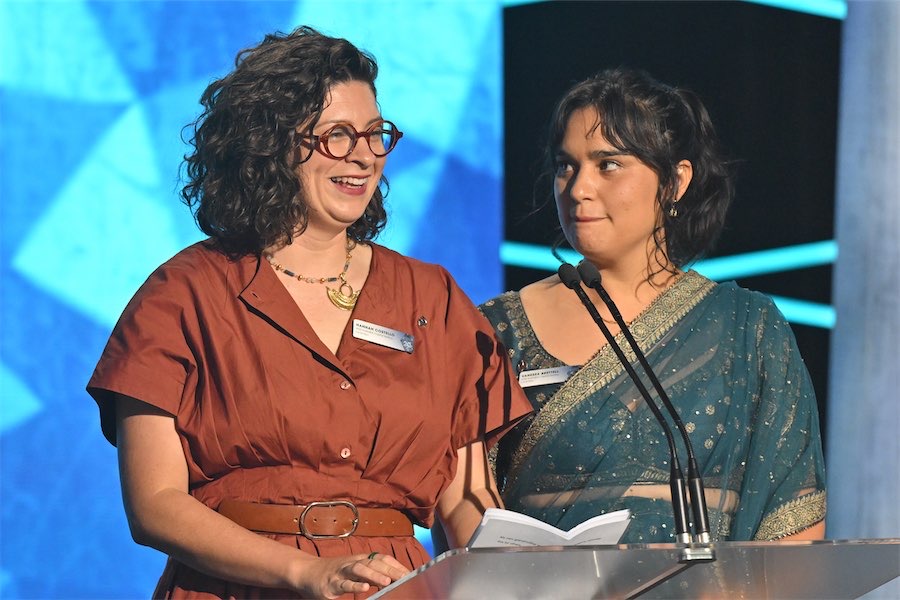
In my own electorate, Cafe Stepping Stone is founded on the idea that hospitality can change lives. Over the past six years, it has helped more than 60 migrant and refugee women take part in meaningful work. Last year, its founders, Vanessa Brettell and Hannah Costello, were named Australian of the Year Local Heroes. Their model is engaging and effective: English classes, cafe jobs and partner employers, a pathway from language to work and from work to belonging.
Community connections strengthen politics. Czech president and poet Václav Havel often spoke about how important it was for a democracy to have a strong social life. Havel gave the example of citizens who join together in a beer-brewing club. By taking pride in their beer-making, and coming to know others who do it well, they are creating civil society.
One of the errors in policymaking is to treat charities as subcontractors for government. Many charities do deliver programs, often with public support. Yet they aren’t just another delivery arm. A good community organisation can notice that a client has stopped turning up. A local group can create the trust that helps a newly homeless person ask for assistance before their crisis deepens.
Conversely, government has responsibilities that charities should never be asked to replace. Medicare, public schools, income support and disaster response are core public obligations.
Governments need a strong civil society. The best societies have both strong public institutions and strong civic institutions.
There are four parts to the project of rebuilding trust and strengthening civil society.
The first is growing local giving through community foundations. Community foundations pool local generosity, build endowments, support grassroots organisations and keep resources close to local knowledge. They create a table around which families, small businesses, donors and community leaders can gather. They create a trusted place to give, bequeath, volunteer or help decide what a community needs.
In Canada, there are more than 200 community foundations, five times as many as in Australia. We can learn from that experience while building our own model. That would mean an Australia in which every major town and region has a trusted vehicle for local generosity.
The second part is bequest giving. Australia is about to experience one of the largest transfers of wealth in our history. JBWere estimates that $5.4 trillion will be transferred through estates over the next 20 years. At present, only about 1 per cent of Australian bequests go to for-purpose organisations. In the United States and the United Kingdom, that figure is 4 per cent.
Australian community life would be stronger if the professionals who help people prepare their wills made charitable giving a routine part of the conversation. A simple question from an accountant or lawyer could make a lasting difference: “After looking after your family and friends, have you considered giving something back to the community?” Asked more often, that question could help Australia build a stronger culture of charitable legacies.
There is also a digital divide in the charity sector, as in the corporate sector, and this is the third part of rebuilding trust. Large organisations generally have data teams and donor platforms. Smaller charities may have a laptop, a spreadsheet and goodwill. That gap shapes whether a charity can protect donor data, match volunteers, measure impact and make the most of artificial intelligence.
Australia should think of this as a digital working bee. The old working bee painted the hall and fixed the fence. The modern version can secure the website, clean the database, build the volunteer roster and persuade people that “password123” has had its day. Less paint on the overalls, more two-factor authentication.
Business can help by treating civil society as more than a sponsorship opportunity. A company can lend its tech team, buy its catering from a social enterprise, or make pro bono contribution one of the things that counts in managerial promotion decisions. Universities can connect students with relevant projects. Philanthropists can fund capability as well as programs. Larger charities can share tools with smaller ones.
The fourth part is partnership. The Productivity Commission’s Future Foundations for Giving report and the non profit sector’s own development blueprint give Australia a substantial reform agenda. Some of that work belongs to government: simpler rules, smarter regulation, support for advocacy and strong charity oversight. Some belongs to the sector: governance, transparency and impact. Some belongs to citizens: giving, volunteering, joining and bequeathing.
Social capital can be rebuilt. We rebuild it when a young person joins surf lifesaving, when a retired teacher becomes a reading buddy. It is there when a local business backs a community foundation or a donor leaves a bequest to a cause that shaped their life.
We rebuild it when Australians move from spectators to participants.
The Grafton survivors lived because they acted like a community before rescue arrived. They built shelter, shared labour, kept up morale and trusted one another enough to attempt a 450-kilometre rescue voyage in a dinghy.
Modern Australia is far from 19th century Auckland Island. Still, the lesson echoes down through the decades. A country’s future depends partly on what its people can do together.
The challenge is to become a country of joiners again, a country where more people volunteer through organisations, take part in local groups, trust their neighbours and bequeath a gift to the community that helped shape them.
Trust is built through reliable institutions and shared work. Charities help Australians do that work. They give people a way to act on fellow feeling. They turn strangers into neighbours. In a scratchy age, that is work worth doing.
Andrew Leigh is the Assistant Minister for Productivity, Competition, Charities and Treasury.
News all day, every day at CityNewsQBN.com.au.




Leave a Reply