
COLIN STEELE reviews two books that cover the lives and work of two global bestselling authors, who are coincidentally both Cornwells.
The books under review cover the lives and work of two global bestselling authors, who are coincidentally both Cornwells – John le Carré, aka David Cornwell and Patricia Cornwell.
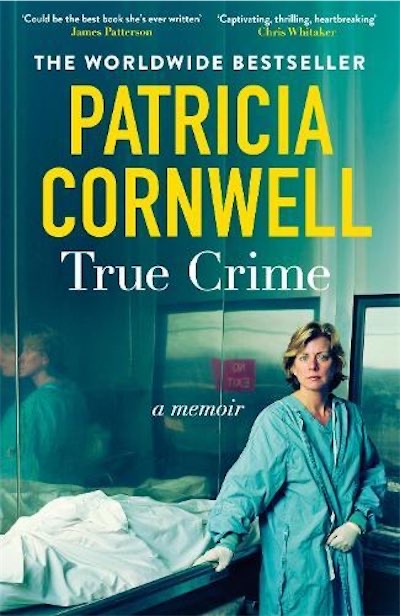
Patricia Cornwell tells her story in True Crime, a Memoir (Sphere, $34.95), which one reviewer has called, “Cornwell takes a scalpel to her own life story”.
Cornwell had a traumatic childhood. On Christmas Day 1961, her lawyer father walked out on his wife, Patricia (then five) and her two brothers. Her mother subsequently had a breakdown and was twice institutionalised in the 1960s, her three children taken in by an abusive religious foster family, which led Cornwell into severe anorexia in her teenage years.
Cornwell’s account of her early life is based on an unpublished fictional version of her life she wrote when she was 20, studying at Davidson College in North Carolina.
She later married Charles Cornwell, an English literature professor from Davidson, who was 18 years her senior. They later divorced, partly because of his resentment of her commercial success.
Cornwell never had children because, she says, she was afraid they would inherit the “abandonment, loss, fear” that she felt from her parents.
After college, Cornwell became a crime desk reporter at the Charlotte Observer, which brought her into contact with numerous police officers one of whom drugged and raped her. This experience is reflected in her first Kay Scarpetta book, Postmortem (1990), in which a police reporter is raped by a district attorney. In hindsight, she says writing about it was a “therapeutic move”.
Kay Scarpetta was to become the lead character in many of Cornwell’s novels and opened up to readers the world of forensic science.
Cornwell says: “I identify with Scarpetta. Our sensibilities and views on things are similar. Our minds work the same way. But there are plenty of differences, too; I’m not a scientist or a doctor, I’m not Catholic or Italian. If she were exactly like me, I’d get very bored”.
Scarpetta has recently come to the screen with Nicole Kidman portraying the older version of Kay in an Amazon Prime series.
Cornwell recounts the several previous failed attempts, notably long discussions with Demi Moore, which began when Cornwell was in Canberra in 1992 for an ANU Meet the Author event.
Those discussions ended in 1993 after Cornwell crashed her car in Los Angeles and ended up in hospital with injuries and PTSD, which took her into therapy.
Her success with the novels led to personal trauma, including fending off stalkers and a recognition of her bisexuality, Cornwell subsequently travelled in an armoured car or helicopter to events. She has said putting her personal life under a microscope was “unnerving” but “it’s important that you do what you need to do, even if it scares you a little bit”.
SINCE John le Carré died in December 2020, we have learned more from several authors about his life, especially his numerous and complicated love affairs – a secret life in itself.
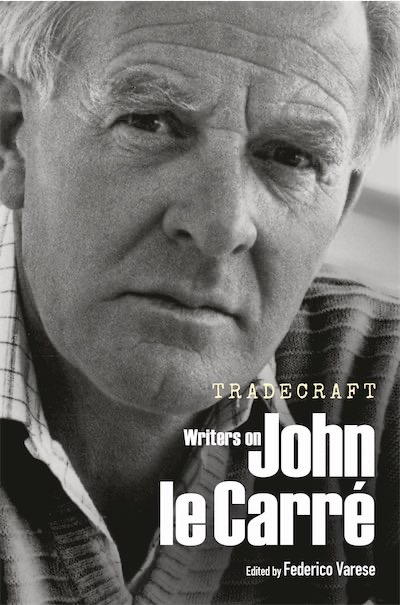
In Tradecraft, Writers on John le Carré (Bodleian Library Publishing. $59.95), eight authors document their experiences working with le Carré. “Tradecraft” is a word le Carré used to describe the techniques of espionage, but it can also be applied to le Carré’s tradecraft of writing, which as several authors demonstrate was underpinned by meticulous research.
The volume’s editor, Prof Federico Varese, an expert on the Russian Mafia, began assisting le Carré when he was a doctoral student at Oxford in the 1990s, providing background information for the novel Our Game and then Our Kind of Traitor.
On the other side of the Cold War ledger, Russian investigative journalist Andrei Soldatov reveals how le Carré’s books were widely read by the KGB’s leadership.
International relations scholar Andrea Ruggeri analyses le Carré’s work from a geopolitical perspective, while Lawrence Osborne documents how le Carré captured the geography and atmosphere of Phnom Penh and Hong Kong in The Honourable Schoolboy.
Oscar-winning scriptwriter and director Hossein Amini describes his experience in taking Our Kind of Traitor from page to screen.
One of of le Carré’s four sons, Nicholas Cornwell, explains why he continued the George Smiley narrative under the pen name Nick Harkaway,
Tradecraft is a beautifully produced book with numerous illustrations of previously unseen family photographs, original sketches, annotated manuscripts, film stills and correspondence. The end result is a multi-faceted portrait with new insights into a complex man and acclaimed writer.
News all day, every day at CityNewsQBN.com.au.


Leave a Reply