“I think many of us have missed that One Nation’s growth is partly down to a lack of centrist options and less the rise of the conservative vote,” writes political columnist ANDREW HUGHES.
Just after the 2025 election drubbing of the Liberals, I started to hear more and more talk of a centre-left party being founded. The supposed third way.

Rumours were of wealthy backers prepared to contribute around $10 million to get the party up and running with a team of around 20-30 professional staff and, of course, money for campaigns, initially focused on areas with proportional representation so they could stand a better chance of being elected.
These rumours have never gone away, and with the demise of the Liberal primary vote and the rise of One Nation more and more I hear that they are still there. Even now extending to targeted rural and regional seats where there is a substantial urban population, such as Farrer, which makes sense if you look at how well centre-left independents are doing in the regions.
Labor has become the leading centre right party now identification wise in the electorate. The Liberals are too focused on wars/battles/dramas with One Nation and have largely forgotten the cities, so identification there is waning significantly.
They have effectively wedged themselves between Labor to the centre right and One Nation to the hard right, which is a very tight space of around 10-15 per cent primary vote. Or minor party level.
This leads me to what I think many of us have missed, is One Nation’s growth partly down to a lack of centrist options, less the rise of the conservative vote?
To the numbers. Primary votes don’t necessarily win you elections any more, but they can lose them. So let’s compare primary votes from the last three federal elections by rough identification of ideology and where I think they are all at now. Yes, yes, my thoughts only, get the pile of rocks ready.

The chart shows how much politics has changed at a national level in a decade, especially the slow rise of One Nation, the only significant party to have grown its primary every single federal election.
But it also says that around two thirds of us are middle. That middle lives in large urban centres (+20k pop) where cost-of-living is our number one issue. And it also says that the only offerings in the centre were Labor and the Liberals to those two thirds.
Remove one and there is space. A lot of it. Have dissatisfaction with the other, and where does that middle (and 2026 angry) voter go?
There is no centre offering, so they go to the party that matches their emotions, not their ideology.
If there was a party that could offer both, then I believe that they would currently be between 16-22 per cent primary right now, comprising some disenchanted Labor voters and most of the urban moderate base.
One Nation would be looking at a low teens level for its primary and be nowhere near the voice and share it is now.
So why hasn’t this happened? Why isn’t there a Teals party?
The big three structures of a modern party; leader, party and policy, aren’t there. If they were then we’d be talking.
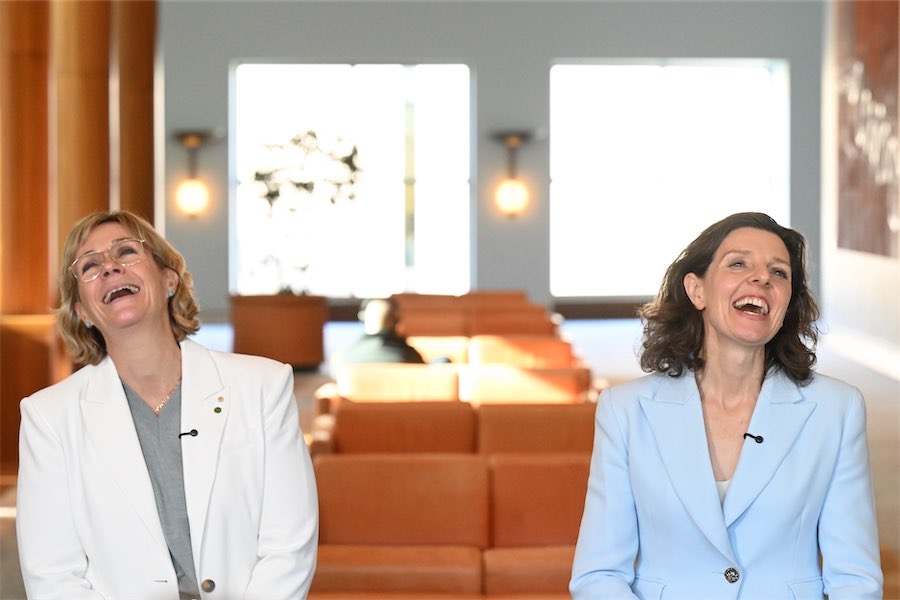
Example. The Community Strong Australia party recently set up by Allegra Spender and Zali Steggall couldn’t decide on a clear leader. That matters because building campaigns is done around the leader’s profile. Without a clear one then resonance/connection at a broader level fails. So they are stuck right now.
Next, the party itself. We have a teal movement right now, but not a party. That means those associated with the movement don’t agree enough to get that party up and running. They still have differences in specifics, not necessarily ideology.
Those subtle differences are enough to stop the movement from getting past the friendly zone and into the formality of a party and serious contenders at the next election.
Not to mention of course that many of the independents want to stay independent, even if backed by the same people.
Finally, policy. As noted above on policy, without a party to enable unity and consistency on the policy front then it is a handful of people who agree on ideology but not policy. There is no Labor solidarity. There are subtle differences. Differences matter in campaigns. So scratch that, too.
So does this mean the third way will remain a myth in Australian politics? For now, maybe, but I think if someone builds it, they will come.
Dr Andrew Hughes lectures at the ANU Research School of Management, where he specialises in political marketing.
News all day, every day at CityNewsQBN.com.au.


Leave a Reply