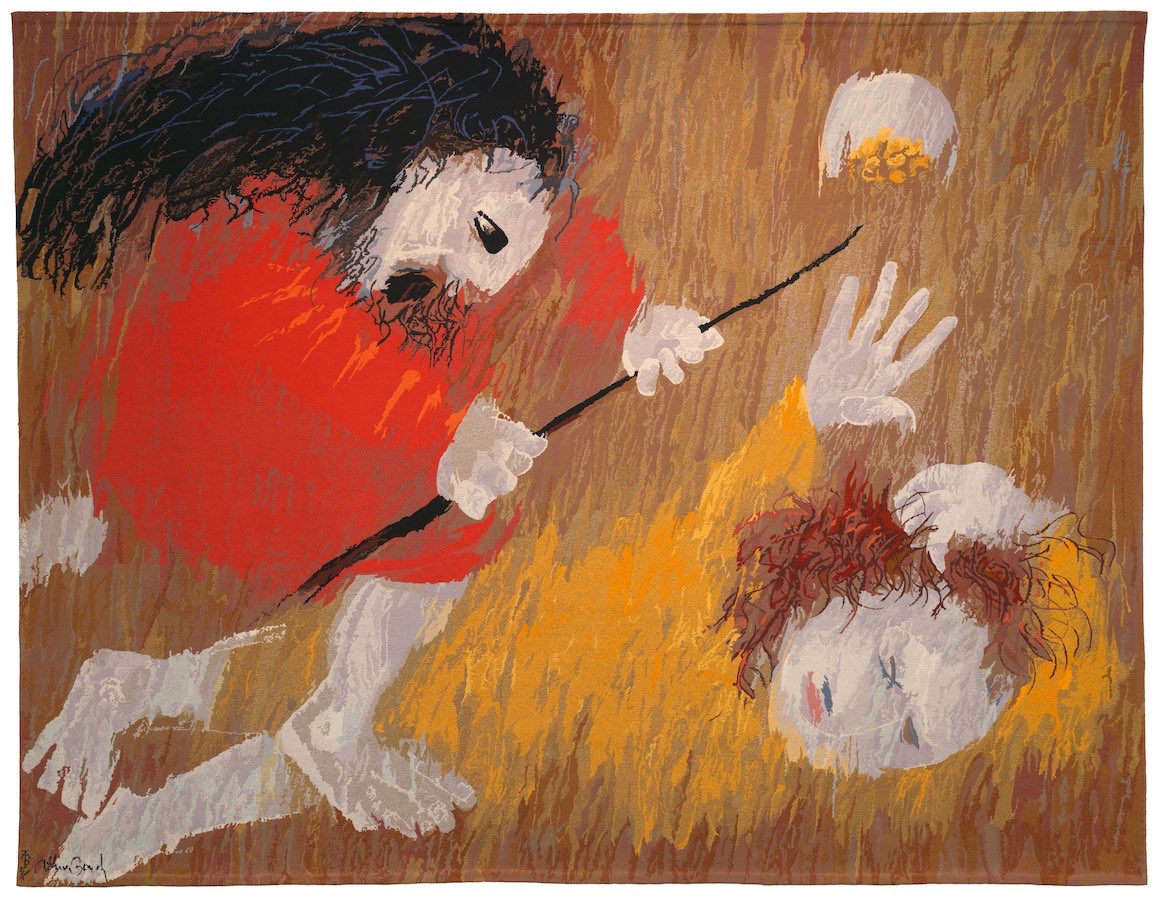
“The National Gallery is offering the public a rare opportunity to see the complete cycle of 20 monumental tapestries about St Francis by Arthur Boyd. But Francis aficionados may be shocked at Boyd’s take on the gentle saint, who is seen here in a sometimes brutal guise,” says HELEN MUSA.
Without doubt, the world’s most famous saint is St Francis of Assisi, loved by believers and non-believers alike for his compassion towards the poor, animals and the environment.
Born wealthy, he embraced a life of simplicity. Pope Gregory IX canonised him in 1228 and, in 1979, Pope John Paul II named him the patron saint of ecology. Legendary accounts tell of him negotiating peace with the marauding Wolf of Gubbio and crossing battle lines to meet Sultan Malik al-Kamil of Egypt during the Crusades.
Now the National Gallery is offering the public a rare opportunity to see the complete cycle of 20 monumental tapestries about St Francis by Arthur Boyd (1920-99). But Francis aficionados may be shocked at Boyd’s take on the gentle saint, who is seen here in a sometimes brutal guise.

Part of Boyd’s extensive artistic exploration of the life of St Francis, the tapestries were woven at the Manufactura de Tapeçarias de Portalegre in Portugal between 1972 and 1974. They were acquired by the National Gallery’s founding director, James Mollison, in 1975 for $100,000. Vera Fino, the current director of the centre will be here for the exhibition.
When I catch up with Elspeth Pitt, senior curator of Australian Art at the National Gallery, she explains that the entire series has never previously been shown together, although seven tapestries were exhibited in 2023 at The David Roche Foundation House Museum in North Adelaide.
Tapestry-making might seem a quintessentially European tradition, but Pitt points out that Australian artists such as Boyd, Sidney Nolan, Charles Blackman and John Olsen all helped make it part of Australian artistic practice.
Boyd’s encounter with the medium predates his enormous Great Hall Tapestry in Parliament House, woven by the Australian Tapestry Workshop.
“Turning from one medium to another as Boyd did was a mark of genius,” Pitt says.
Boyd’s fascination with St Francis can be traced back well before his encounters with Italy. Although raised within an unconventional Christian Science household, he found in St Francis a figure whose appeal transcended religious belief, and he frequently used the story to explore the psyche of his father, ceramic artist Merric Boyd.
In 1959 Boyd moved with his family to London. A trip to Italy in 1964 proved transformative. Visiting Assisi and nearby towns, he was deeply moved by Giotto’s frescoes in the Basilica of St Francis and, beginning with pastels and drawings, went on to create lithographs and eventually tapestries depicting episodes from the saint’s life in soft and luminous colours that retain something of the original pastel drawings.
Back in London, Pitt says, Boyd connected with historian Thomas Boase, whose biography of St Francis had been destroyed in a fire in 1936. Boyd encouraged him to republish the work and offered to illustrate it, creating a suite of 20 coloured pastels on the subject. These were rejected because of cost and the eventual publication included 21 of Boyd’s black-and-white lithographs instead.
But Boyd never relinquished his vision of St Francis in colour. The Portuguese connection came through Sydney gallerist Frank McDonald, of Clune Galleries, who suggested Boyd visit Portugal and meet John Olsen, who was then working with the Portalegre tapestry workshop.
Determined to produce a St Francis series, Boyd placed an order with the Manufactura de Tapeçarias de Portalegre in 1969 for 20 tapestries measuring 2.5 by 3.5 metres each. He bore the cost himself.
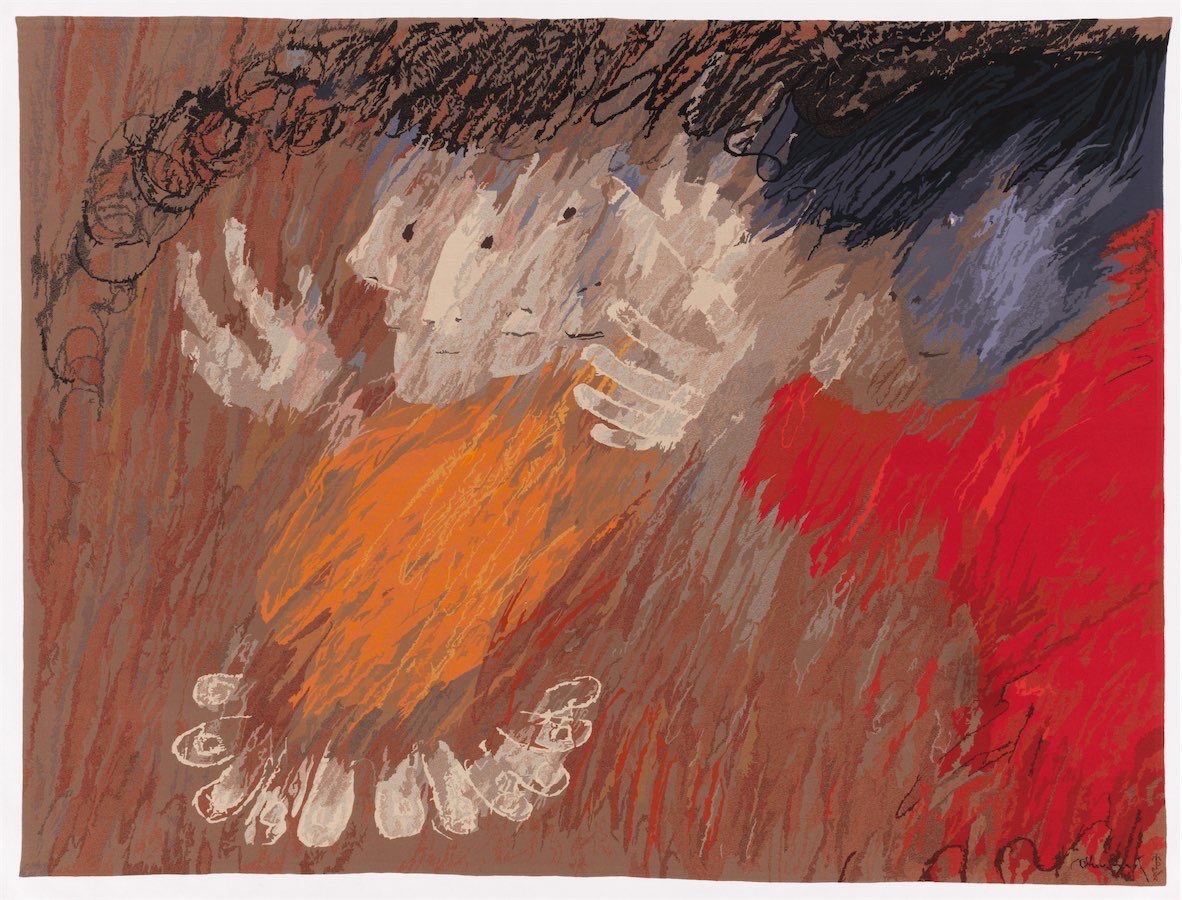
These are what we see in the exhibition and they are radically unlike traditional Giotto renderings, with no Italian countryside, no brown monk’s habit and no birds.
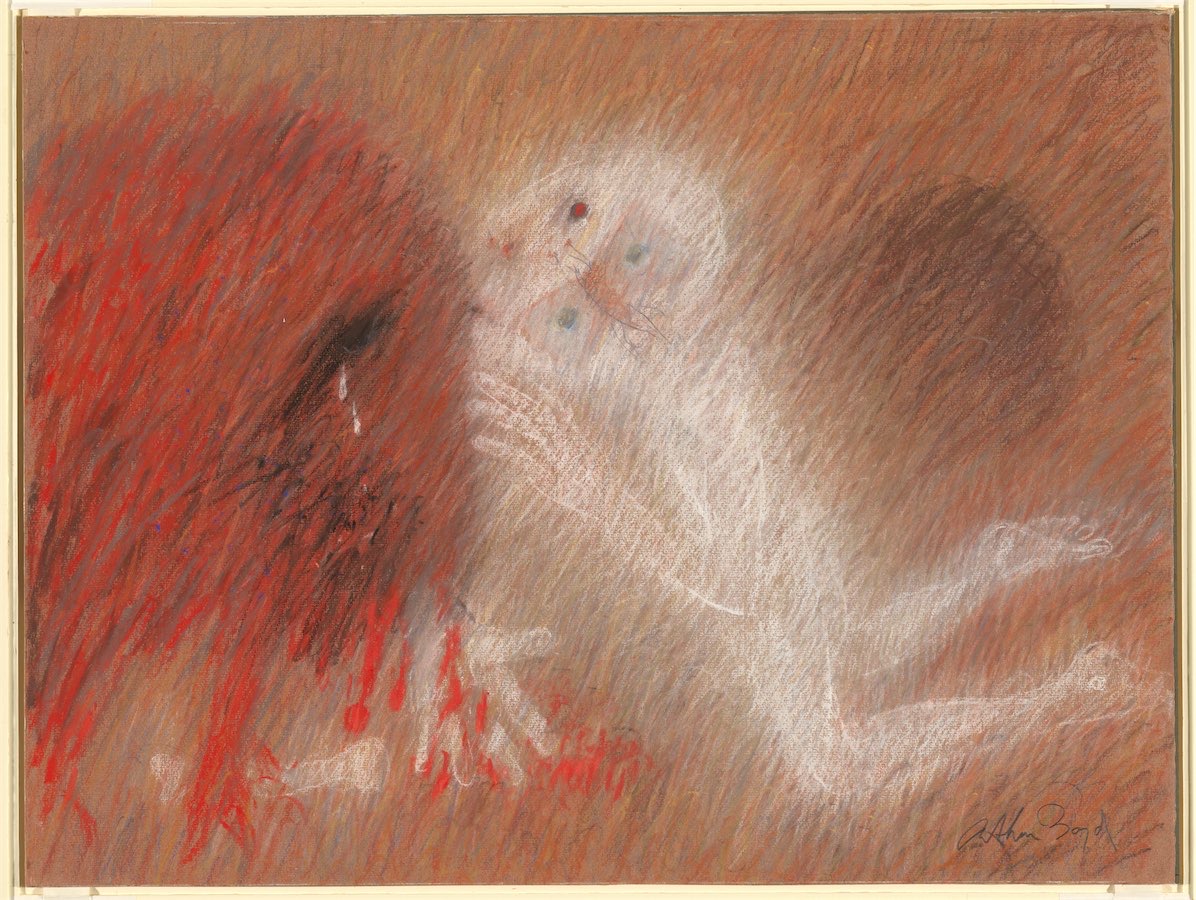
A few examples will suffice. St Francis with the Stigmata shows the saint naked and wounded, dripping blood on to a pope lying beneath him, while St Francis Being Beaten by his Father depicts a rarely portrayed aspect of the saint’s early life.
In St Francis Blowing Brother Masseo into the Air, 1973, Boyd shows Francis elevating his closest companion by sheer force of breath, while in St Francis Kissing the Wolf of Gubbio we witness an intense struggle, not a truce.
The tapestries do not present a strict chronology of St Francis’s life but rather depict him as visionary, sufferer, mystic and earthly man, caught between heaven and earth and sometimes almost brutal. Other imagery focuses on St Clare, one of Francis’s earliest followers.
The exhibition also explores the making of the tapestries. Visitors will see preparatory drawings and the tiny original transparencies that were transformed into vast woven works.
To bring the works together, head of exhibition design Daryl Westmore has created an immersive environment using Franciscan browns, blues and deep reds that evoke both the Italian landscape and Catholic symbolism.
Pitt believes Boyd’s St Francis cycle remains among the most ambitious ever attempted by an Australian artist.
“St Francis gave Boyd the opening to create extraordinary imagery,” she says.
Arthur Boyd: Tapestries, National Gallery of Australia, until October 18.
News all day, every day at CityNewsQBN.com.au.



Leave a Reply