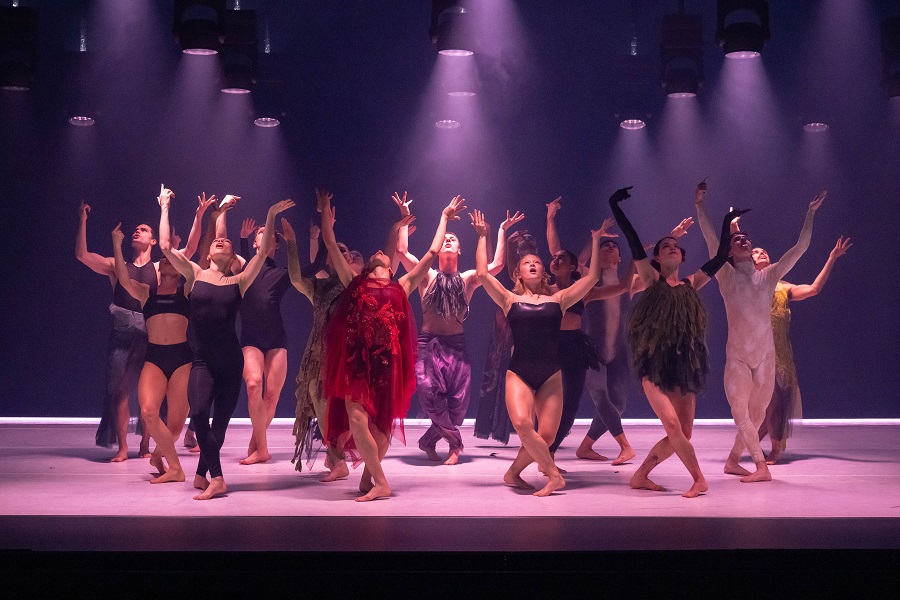
Dance / Engine by Sydney Dance Company. At the Drama Theatre, Sydney Opera House, June 24-July 12. Reviewed by MICHELLE POTTER.
Sydney Dance Company’s latest production, Engine, is a triple bill with works from Canberra choreographer Melanie Lane, with a return of her acclaimed Love Lock; Berlin-based Fran Diaz, with the Australian premiere of The Mass Ornament; and Rafael Bonachela, artistic director of Sydney Dance Company, with a new work, The Journey Itself is Home.
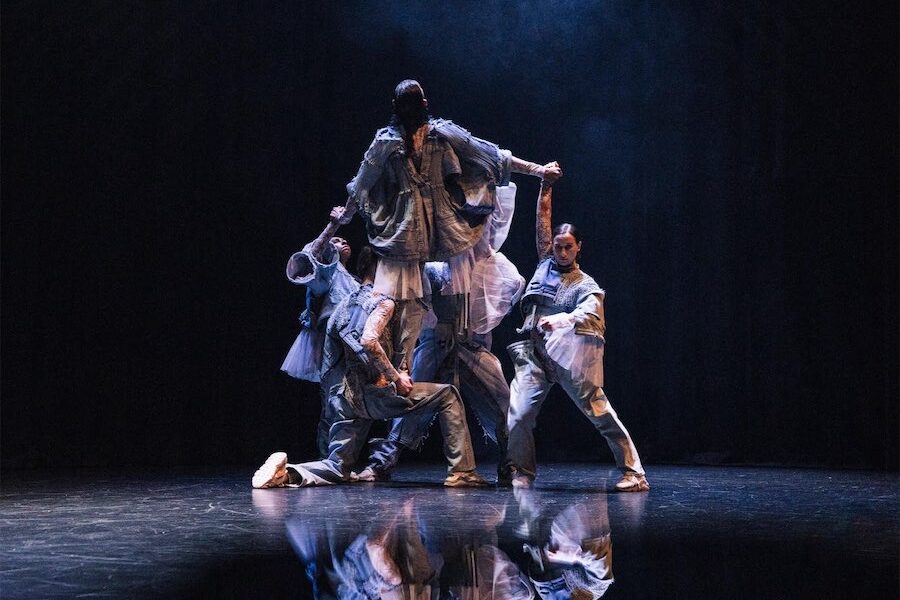
The evening opened with Love Lock, which I first saw back in 2024 when it was part of Sydney Dance Company’s Twofold program. Then I was transfixed by the notion and nature of the love lock (a padlock that represents everlasting love) and its role in people’s connections with those who share their life. This time I was able to focus more on the choreography, which was like nothing I have seen from any other choreographer. Lane’s approach to movement was quite eccentric with its angularity from individual dancers set beside unity of groupings of bodies. Costumes by Akira Isogawa contributed to the individuality that characterised the work, as did a pounding score from [Chris} Clark, which he describes as “a dense collage of percussion/cello/synthesisers/voices/flutes”, along with atmospheric lighting from Damien Cooper.
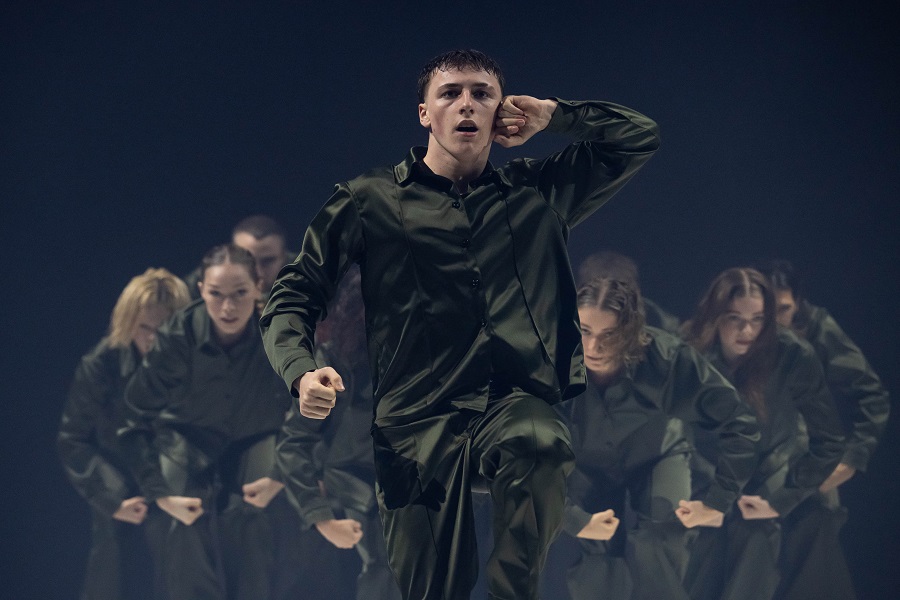
After a brief pause while the stage was being reset, Fran Diaz’s The Mass Ornament, with very plain costume design also by Diaz, took us into a world that focused on a new look at, or changed approach to, popular music hall entertainment. With its relatively simplistic use of movement and groupings, it reflected a certain unison characteristic of early popular entertainment. But it nevertheless embodied a certain individuality from the dancers and suggested we look beyond superficiality at inherent emotional connections. The Mass Ornament was not my favourite work on the program, but was interesting as perhaps an example of an early German Expressionist approach to art?
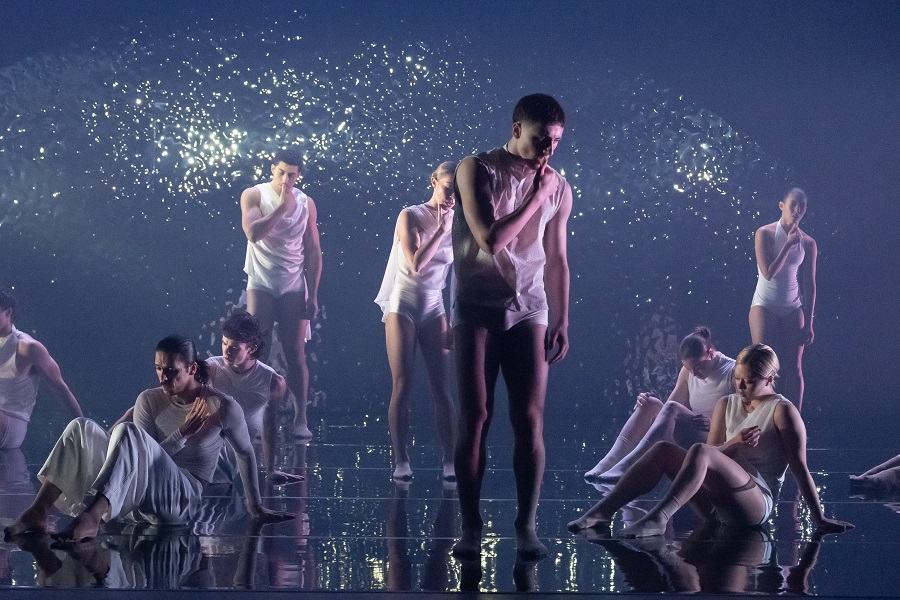
The evening concluded with Bonachela’s brand new The Journey Itself is Home danced to a score by Bryce Dessner and lit by Damien Cooper. Compared with the other two works, Bonachela’s choreography looked quite unusual, or at least more like Western contemporary dance as we tend to know it. The work certainly showed Bonachela’s choreographic fluidity and approach to connections between dancers. A section that was basically a series of duets, one duet replacing the previous one, was admirable. But what stood out for me in this work was the manner in which Bonachela had used unison dancing and had made it quite fast-paced. It carried the work forward in an unexpected manner.
Before the show began, I wondered why the program had the somewhat unusual title of Engine. It was quite clear, however, from Lane’s opening piece that the title referred to an intensity of movement seen in the full-on, engine-like physicality that characterised all three works. The triple bill format is always an intriguing arrangement and opens up a wealth of possibilities. This program opened up one very clear aspect of the evening’s presentation: the powerful manner in which dance can deliver its physicality and connectivity.
But an engine-like visual effect was just one aspect of what we saw onstage. For a start, the dancers were breathtakingly brilliant in every work. Then the costumes and lighting were outstanding in the way in which they contributed to the different approaches of each of the three choreographers ̶ from the idiosyncratic nature of Lane’s work, through the hard-core expression from Diaz, and on to the more gentle and predictable nature of Bonachela’s contribution.
Engine was a stunning show and well deserving of the standing ovation and loud cheers and exclamations that concluded the evening.
News all day, every day at CityNewsQBN.com.au.


Leave a Reply