Author Maree Spratt… “I think no one escapes childhood unscathed.”
Canberra author Maree Spratt reflects on girlhood, friendship, social media and the 15-year journey behind her debut novel to reporter DHWANI PATHAK.
Reading her debut novel, The Followers, as an adult and a mother, Maree Spratt finds parts of it difficult to revisit.
“It is such a dark and unsentimental, but also true representation of childhood and some of the childhood bullying that children can experience,” she says.
“What they do to this character Carmel and the way they treat her, reading it as an adult kind of makes my skin crawl.”
The story’s journey to publication took about 15 years. Spratt began writing the novel around 2012, while studying creative writing at university in Queensland.
Earlier versions were shortlisted for literary competitions, but the manuscript underwent substantial changes until she took unpaid leave in 2024 to finish it, fitting writing around family life. It was published by Allen & Unwin this year.
Set in 2000s Brisbane, The Followers follows two schoolgirls, Lacey and Teresa. Years later, Lacey has become a lifestyle influencer promoting self-love and body confidence, while Teresa remembers a much crueller version of her.
“I think no one escapes childhood unscathed,” Spratt says. “Those things are important to children because they are also important to adults.”
The idea for the novel came from a creative-writing assignment in a unit on youth and children’s writing where she drew on her own primary school years, when she and her friends called themselves “the group”.
“As a pre-teen, when you haven’t quite formed your identity yet, I very much just felt so connected to the girls that I was friends with,” she says.
Spratt wondered why childhood relationships can continue to occupy our minds years after they have ended. Reading Margaret Atwood’s Cat’s Eye, about a woman revisiting memories of a toxic childhood friendship, prompted her to consider how social media changes that experience.
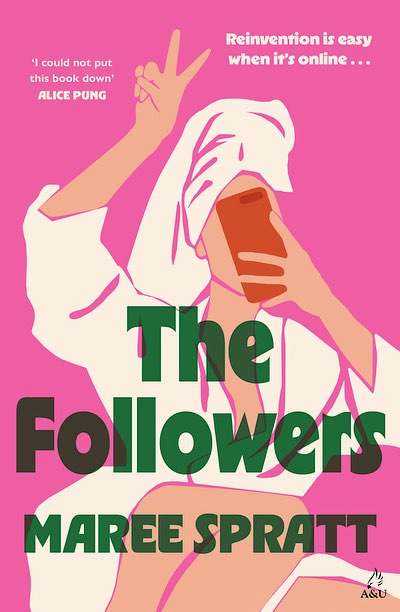
The cover of The Followers.
“Nowadays you could continue to follow your childhood tormentor on social media,” she says. “You could just carry that person around with you in your pocket all the way into adulthood.”
The novel also questions popular culture’s messages to women. Lacey absorbs body-shaming messages from 2000s magazines, then adopts the language of wellness and self-care as an adult.
“The beauty industry and popular culture began to encourage women to speak more kindly to ourselves and about ourselves,” Spratt says. “But at the end of the day, that was still being used by brands who wanted to sell us something.”
“Is it not just the same thing packaged differently?” she asks.
Having worked as a teacher in Central Queensland, Spratt says she does not believe the social pressures and friendship dynamics experienced by girls have changed significantly.
“Patriarchy hasn’t changed and misogyny hasn’t changed,” she says. She believes some girls’ behaviour towards each other reflects internalised attitudes about women and femininity.
Spratt says novels about boys coming of age are often regarded as literary, while stories about girlhood can be dismissed as young adult fiction.
She deliberately chose not to make romance the central relationship through which her characters develop. “I feel like that’s maybe something that’s been overdone in the genre in the past and not necessarily representative of what every girlhood looks like,” she says.
Moving to Canberra in 2018 proved important. A program run by the ACT Writers Centre, now Marion, gave her the opportunity to workshop the manuscript and receive industry feedback.
“I really feel like I’ve actually started to identify more as a writer and someone who could write professionally when I moved to Canberra,” she says.
Now published, she is ready to leave its characters behind.
“I’m certainly glad to be done,” she says. “It’s a relief even more than a reward.”
Her next project will move away from childhood, exploring marriage through women at different stages of their relationships.
Readers have surprised her by describing The Followers as nostalgic, despite its dark portrayal of girlhood. Spratt had not expected that response.
Perhaps the past can be both something we long for and something we would rather not revisit.
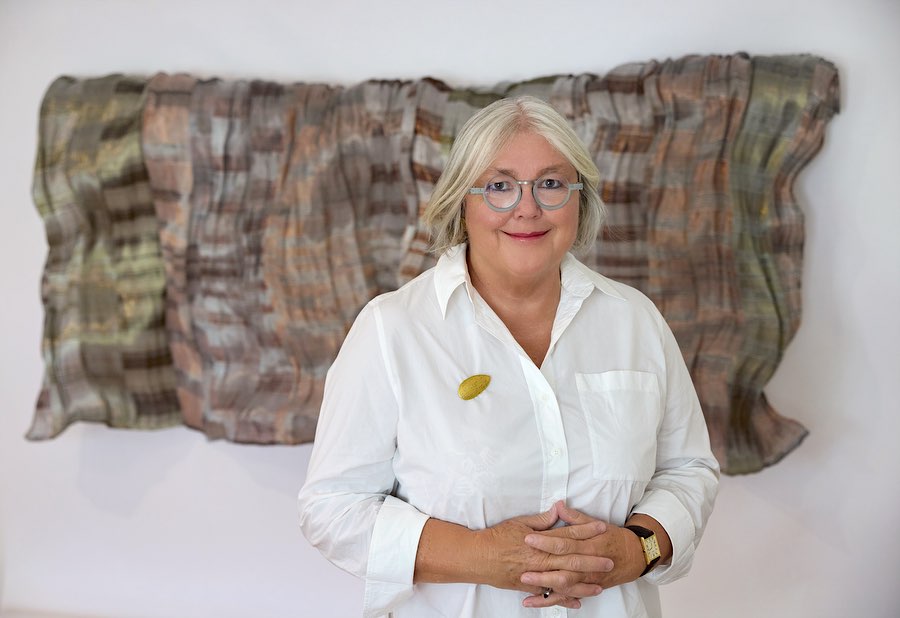
An original thinker whose woven art evokes the undulating surface of the earth, Jennifer Robertson, is the 2026 Canberra CityNews Artist of the Year, reports arts editor HELEN MUSA.
Described by members of the Canberra Critics’ Circle as “very real, raw and courageous”, Jenna Roberts has been recognised for her performance as Hester Collyer in Terence Rattigan’s The Deep Blue Sea.




Leave a Reply