Is the US right about Australia’s anti-slavery tariff?
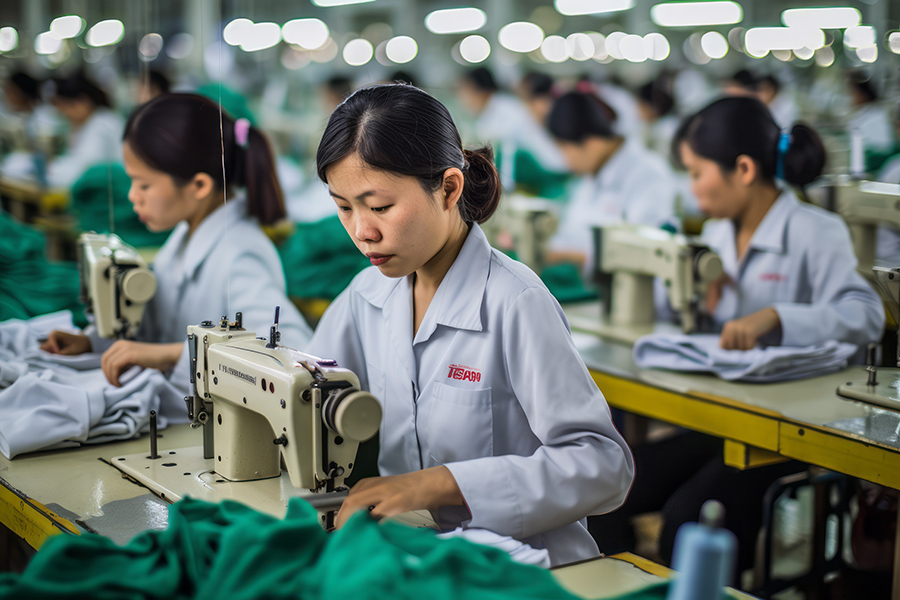
An estimated 50 million people around the world – and rising – are trapped in modern slavery, more than half of those in forced labour.
Australia is facing a new 12.5% US tariff over anti‑slavery claims. Human rights expert JUSTINE NOLAN asks if they are actually right.
The United States is threatening to impose trade tariffs of up to 12.5% on 60 countries, including Australia, over their inaction on forced and slave labour worldwide.
The failure of our most important trading partners to address the importation of goods made with forced labor is unacceptable.
Australian Prime Minister Anthony Albanese responded that a new tariff on exports to the US was “unjustified”, as Australia has “robust, comprehensive and world-leading legislation addressing forced labour and modern slavery”.
Who’s right? And are the US claims about other nations turning a blind eye to forced and slave labour – where a person is either forced to work, or even owned by someone else – actually true?
failed to impose a legal prohibition on the importation of goods produced wholly or in part with forced labour and to effectively enforce such a prohibition.
All of those countries face a proposed 12.5% tariff on their exports to the US.
Another six economies – including Canada, the European Union and Indonesia – face lower 10% tariffs. They were seen to have done more overall, but failed to effectively enforce their own laws.
Forced labour is a form of modern slavery, defined under international law as “all work or service which is exacted from any person under the threat of a penalty and for which the person has not offered himself or herself voluntarily”.
This definition is consistent with an almost century old US law, Section 307 of the US Tariff Act of 1930. It’s now being used to legally justify this latest round of tariffs.
The US has a strong history of taking legislative action against forced labour. Section 307 prohibits imports of goods mined, produced or manufactured by forced labour.
In 2022, the US also established the Uyghur Forced Labor Prevention Act, prohibiting goods being imported from China’s Xinjiang Uyghur region, where there are “credible” allegations of widespread forced labour.
This latest move comes after US courts blocked US President Donald Trump’s sweeping international tariffs announced over the past year. That prompted Trump to pledge: “We get one ruling, and we do it a different way.”
As former Australian ambassador to the US Joe Hockey said about the new forced labour tariff today, “America is running out of money and they need to get it from somewhere”.
there is no hard evidence that the Modern Slavery Act in its early years has yet caused meaningful change for people living in conditions of modern slavery.
That’s not surprising: there is no enforcement built into the law.
What more needs to be done?
If Australia does want to have “world-leading” laws – and a stronger case to argue for lower US tariffs – what needs to change?
While the Modern Slavery Act has raised awareness of the problem in Australian boardrooms, it is not improving the working conditions of supply chain workers, here at home and overseas.
So Australia needs to move quickly to strengthen that law with enforcement, and establish a forced labour import ban.
A 2023 review of the Modern Slavery Act recommended penalties for companies failing to comply with reporting requirements and the introduction of a human rights “due diligence obligation” – similar to European Union laws and emerging requirements in South Korea, Thailand and Indonesia. This sees companies working to reduce human rights harms not just in their own factories, but through their suppliers’ suppliers too.
The Albanese government partially accepted some of the 2023 report recommendations, including the need for penalties. Three years on, it’s failed to take serious action.
The Australian government should also establish a forced labour import ban, like one the EU passed two years ago, now being phased in across all 27 member states. This would stop specific goods suspected of being produced with forced labour at the border.
Whether these proposed tariffs come into force or not, this new US forced labour investigation could actually do some good.
Right now, millions of people are working in dangerous, dehumanising conditions to make goods sold in Australia and worldwide. It’s long overdue to do more to stop it.
Federal MP Helen Haines' condition has improved, a spokesman for The Alfred Hospital in Melbourne says, after she was critically injured when a car struck her outside her electoral office.




Leave a Reply