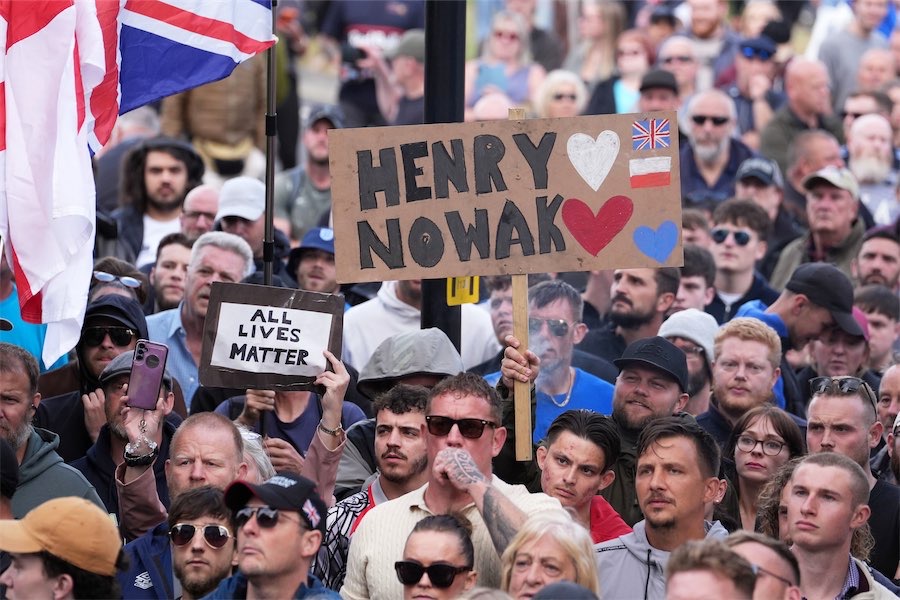
“If racial prejudice, hostility, stereotyping and assumptions can only ever travel in one direction, then we have ceased talking about racism as most ordinary Australians understand it,” writes GWYN REES.
Last year Australia’s race discrimination commissioner made headlines at the National Press Club of Australia when he argued that anti-white racism does not exist.
In speeches and public commentary, he has spoken of white privilege, settler colonialism, structural racism and the need to centre anti-racism efforts around First Nations experiences.
Whether you agree with those views or not, they are now deeply embedded within Australia’s political and institutional class.
The language of equity, diversity, inclusion and anti-racism has become deeply embedded throughout the Western world. Many Australians support these efforts. Many others believe they have already gone far enough. But wherever you sit in that debate, one fact remains. Change is happening rapidly.
When the race discrimination commissioner delivered his recent speech, he argued that Australian institutions were built to ensure white privilege. That is about as strong an ideological claim as one could make. One could equally argue that many institutions were built for reasons of governance, law, commerce, security and administration; while acknowledging they may have disadvantaged indigenous people and migrant groups.
He cites structural racism as pervasive throughout Australian institutions. Whether racism exists is one question. But I put it to the commissioner, if anti-white racism does not exist, perhaps he can explain the tragedy that unfolded in Southampton in the UK.
When race entered the narrative
Henry Nowak, an 18-year-old young man, is dead.
Unarmed, sober and walking home after a night out, he was stabbed multiple times by Vickrum Digwa, who has now been convicted of his murder.
In sentencing, the judge described Henry as a much-loved, kind and ambitious young man with a bright future ahead of him. He was the first in his family to attend university. He was devoted to his family and full of humour, warmth and promise.
But what makes the case so unsettling is not simply the violence itself, it is what followed. Race entered the narrative.
In recent years we have seen politicians, activists, media organisations and public institutions react with extraordinary intensity to incidents that fit broader narratives about race and discrimination. The death of George Floyd became a global cause and the race discrimination commissioner himself referenced Black Lives Matter in his National Anti-Racism Framework speech.
Again, people can debate whether that response was justified or excessive but that is not the point. The point is consistency.
According to the sentencing judge, Digwa falsely claimed that Henry had called him a “Paki”. The judge was sure this was a lie and concluded that such a remark was completely at odds with Henry’s character.
The judge also found that these lies misled attending police officers and influenced their decision to arrest and handcuff Henry.
Digwa further abused the privilege extended to Sikhs to carry a kirpan in public, which the judge said carried “huge responsibility”. Yet despite the aggravating factors identified by the court, Digwa received a minimum term of 21 years, a sentence now referred by the attorney-general as potentially unduly lenient.
So where is the outrage?
So where is the outrage? Where is the national conversation?
More importantly, how are Australians expected to reconcile the claim that anti-white racism does not exist with a case in which false allegations of racism against a white victim influenced how events were perceived in the immediate aftermath of a murder?
If racial prejudice, hostility, stereotyping and assumptions can only ever travel in one direction, then we have ceased talking about racism as most ordinary Australians understand it. Instead, we will be on the same path as the UK, creating political and social definitions that protect some groups while excluding others.
That should concern everyone because justice depends on consistency. The credibility of anti-racism efforts rests on the public believing that the same principles apply to everyone. The moment people begin to suspect that race matters more than truth or that some victims attract greater sympathy because they fit a preferred narrative, public confidence will inevitably erode.
Perhaps that is the real lesson of Henry Nowak, if we can at all make sense of his death. Not that racism is unimportant or that inequality does not exist. But that a society genuinely committed to fairness cannot pick and choose when race matters.
If anti-white racism doesn’t exist, how can false accusations of racism against a white teenager be used to influence perceptions, shift sympathy and alter the way people understand a violent crime? It is a contradiction that deserves a better explanation than we have been given.
And perhaps one more lesson for Australia. The UK National Police Chiefs’ Council now states that anti-racism “does not mean treating everyone the same”.
Britain’s institutions did not arrive there overnight. The grooming gangs scandal, the Southport murders and now the death of Henry Nowak all reveal institutions increasingly fearful of the race card and increasingly reluctant to apply the same standards to everyone.
Australia should take notice.
Because equal treatment under the law and colour blindness were once considered virtues.
Henry Nowak’s parents might reasonably ask what changed.
Gwyn Rees is a Canberra-based business and social advocate.
News all day, every day at CityNewsQBN.com.au.




Leave a Reply