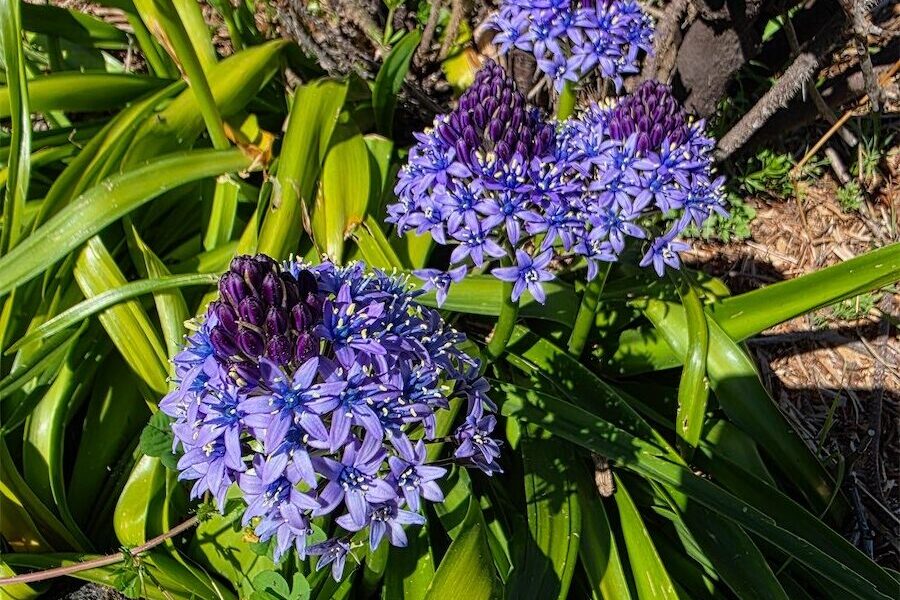
Ivy leaf cyclamen… comes in a variety of colours and flowers for many months. Photo: Jackie Warburton
Ivy leaf cyclamen thrives through Canberra’s cold winters, producing months of colour before retreating into dormancy when warmer weather arrives, writes gardening columnist JACKIE WARBURTON.
Ivy leaf cyclamen is a pretty little plant that grows well through our cold winters and dies down once the weather warms.
Jackie Warburton.
Cyclamen hederifolium comes in a range of colours from white, pink and red through to every shade in between, flowering for many months. These long-lived plants can eventually grow to about 10cm across and flower in early winter.
The root systems of cyclamen vary between species. In Cyclamen hederifolium, the roots emerge from the sides of the tuber, which has a flat base. Other cyclamens, such as Cyclamen coum, have rounded tubers with roots growing from the bottom. Cyclamen coum flowers in mid-winter and also blooms for many months.
The latter is more commonly grown as a potted plant indoors and can be planted into the garden when the weather warms. Neither species likes to be planted too deeply. When conditions are favourable, cyclamen will self-seed and create a carpet of colour in shady areas of the garden.
To increase numbers, large tubers can be divided during summer dormancy. Cut the tuber into sections, ensuring each piece has growing eyes, like potatoes, plus some roots attached. Dust the cut surfaces with sulphur, then plant into a mix of fine potting mix and coarse river sand. Water sparingly.
IN the vegetable patch, winter is a busy time for improving soils so additives can break down over the cooler months and be ready for spring. Keep beds tilled, weed-free and lightly mulched. Small autumn leaves can be added to garden beds, along with manures of any kind.
Chicken manure is high in nitrogen and suits plants requiring lush growth, such as evergreens or hedges. Cow and sheep manures are also excellent additions. Generally, the more processed the manure, the fewer weed seeds it contains. Sprinkle lightly over the garden and water thoroughly.
Take care when using manure around natives, ferns or young plants. Apply lightly to avoid root burn and always water well. Pelletised manure can also be used, but avoid slow-release fertilisers until soils have warmed. A foliar feed on vegetables will encourage strong root and foliage growth.
Bottlerbrush… a terrific screening tree to have growing under powerlines in the backyard. Photo: Jackie Warburton
ONE of my favourite plants flowering now is the callistemon, commonly known as bottlebrush. These Australian natives range from small shrubs to trees, and flower in shades of red, white and pink. They make excellent screening plants beneath powerlines, useful backyard trees or attractive small street trees.
Callistemons respond well to pruning. Even harsh pruning will not kill them and can reinvigorate growth. Compact varieties such as Little John and Better John are available in the same flower colours. They are ideal for pots, low hedges or border plantings, while also providing habitat for bees and birds.
Occasionally, callistemons are affected by sawfly larvae or webbing caterpillars. Choosing tougher-leaved varieties can reduce pest damage. Sawfly larvae skeletonise leaves by stripping away the leaf tissue during spring.
Diapel is effective against webbing caterpillars but not sawfly larvae. Success Ultra, an organic spinosad-based spray, can be used to control both pests. Where spraying is not practical, prune out affected branches and place them in the garbage bin for disposal.
With soil warming, it’s time to plant tomatoes, capsicums, cucumbers and other summer vegetables for a productive harvest, writes gardening columnist JACKIE WARBURTON.
"In 2026, NZ had an increase in overall sales of wine of eight per cent, a remarkable statistic given the global decline in wine sales generally," reports wine columnist RICHARD CALVER.
Hats off to the National Gallery for repositioning its café – Oculus Café x Kitchen by Mike – to the ground-floor foyer with views of the Sculpture Garden, writes dining reviewer WENDY JOHNSON.





Leave a Reply