“The government has signalled that we are all best off as wage slaves depositing our compulsory 12 per cent into super and looking forward to a government-approved modest retirement,” writes ROBERT McMAHON.
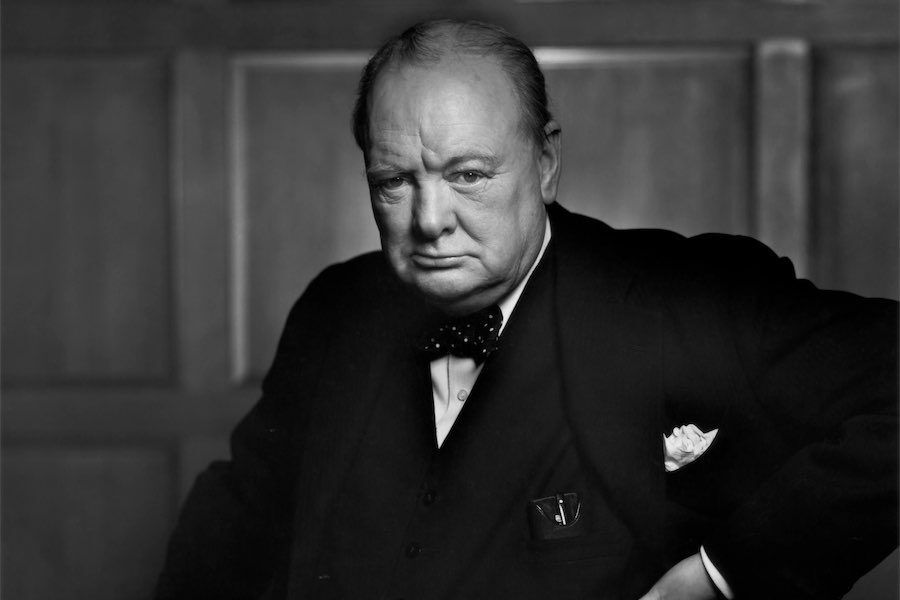
British prime minister Winston Churchill was said to have quipped: “Never let a good crisis go to waste”.
Dr Robert McMahon.
I was reminded of this maxim observing the government’s recent changes to negative gearing and capital gains tax (CGT) for residential property investors – so called mum and dad landlords – justified by the assertion that residential property investment had crowded out first home buyers unable to get into the housing market.
Because the government indeed has a crisis on its hands – and it hasn’t let it go to waste.
While the first part of this conceptual algorithm is correct – a current housing crisis in Australia – the second part, that it is caused by mum and dad property investors, is at best exaggerated and at worst spurious.
But, drawing on the British Bulldog’s exhortation, the government nevertheless laid claim to the housing crisis to justify breaking its promises on negative gearing and CGT.
Here, I want to explore the unintended and perverse effects they are likely to have not only on housing supply but also on other forms of economic investment.
This is because the government’s changes went many steps beyond investment properties owned by landlords.
It announced changes to CGT on most classes of investment assets, including those already owned. These include shares in listed companies, stakes in private companies, unit trusts, crypto, some business assets and testamentary trusts. Quite the list.
And the changes are not small. The government has replaced an effective tax rate of a maximum of around 23.5 per cent with a minimum rate of 30 per cent rising to the highest rate of income tax, currently 47 per cent.
This will materially increase the CGT on currently held assets and double it for those acquired in the future. The government says that this impost is partly offset by adjusting any gains caused by inflation.
While mum and dad property investors might lament that their efforts to help fund their retirement or support their kids get into the housing market have suddenly been devalued, there is something much larger going on here beyond the potential redistribution of housing assets between landlords and first home-buyers.
And that is the corrosive effect these changes will have on risk-taking by investors, entrepreneurs and household landlords alike.
The ideological genesis of these changes is that the government – particularly the Treasury – considers lesser taxation of profit compared to that of salary or wages as “lost revenue”; “concessions” as they call them. But here’s the rub. Investing in a property, buying shares or starting a new business is not like going to work, sitting at a desk and “working for the man”. It involves incalculably more risk, effort and stress than merely drawing a predictable salary from paid employment.
And that’s why it’s entirely appropriate that these ventures – inherently risky and many doomed to falter or worse – are taxed at a lower rate than salaried taxation: to encourage people to take the risk, make investments, create jobs, grow the economy and provide accommodation to tenants.
By the government so drastically changing this taxation balance, it has changed this fundamental economic compact. It has made equivalent the risk of investment – with the commensurate entitlement of greater reward – with that of salary earners who incur less risk earning their daily bread.
The effects of these changes are therefore likely to extend well beyond just causing landlords to buy fewer investment properties.
They will undermine investors’ appetite for taking risk on new ventures, so very fundamental to providing the funds necessary to start and grow new companies, fund innovation and provide housing to renters – some of whom will neverbe able to afford to buy a new house whether some landlords drop out of the market or not.
But there was something else in the government’s changes that rather chilled me.
They signalled to Australians that economic creativity was somehow no longer valued by its government: that we were all best off as wage slaves depositing our compulsory 12 per cent into super and looking forward to a government-approved modest retirement. No incentive to invest for tomorrow, create wealth or help your kids buy their first home.
It is this thwarting of aspiration – this failure to reward Australians’ graft and endeavour – that disappointed me the most about these rapacious changes. And it is this signal that may well cause us the greatest pain in years to come as our economic innovation is inevitably stifled by their effect.
Dr Robert McMahon PSM is a visiting fellow at the Australian National University, adjunct professor at the University of Canberra, and former assistant secretary of the Department of the Prime Minister and Cabinet.
The attack on Helen Haines has forced politicians to confront the ugliness of political discourse, but lasting change will require a broader reckoning with society’s growing incivility, writes political columnist MICHELLE GRATTAN.
For political columnist MICHELLE GRATTAN, Mathias Cormann’s warning against imitating populists carries a pointed message for the Coalition as it struggles to counter One Nation’s growing appeal.






Leave a Reply