The more picking, the more peas they produce. Photo: Jackie Warburton
At this time of year there is very little on the growing calendar, but peas and spinach can be planted with shelter and care for a worthwhile yield, writes gardening columnist JACKIE WARBURTON.
At this time of year there’s very little on the growing calendar, but peas and spinach can be planted this month.
Jackie Warburton.
Planting will need some shelter from winter conditions and a little nurturing through the colder months, yet the yield is well worth the wait.
Prepare the soil first by sprinkling a little lime and installing a trellis or support structure before planting. Sow peas directly into tilled, weed-free soil, pushing the seed just below the surface in a full sun position. I grow mine on the western side of the house, where morning sun avoids frost burn while still allowing warmth through the day.
All pea varieties should be picked as soon as pods begin to form. The more regularly you pick, the more the plants will produce.
As legumes, peas generally don’t require heavy fertilising, but a little potash will encourage strong flowering. Rotate crops by planting peas where root vegetables such as onions, garlic, carrots or beetroot were grown the previous season, and avoid planting near alliums such as onions, leeks and chives, as well as potatoes.
SPINACH is a reliable year-round vegetable for Canberra gardens. There are many types of spinach and chard; they can be used interchangeably in the kitchen but grow differently.
Spinach is smaller and best suited to cool seasons and can be grown in pots. Chard is larger, with thicker growth, and needs deeper soil to perform well.
Both spinach and chard are biennial. If harvested regularly, they may continue beyond two seasons.
Once plants mature and flower, allow seed heads to turn brown, then bend the stalks so seed can drop naturally for self-sowing the following season. Lightly cover with soil or mulch; seeds will germinate when conditions are right.
When seedlings reach the two-leaf stage, thin or transplant to give stronger plants space to develop. Self-sown seedlings are often more resilient and provide a very cost-effective way to expand plantings.
Olives need to be picked when full size. Photo: Jackie Warburton
NOW is also the time for harvesting olives, which should be picked at full size.
For table olives, fruit can be harvested at any stage, though darker olives require longer brining and curing before they are edible. For oil, green olives are preferred.
Choosing the right variety is important in our climate. Kalamata is a reliable eating olive. For dual-purpose production, Frantoio and Manzanillo are strong choices. While both are self-fertile, they benefit from cross-pollination and produce well for both eating and oil.
Olive growing is a long-term commitment, with trees taking several years to bear fruit. Once established, they will produce annually.
Prune at the end of winter after severe frosts have passed. Remove suckers, broken branches and any that cross to improve airflow. Maintain an open canopy and encourage new fruiting growth on one-year-old wood. Dwarf varieties are also available for smaller gardens and easier maintenance.
Jottings
Prune crepe myrtles once they have lost their leaves.
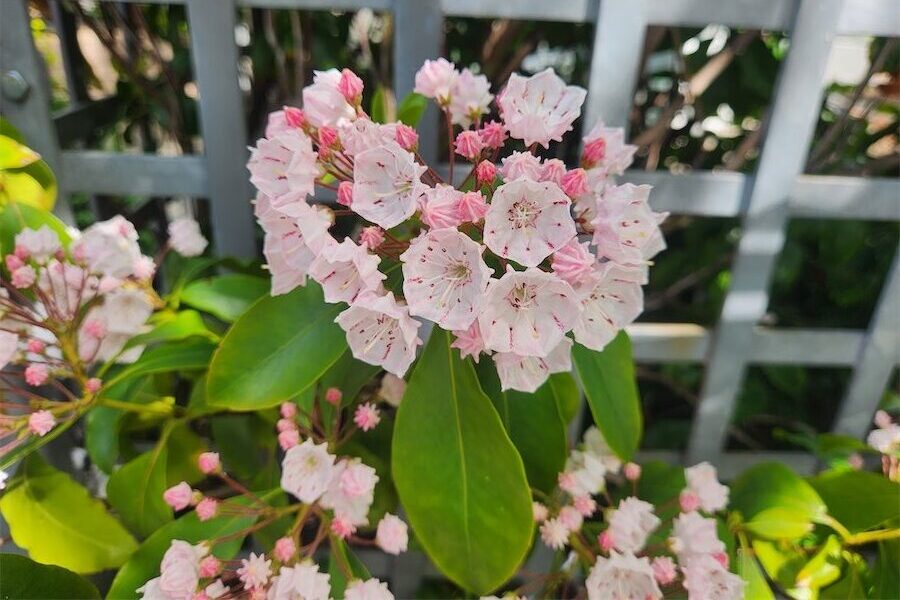
Mountain Laurel brings delicate pink spring flowers to the garden and is a tough evergreen well suited to Canberra’s cold climate, says gardening columnist JACKIE WARBURTON.




Leave a Reply