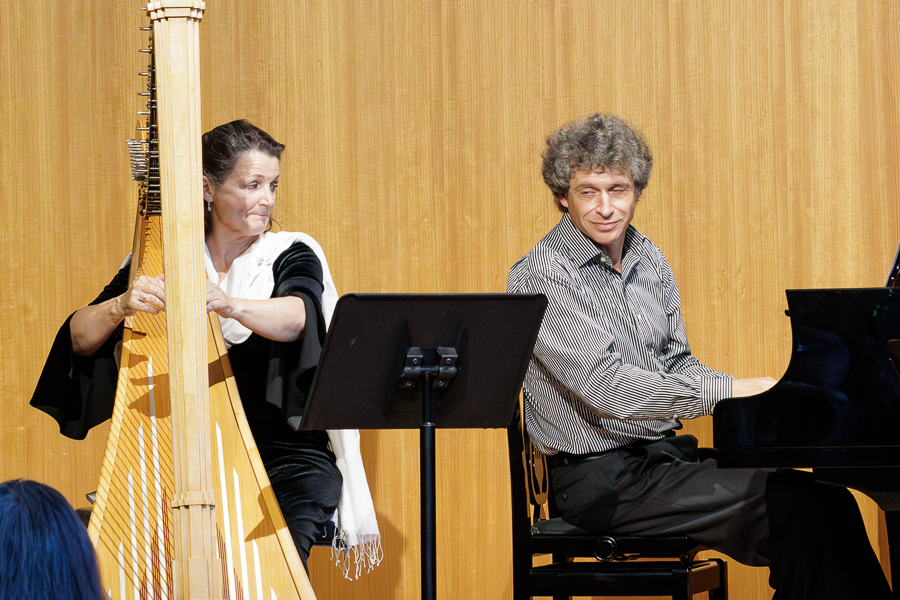
Music / Mystic, Harmonic Curves Series. At Wesley Music Centre, March 15. Reviewed by SARAH BYRNE.
This first in Alice Giles’ Harmonic Curves series of concerts for 2026 delivered an interesting and challenging program of largely expressionist (or expressionist-adjacent) music, including two world premieres, for combinations of harp (Giles), cello (David Pereira) and piano (Arnan Wiesel).
We had a soft opening, with the Schumann Fantasiestucke for cello and piano – though originally intended for clarinet and piano, Schumann gave his blessing to cello performances also, and the plangency of the cello suits the piece very well. Pereira’s long, legato bowing was as tender and expressive as the first movement requires.
The second movement began with more gravitas than expected but quickly morphed into the “light and lively” of the description, with some especially fun cello runs. Wiesel and Pereira came together more comfortably for the third movement, with a markedly assertive up-tempo delivery.
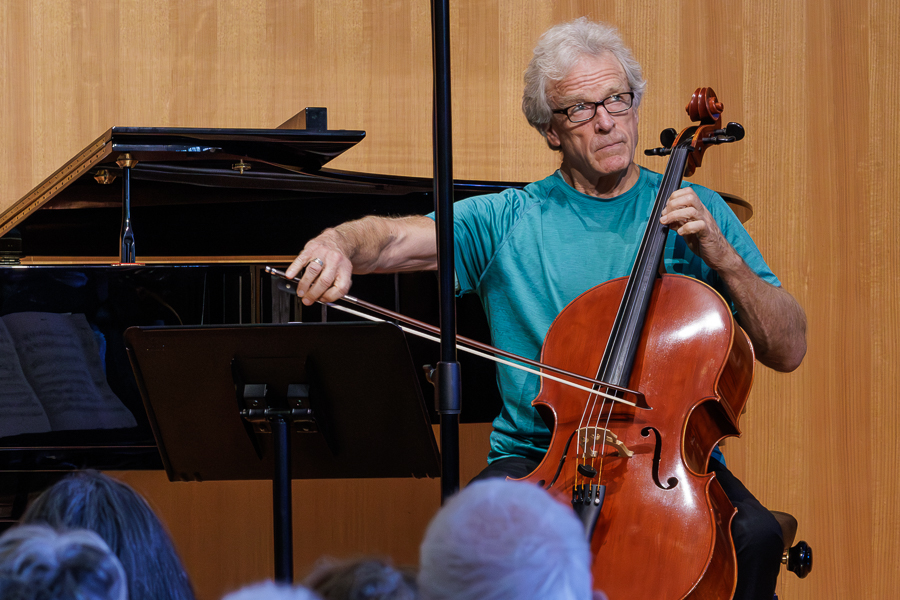
The afternoon’s centrepiece was the world premiere of Larry Sitsky’s piece The Four Worlds of the Kabbalah, originally composed for Giles and Pereira in 2015, who have been unable to perform it together until now. A difficult piece to describe, as befit the concert’s title of Mystic, Sitsky has been influenced by the theosophy of Scriabin in seeking to express four metaphysical aspects of the Kabbalah in a musical form, using occasional melodic themes surrounded by complex harmonies.
The first movement, World of Action and Labour, certainly evoked both concepts, with frenetic atonal phrases leavened by moments of liquid melody and conscious interplay between harp and cello. The second movement, World of Formation, gave us the cello at its deepest, counterpointed by the harp at its most celestial. This was where I picked up the Scriabin influence most. The third movement, World of Creation, was hectic, using every technique in the book for both sets of strings, and the fourth and briefest movement, World of Emanation, was more obviously melodious than those before, with rumbling cello beneath the uppermost notes of the harp.
This is not music you play to relax by; it requires concentration to listen to (though doubtless much more to perform), but it is fascinating and rewarding nevertheless.
Next were selections for harp and piano from Of the Seasons, by Dutch Impressionist (and auto-didact) Henri Zagwijn, falling under the Mystic rubric by virtue of his subscription to the Steiner school of anthroposophy, the belief that an objectively true spiritual world can be accessed by human sensory perception.
Summer was a pretty, lyrical piece with distinct echoes of Debussy; Autumn more melancholy – and melodic – liquid and languorous, with some wistful piano runs. Winter was elided in favour of Spring, brief and sprightly, with a triumphant coda.
We were then treated to our second world premiere, Pereira’s own Dreaming (cello and piano), originally written for a student of his, which can be seen in the wide range of techniques and approaches, percussive in places, and even accompanied by a bit of commentary around an apparent improvisational insertion from Weisel. This was followed by another short piece by Pereira, his Lullaby for Ivana, improvised for his baby daughter 17 years ago and later committed to paper with the addition of harp.
The encore, to my surprise, was the von Paradis Sicilienne, also the encore chosen by the Chamber Harmonie Cologne last week, this time for harp and cello. Always beautiful, it might almost have seemed schmaltzy given the austerity of other parts of the program, but it served as a lovely palate cleanser after the active listening required by the intriguing Sitsky piece especially.
News all day, every day at CityNewsQBN.com.au.


Leave a Reply