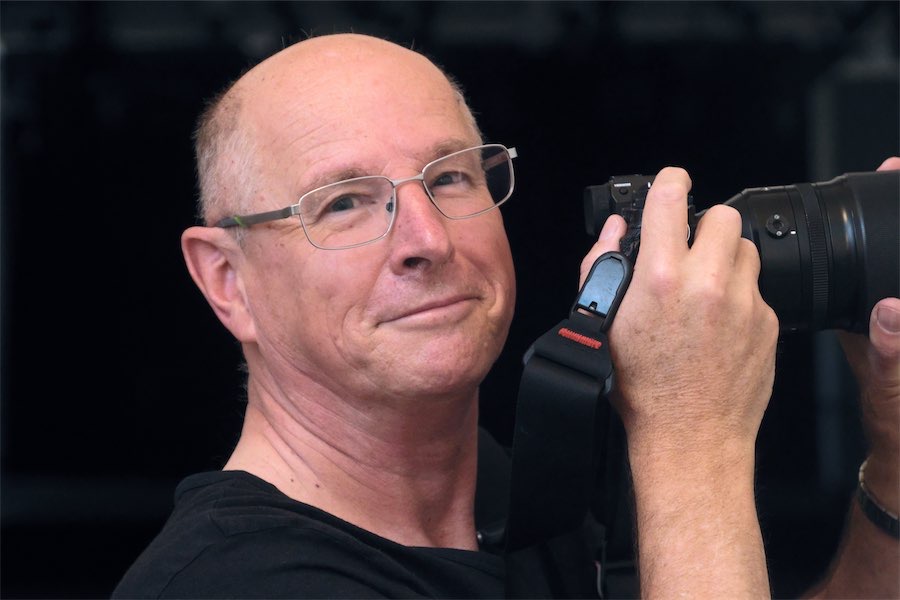
Dedicated music lovers will have noticed over the last several years that CityNews has been enlivening its music reviews with timely pictures of musicians in the heat of performance.
Most of these pictures are by well-known specialist music photographer Peter Hislop, who gives his time to documenting the musical life of the nation’s capital. Along with his associate photographer, Dalice Trost, he has long collaborated with CityNews while also guarding a priceless archive of music images.
“We are documentary observers,” he says, with characteristic understatement.
Now Hislop is keen to share his knowledge with the public and will present what he calls an “illustrated lecture”, hosted by the Wesley Music Centre.
He’s keeping the audience small – around 20 – to allow time for questions, but is open to repeating it later in the year if there’s demand.
“It’s mostly about educating musicians,” he tells me. “I’m often asked to snap concerts, but people don’t always understand what’s involved.”
The idea came when he was talking to the Australian Youth Orchestra and suggested a workshop as an educational initiative. In the end, they decided instrumentalists had production assistants to handle that work anyway.
Undeterred, Hislop realised that since most instrumentalists aspire to become soloists, they need to understand the impact a good photograph can have – and how to achieve it.
“A lot of musicians don’t rate the importance of a photograph, which can make a big difference to the documentation and promotion of a concert,” he says.
Canberra is a special case because, through his efforts, Hislop has been documenting the city’s musical life for decades. Now retired from full-time work, he’s eager to train a new generation of photographers.
But he’s adamant that his illustrated discussion at Wesley is not for photographers – he’ll run another workshop for them later. This one will be aimed at musicians, reviewers, arts organisations, and those who manage archives.
The skills of a music photographer, Hislop explains, range from formal shots – where the subject must look directly at the camera, as in the front covers he’s done for CityNews – to capturing dramatic or quirky moments that show music-making in action. Some images show a concert as a public event, while others respond to its creative spirit.
In the ACT, most concerts are held not in formal venues but in churches or community halls, where the background isn’t designed for photography – flat sightlines and vertical lighting are standard, often aimed at the altar rather than the performer.
Some venues, such as All Saints Anglican Church in Ainslie, offer ornate architecture; others, such as the Larry Sitsky Room at ANU or the Australian Centre for Christianity and Culture, feature expansive windows that draw focus.
Out of respect for performers, Hislop can’t move around too much. Usually clad in black, he’s almost invisible, working from the sides or a mezzanine. From the front row, he gets a low viewpoint and is limited to “letterbox compositions”; from higher up, he often contends with clutter.
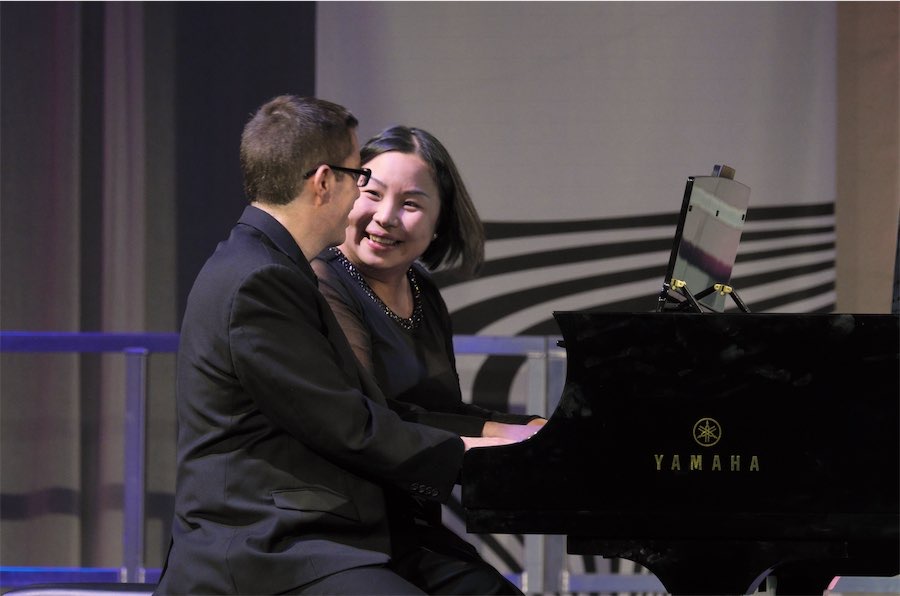
So, what does he find most challenging? Choirs are fine – though not very dynamic – but he says the hardest to photograph are artists with hair covering their faces or those showing no expression. A favourite image of pianists Stephanie and Edward Neeman, he notes, shows quite the opposite: pure animation.
Hislop says preparation is key – having a concert checklist and knowing the repertoire help achieve his aims: documentation, capturing performance in action, and highlighting emotion.
Snapping is only part of the job. Once the photographs are taken and a few are selected for outlets like CityNews – which often need them by 10am the next day – the daunting task of cataloguing begins. He’s developed his own system for managing that.
In his illustrated conversation, Hislop will also discuss issues such as permission to shoot minors, copyright, usage fees, how long photographs can be stored, and the reality that roughly 80 per cent of digital images — sometimes 500 from a single concert — are ultimately deleted.
Hislop began photographing concerts in 1975 and now documents an average of 150-200 events a year.
“Musicians have learnt to trust me to select for them,” he says.
Peter Hislop photography workshop, Wesley Music Centre, Forrest, January 28. Free, but registration is essential at wesleymusiccanberra.org.
News all day, every day at CityNewsQBN.com.au.




Leave a Reply