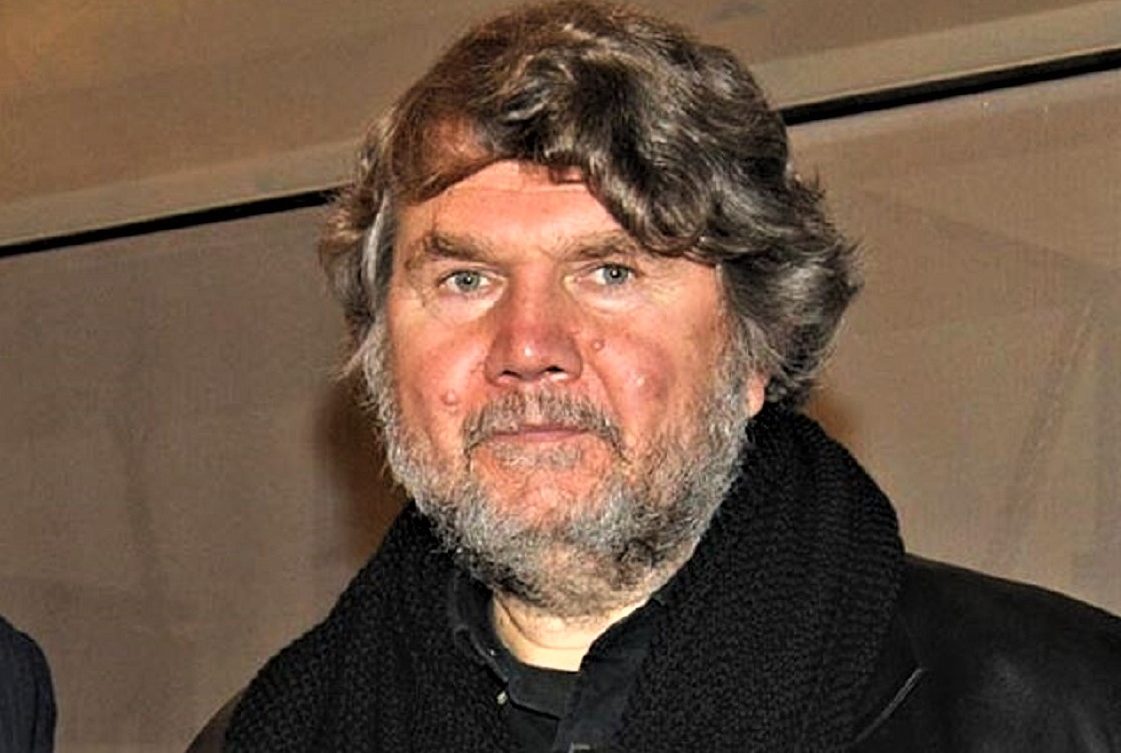
“The paper has abandoned the arts community and the arts community will abandon the paper.” After 46 years reviewing for “The Canberra Times”, leading Australian art critic and author SASHA GRISHIN is sent packing as the paper dumps its reviewers.
LATE in January 1977, I received a phone call from Ian Mathews introducing himself as the editor of “The Canberra Times” and inviting me to pop into the office for a chat.
The chat was as rewarding as it was surprising. I had just been appointed to the ANU, after studies in art history at the universities of Melbourne, Moscow, London and Oxford, to set up a Department of Art History, initially called the Fine Art Program.
Having a passion for contemporary art, it was an invitation too good to turn down, but being aged in my mid-twenties and with quite a bit on my plate, I asked if I could “appoint” specialist writers to write alongside me in dedicated areas such as crafts, photography and new media. Mathews, a man of great charm, intellect and integrity, readily agreed and my fruitful collaboration with “The Canberra Times” commenced. By fruitful, I mean it lasted for over 46 years and resulted in about 3500 exhibition critiques, articles, interviews and book reviews.
I have not researched the history of art critics writing for this paper, but I gather that it goes back about seven decades. Prof Donald Brook started writing for the paper in 1962 and my immediate predecessor was the distinguished painter and teacher Geoffrey de Groen.
On my watch, until very recently, there was an arts editor at the paper who fought on all fronts to give the arts a high profile in the nation’s capital and, within the paper, fought against the encroachments from other interest groups.
The Canberra commercial art gallery scene, as well as the institutional galleries – tertiary, local government and federal – thrived on the public discourse. I have heard many times, artists telling me that they exhibited or performed in Canberra because they knew that they would be reviewed, unlike in some other cities. Arts critics, theatre critics, music critics, dance critics and book reviewers were all professionally trained in their areas of expertise and clocked up many years of experience.
The paper’s journalists were great in attending media previews and interviewing artists, curators, directors, authors and musicians and drumming up publicity for the various events, but they were certainly not part of the critical discourse.
They informed readers that an event was on or a book had been published or an exhibition was about to open, but they were not in a position to assess it, evaluate it and inform professionally the newspaper’s audience.
“The Canberra Times” was at the centre of the city’s cultural hub and was relevant to the lives of Canberrans interested in the arts and that was, and remains, the majority of Canberrans.
My near annual trips abroad, to Europe and New York, meant that I was largely up to date with what was happening in the art world and writing for about 30 other art journals nationally and internationally did provide a critical context for what I was saying domestically.
On May 15 this year I received an email from “The Canberra Times” features editor that the paper is “cutting a lot of physical pages from the print product, and cutting down drastically on outside contributors across the board” and could I come in for a chat.
It sounded ominous and I had already heard of cuts in music, dance and theatre reviews. I anticipated that this would be the end of my career as an art critic for the paper. Friends debated whether after 46 years of faithful service and being paid only a symbolic remittance, I would be given a gold watch or some suggested a gold-coloured biro.
Both proved wrong and at our meeting I was told not to take it personally that this was purely a cost-cutting measure. From now on, there would be no reviews published in the paper, except on exceptional occasions where they could possibly call on me. Otherwise, they would only be publishing previews written by the paper’s reporters.
No watch, biro or even cup of tea, not even a word from the editor.
If there is no widespread outcry and only a few hundred subscribers will not renew their subscriptions and a few galleries will withdraw their limited advertising, the matter may end there. If there is a major outcry and the paper’s existence looks as if it is under threat, decisions may be reversed.
The paper has abandoned the arts community and the arts community will abandon the paper as it has become a paper without a soul. Personally, I’m saddened by these developments when 70 years of tradition is discarded for very minor savings, especially in this digital age where column space is no longer expensive.
For myself, there are other publishing outlets that I will keep on using and I will look out for others, however, I feel sad that the Canberra art scene has lost an important cultural voice in “The Canberra Times”.
This is an edited version from Sasha Grishin’s art blog (sashagrishin.com).
News all day, every day at CityNewsQBN.com.au.


Leave a Reply