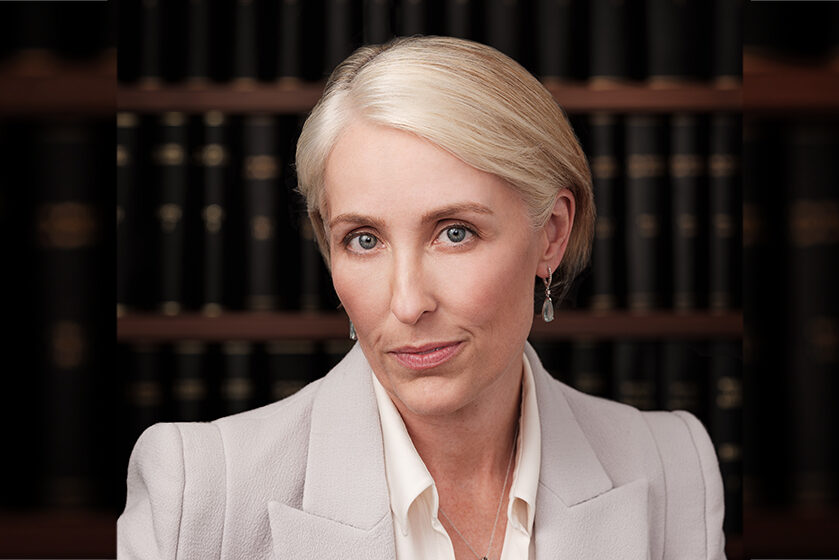
Justice Penelope Wass… “It has been galling that despite the broadside attack on my professional reputation, as a judge I was in no position to defend myself or explain publicly what had occurred.”
“The mere notion that anyone in an ODPP would not only ignore their own media guidelines but single out a sitting judge for a concocted false story beggared belief two years ago.” And the saga rolls on without resolution, reports HUGH SELBY.
Writing about sandpapergate, following the recent Usman Khawaja and David Warner disclosures of how widespread was the ball tampering practice and players’ knowledge of it, gifted sports writer Dean Bilton wrote: “As ever, the cover-up was worse than the crime.
Hugh Selby.
“The cavalier hubris of the whole affair, from conception to execution to deception, stung our sense of Australian exceptionalism and prompted an exceptional punishment.”
In those words he has summed up the conduct of players and a selector on the legal playing field in NSW who have ganged up these past two years to do over, and get off the field, an umpire who made the right call.
His summing up reveals the unfinished business in this legal match. What has happened is a continuing disgrace that continues to sting, but those responsible have, to date, got away with it.
In Greek tragedy, a hero’s hubris – their self congratulation and arrogance – almost always provoked nemesis – a severe divine punishment that brought them down to earth.
So let’s take a lit candle into the darkened dressing room and see if we can set alight the wick that will belatedly shine on probity.
The reputation of the NSW judiciary – our cohort of umpires – is being undermined by the conduct, since October 2024, of both the NSW Director of Public Prosecutions (DPP), Sally Dowling SC, and the NSW Attorney-General (AG), Michael Daley.
What began as an indefensible, planned media attack by the NSW office of the DPP on a sitting District Court judge has now widened to the thwarting of a Parliamentary Committee inquiry by the non-attendance of key witnesses and a recent complaint by the AG against that judge to the Judicial Commission.
The cover up, yet again, is worse than the crime.
Along the way there have been many errors. To name some:
The judge, Penelope Wass SC, under fire from the attack dog media (an unexpected, undeserved, unpleasant and stressful situation) contacted the defence lawyers in several other matters before her with the result that there was an undeniable “apprehension of bias” such that she could not hear those cases. She was wrong to refuse to recuse herself.
A Parliamentary Committee Inquiry looked into how the “attack dog media” event was set up. In their majority findings they made leaps too far: suspicion, however strong, is not proof.
The AG invited the DPP to recommend who should review the Parliamentary Committee inquiry that made adverse findings against her. This was a conflict of interest that ought to have been obvious to both the AG and the DPP.
NSW Crown prosecutors and DPPs from elsewhere in Australia gave public support to the NSW DPP, support that was given in the absence of evidence to justify it (see the alarming report in The Australian, November 10, at how some of those DPPs behaved. As one commentator observed: “They should hang their heads in shame.”).
Neither the DPP nor the AG have publicly deplored how the attack dog media was unleashed, namely by the sending from the ODPP to Radio 2GB of misleading and inflammatory material about Judge Wass’s handling of the sentencing of an indigenous offender.
Often enough a quick summary gets across the gravity of what has happened, and is happening. Not so in this instance.
The background story needs to be understood so that both the extent of the egregious conduct by the DPP and the AG, and what investigative powers are necessary, can be grasped and remembered.
In her introduction she sets out what happened in court:
“1. On 25 October 2024, an Indigenous child X and I were the subject of comment by Ben Fordham and Ray Hadley in their respective broadcasts on radio 2GB (the 2GB story). The 2GB story was substantively republished by (a) newspaper and rebroadcast on (a news channel). It has also been republished on numerous social media platforms.
The 2GB story criticised my decision on 11 October 2024 to allow X to present his Welcome to Country statement (the Welcome) during sentence proceedings conducted by me under the Children (Criminal Proceedings) Act 1987 (the Act) in the District Court, sitting at Taree.
Although X was not named in any media publication, the 2GB story included information that could lead to the identification of X, particularly in the small rural community of Taree…
Mr Fordham and Mr Hadley broadcast the 2GB story, armed with information on… the case, provided by the ODPP, including, but not limited to, information contained in an internal ODPP document stating X’s name. It was not an accidental disclosure. The information was provided deliberately, reckless as to the identification of X and in breach of ODPP guidelines on dealing with the media(emphasis added for this article).
The information was provided by the ODPP to 2GB for no discernible proper purpose. The case bore no significant public interest. Prior to the disclosure by the ODPP, no member of the media had taken an interest in the case, and no member of the media was present in court during the proceedings. There had been no departure from any normal procedure. The Welcome took place as part of evidence with prior notice to, and the consent of, both parties. X had committed a serious crime and received the maximum sentence available under the Act. Neither the decision to proceed under the Act, nor the sentence itself, was appealed by either party.”
That introduction lays bare the essential aspects of the serious misconduct by one or persons within the ODPP.
That this happened demeans the ODPP. It damages the essential reciprocity of professional trust between the ODPP and the courts. It traduced the reputation of Judge Wass and, given how it occurred, there is more than a sniff of malice.
Those readers who are asking: “But why would anyone from the ODPP deliberately traduce a sitting judge?” might look at the chronology that Judge Wass has attached to a statement made to an ODPP investigation (sic) that is appendix 5 in her submission. The content of that chronology is revealing: instances of prior judicial criticism of the ODPP.
We take it for granted that our judicial officers and tribunal members are competent and honest. For their part those decision makers need to be able to trust those who appear before them.
The absence of that trust, be it advocate distrust in a decision maker, or decision maker distrust of an advocate, has significant, adverse consequences for the conduct of a hearing. The atmosphere in the hearing room will be guarded. The hearing will take longer because every point has to be detailed and put on the record.
As a result of the ODPP misreporting to selected media about Judge Wass’s sentencing court, every trial judge could have reasonable concerns about some similar shock jock media ambush from the ODPP when he, she, or they, incurred the ire of someone within ODPP management.
That sentiment turns our criminal justice system upside down. The mere notion that anyone in an ODPP would not only ignore their own media guidelines but single out a sitting judge for a concocted false story beggared belief two years ago.
The NSW Director of Public Prosecutions Sally Dowling SC… Her organisation had breached its obligations in a serious way. The buck stopped with her.
To my mind – which is out of touch with current notions about leadership – Ms Dowling, as DPP, had three tasks when told of the radio reporting. First, she had to immediately issue an apology for the information being sent from the ODPP and deplore the explicit damage done not only to Judge Wass but to the NSW Courts.
Second, she had to notify the AG of the misconduct and her response.
Third, she had to take full responsibility (whether or not she had any fore-knowledge of the misconduct) and immediately resign as DPP.
To be clear about why she had to resign: she headed an independent, powerful, statutory body with clear obligations to the courts. Her salary, as with the salary of any CEO, includes a component for “taking the fall”. Her organisation had breached its obligations in a serious way. The buck stopped with her.
Had she done the right thing two years ago it would have been appropriate for the government, after a decent interval, to have appointed her to something else, if that is what she wished. (That, doubtless, is what will happen with former ACT Minister, Yvette Berry. Despite there being no evidence to link her with the misconduct, she took the blame for her staffer’s successful efforts to derail the tender process for the building works at the Campbell school.)
But instead of following a long and well proven custom the DPP, and the AG, have not only dug in, but the AG has taken steps to cast the victim, Judge Wass, as the person at fault.
Two years later we are much worse off. This is because the systems expected to deal with the ODPP misconduct have failed, one and all.
Futile steps followed by Judge Wass
Judge Wass recounts in the opening summary of her submission that she reported the media misreporting to the AG, the shadow AG, the Chief Judge of the District Court, a detective superintendent of the NSW Police, the ODPP and the law firm investigators engaged by the ODPP.
Queries were raised by the judge, to little or no effect, as to the circumstances in which the disclosure occurred (that is, I expect, such basic matters as to who was present, what was said, who made the decision etcetera). Attempts were made by government to enquire through the Budget Estimates Committee into what occurred, again with little progress.
So, to be clear, the rightly aggrieved judge reported to all those entities that – if, and only if, there was transparent, full co-operation from all those at the ODPP – might have quickly resolved this matter.
People within the ODPP with actual knowledge of how, and by whom, a decision was made to send the false information to media either declined to co-operate with inquiries, or the inquirers declined to share with the judge any information.
There were no processes to compel them to do so.
The DPP, having admitted to attending the all-important media team meeting, claimed and claims to have been otherwise preoccupied with her phone. Leaving aside the question of why bother to attend if you are too busy, why has there been no report of her phone records for that day? This is a routine part of so many criminal inquiries that the failure to supply them invites suspicion that such records may not support her explanation.
Judge Wass also lodged a complaint with the Legal Services Commissioner (OLSC). The DPP, as a barrister, is under their jurisdiction. The results have not been published.
The OLSC enforces the Legal Profession Uniform Conduct (Barristers) Rules 2015 which apply to the DPP, she being “a barrister who holds a statutory office”.
The following rules are directly applicable:
A barrister has an overriding duty to the court to act with independence in the interests of the administration of justice; and,
A barrister must not publish or take any step towards the publication of any material concerning any proceeding which:
(a) is known to the barrister to be inaccurate, ….or,
(c) appears to or does express the opinion of the barrister on the merits of a current or potential proceeding or on any issue arising in such a proceeding, other than in the course of genuine educational or academic discussion on matters of law.
It has not been disclosed as to whether the OLSC used its investigatory powers to compel statements from any lawyers in the ODPP. In any event, the section does not catch non-lawyer staff at the ODPP.
Similarly, we do not know if an OLSC investigator went to the ODPP offices and while there required one or more persons to answer questions.
Despite the inability of the various inquiries to determine what happened there is more than an itch that won’t go away. At para 52 of Judge Wass’s submission there is the following (which I have edited):
“ On 5 May 2025, I received a phone call from my solicitor… He told me that he had received a telephone call from the managing director of Nine Radio, the owner of 2GB. He was looking for legal representation for his “friend”, the media officer at the ODPP. He told my solicitor that the ODPP media officer had disclosed the material to 2GB on instructions from Ms Dowling…”.
Following Judge Wass making her submission to the Parliamentary Committee inquiry the DPP took successful action to be allowed to use that submission as evidence in later court matters.
See Director of Public Prosecutions (NSW) v President of the Legislative Council of New South Wales [2026] NSWCA 20.
For our purposes paragraph 13 of that judgment is important: “…it is highly unusual for a sitting judicial officer to make a submission to a Parliamentary Committee bearing upon the conduct of any particular litigant before the judicial officer.
“None of the parties or interveners identified any comparable case, and we are aware of none. It is axiomatic that any judicial officer must constantly be concerned to ensure that justice is and has the appearance of being administered impartially.
“Although we make no comment as to the Judge’s Submission, one of the incidents of holding judicial office is the need to refrain from making statements which are capable of giving rise to a perception that the judge may not deal with matters before that judge impartially.”
Quite so; however, what Judge Wass had to respond to was exceptional. As she set out in that submission:
“91. It has been galling that despite the broadside attack on my professional reputation, as a judge I was in no position to defend myself or explain publicly what had occurred. Mr Fordham’s call to me in the 2GB story to come on air afterwards and explain myself, left unanswered, left those untrue statements unchallenged. That made it more likely to be accepted by anyone who did not know that judges largely remain publicly silent in the face of even the most strident criticism. Indeed, internet comments on my failure to respond directly to the media (which I did not think appropriate) or through the court (which I sought to have occur without success) were taken as evidence that the 2GB story was true. To my knowledge, no one from the ODPP has come forward to dispel any miscommunication that may have occurred, in further breach of the ODPP Guidelines.”
The AG loses his way
The NSW AG has, so it is reported, lodged a complaint against Judge Wass with the Judicial Commission.
According to The Australian last week the AG wants the Judicial Commission to investigate “the propriety of the judge’s conduct” which he says, “departs from standards of judicial impartiality”.
There is no basis to allege that Judge Wass has done anything warranting her removal. However, theNSW Judicial Officers Act 1986, section 15, provides, in part, for examination of a complaint if the matter may affect or may have affected the performance of judicial or official duties by the officer.
There is nothing in the public space that brings her actions within the scope of that provision.
So, to ask it again, what was the purpose of the AG making his belated complaint? The AG has declined to explain.
We don’t know; however, we can get guidance as to the correctness of Judge Wass’s response to the media attack from a Judicial Commission Handbook, freely available on the web to anyone (including the AG) as to what judges can and cannot do. The most recent update is mid 2026. It is a collection of articles by past and present judicial officers. Here are some relevant extracts. There are not many because Judge Wass’s situation was not foreseen.
Former Justice Ron Sackville wrote in his article: “Lawyers and Judges: the fifth attribute” that, “In 1987, Sir Gerard Brennan (later to be Chief Justice of the High Court) identified four essential requirements for a practising lawyer: legal competence of a high order; a willingness to serve the community; professional commitment going well beyond the call of strict duty; and (of course) personal integrity. To Sir Gerard’s list I would add a fifth attribute required of lawyers (including judicial officers) in a functioning democracy: courage and resilience in the face of public criticism and disapproval.”
Former NSW Chief Justice Tom Bathurst wrote in his article: “Trust in the Judiciary” that, “Each and every judge must strive to build trust where it is lacking and strengthen trust where it exists.”
In another article in the collection, “Community confidence in the justice system: the role of public opinion”, Bathurst made the following two observations that are significant for understanding what’s going on in NSW now: “If judges do not take an active role in explaining what we do and why, criticisms of the administration of justice are likely to go unanswered and thus be accepted by many as unanswerable. Community confidence in the judicial system is too important to allow that to occur”; and, “Courts have nothing to fear, and indeed much to gain from informed, honest and balanced criticism. Nor am I saying that judges never get it wrong. However, the nature of the judicial role, in my view, entails that so long as judges are doing their work conscientiously and with integrity, criticism should be directed toward the decision or the relevant legal principle, as opposed to the judge personally”.
Exceptional crises require exceptional responses. Judge Wass contacted all those who ought to have had the means to determine the what, the why, and the by whom. The available means were not fit for purpose.
Her submission to the Parliamentary Committee is comprehensive and well written. It needs a larger audience. In all the circumstances, and applying former Justice Sackville’s remark, she has shown the necessary courage and resilience in the face of public criticism and disapproval.
Let those responsible be accountable
I pose these questions:
Why did Sally Dowling SC, as DPP, not offer a quick and proper apology to Judge Penelope Wass SC and the NSW Courts for her office providing an indefensible, distorted story to radio shock jocks about the unremarkable, in court actions of the judge?
Why has the NSW Attorney General, Michael Daley, never issued a statement both deploring the ODPP action in contacting media with the false story AND re-affirming the fundamental requirement that the ODPP must support the workings of our courts?
Why did some of those present at the media meeting, attended by the DPP, at which the decision was made to pass on the material to the shock jock, decline to make formal statements to police investigators and/or appear before a Parliamentary Committee inquiring into the matter?
Why did the DPP not offer her phone for forensic analysis to back up her claim that her focus during the media meeting was on using her phone?
Why did the AG consult with the DPP about who should “review” the adverse report of the Parliamentary Committee and then appoint a person “acceptable” to the DPP, when such actions carry the lasting taint of a predisposition to a biased outcome?
Why is the AG so intent on vilifying an able District Court Judge who was the victim of an indefensible attack originating from the office of the DPP, an office supposedly dedicated to the highest standards of professionalism in prosecuting cases before the courts? Let’s not forget that Judge Wass complained to him from the get go. He did nothing.
The candle that we took on this journey into the darkness has nearly burned away. Hopefully, every reader now grasps that this matter is a lot more than mere bitching: it goes to the core of our criminal justice system.
An exceptional attack warrants an exceptional response. Both the AG and the DPP must go.
She, not because it has been proved that she facilitated the attack-dog media – it hasn’t been proved – but because her office has been brought into disrepute.
He, because he did nothing when he should have, and thereafter at every step he has shown an inability, and no interest, in maintaining the credibility of our criminal justice system.
Judge Wass could then go back to her job, competently conducting criminal trials. No one has suggested that she holds an animus towards the prosecutors as a group. After all, she was once a prosecutor, one good enough to be appointed as a judge.
Hugh Selby is a former barrister and the CityNews legal affairs columnist.
DAVID TURNBULL marks former ACT politician Michael Moore's 20th anniversary as a CityNews political columnist with this remarkable profile. If you think you know Michael Moore… you don't.






Leave a Reply