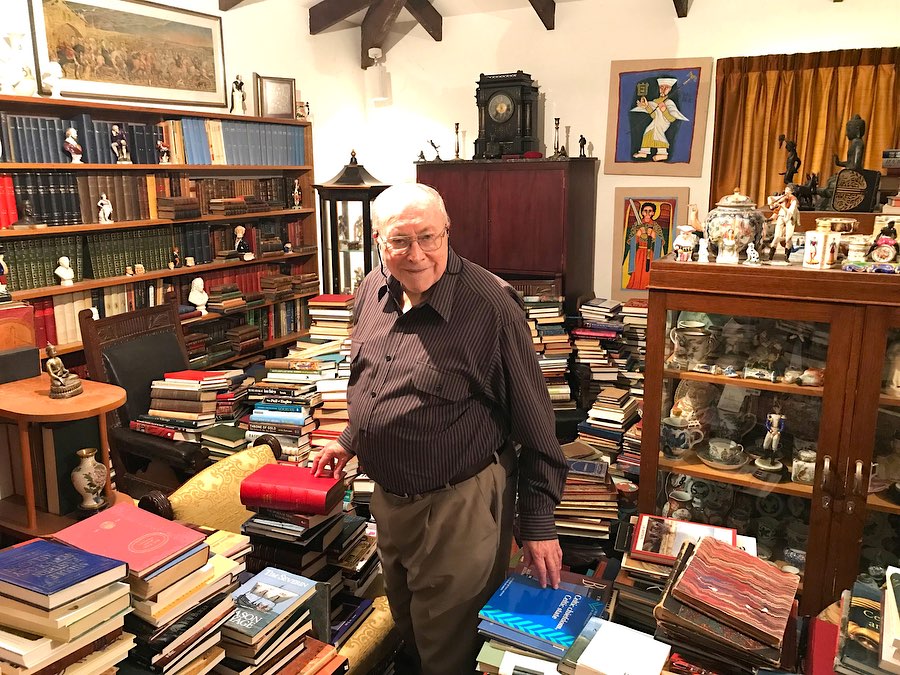
Dr Niel Gunson… accumulated 100,000 volumes, with a particular emphasis on the missionary and ethnographic history of Polynesia and broad coverage of Australian, indigenous and local history.
Reviewer COLIN STEELE looks at a new volume on passionate book collectors, not hoarders, with some fascinating local connections.
“I am never near the head of the queue. You’d need to be there and queuing before dawn,” writes a Sydney attendee of the September Lifeline Book Fair.
“I was in about the first third. I did a quick count of my surroundings and extrapolated to about a thousand when the starting pistol went off.
“And if you are thinking old folks, think again. Young and old. Prams and people in disability scooters. Bags, boxes, trolleys, carts”.
Most, “vehemently deny the fact that collecting is really hoarding”.
Australian Book Collectors – Series Four, edited by Gary Kent and Charles Stitz (Longueville Media, $95), in which Canberrans feature in the 627 pages, amply demonstrates that book collecting is often much more than hoarding.
The first three series of Australian Book Collectors, which comprise five volumes, documented the lives of more than
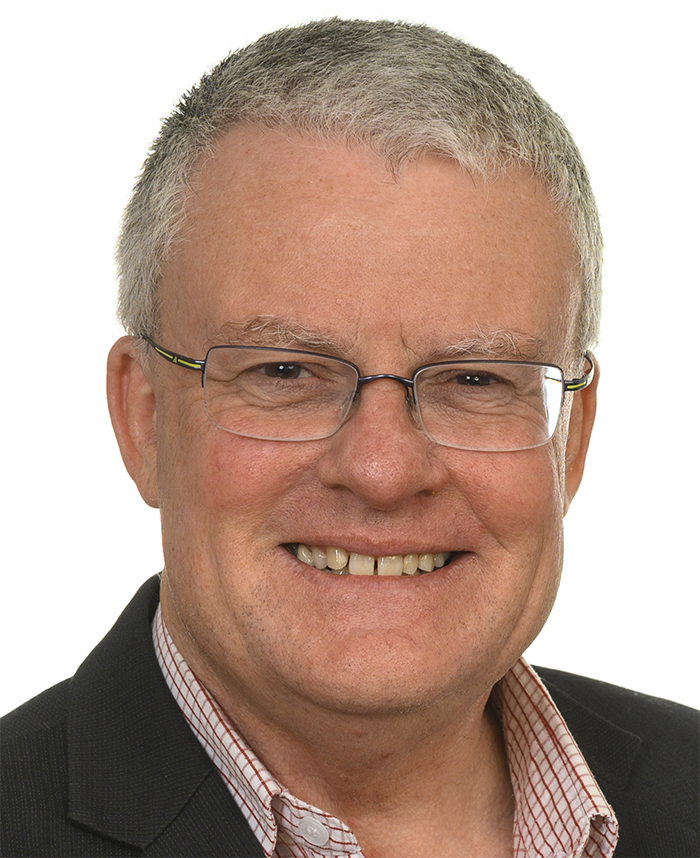
Author and editor Gary Kent.
300 Australian and overseas collectors, detailing their significant collections of Australiana. This latest volume, comprising 33 collector biographies, covers a wide spectrum of individuals from an English aristocrat to a Sydney bootmaker.
The first five volumes were compiled by Charles Stitz, a retired Sydney-based lawyer, now in his 90s, but still an antiquarian bookseller in Albury.
For the latest volume, Charles acknowledges the major role assumed by Gary Kent, a figure well known in Canberra cultural and political circles with positions including chair of the Friends of the National Library, president of the National Trust (ACT) and president of the Canberra and District Historical Society.
Kent provides, in a 40-page chapter, the first detailed analysis of Barry Humphries lifelong book collecting.
Humphries tried to visit bookshops in every town where he toured. His Lizzie Spender is quoted as saying the 2025 auction sales were necessitated by financial needs.
“Some husbands contribute to pension funds, but Barry definitely didn’t. His pension funds were his books and pictures. It was always understood that we’d try to sell nothing in his lifetime, but he knew I’d eventually have to sell them”. The first London auction sale reached over £1.3 million ($A2.5 million), the second £615,000 ($1.2 million).
A Canberran who also collected on a big scale was Dr Niel Gunson (1930- 2023).
Scott Coleman documents Gunson’s life and collection which, by his death, filled not only a large house in Hackett, its double garage, as well as a purpose-built library attached to the house.
Gunson eventually accumulated 100,000 volumes, with a particular emphasis on the missionary and ethnographic history of Polynesia and broad coverage of Australian, indigenous and local history.
He left the bulk of his estate to the ANU, comprising one of the largest donations to the ANU library and archives. Coleman reflects, Gunson during his life transformed from “a bibliophile into a bibliomaniac”
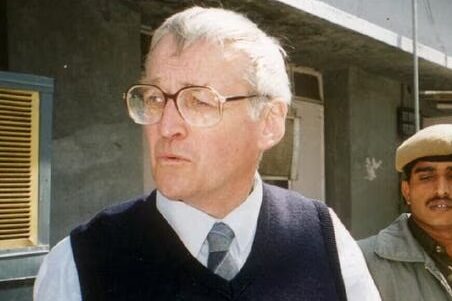
Canberra collector Dr Vincent Flynn… his 15,000 books, specialising in European history, religion and classics, were mostly held in two large warehouses in Queanbeyan.
Another remarkable Canberra collector, and a decidedly controversial figure as Kent and Stitz reveal, was ANU graduate, Dr Vincent Flynn, heir to a Tattersalls fortune, who died in 2016.
Flynn had a house in Campbell, but also in 2010 bought Westridge House in Yarralumla, which sold after his death for $6 million, then a Canberra record.
Flynn’s collection of 15,000 books, specialising in European history, religion and classics, was mostly held in two large warehouses in Queanbeyan, which, after his death I was able to visit.
The warehouses also contained collections of ceramics, Seiko watches, Indian coins and even hundreds of ties and suitcases, both latter categories being sent to Canberra charity shops.
His vintage cars collection, including160 Rover cars, did not sell well in a Queanbeyan auction as many had not been roadworthy for decades. The cars when shipped in containers from England were packed with books!
Two other Canberra figures featured are Geoff Burkhardt and Patrick Walters. Burkhardt’s collection totalled around 5000, largely non-fiction, books on Australian education, economics and social history, while Patrick Walters assembled a superb collection of books on World War I before its dispersal.
Space limitations preclude documenting some of the other fascinating collectors, such as Chris Browne, Charles Bateson, Richard Clough and Viscount Eccles
There are more male than female collectors covered, for a variety of historical and cultural reasons, although Viscount Eccles’ second wife, Mary Hyde, was one of America’s greatest book collectors of the 20th century.
Eminent Australian book historian and bookseller Jonathan Wantrup notes in the preface that “book collecting is essentially a solitary pursuit but is paradoxically one that craves a community”.
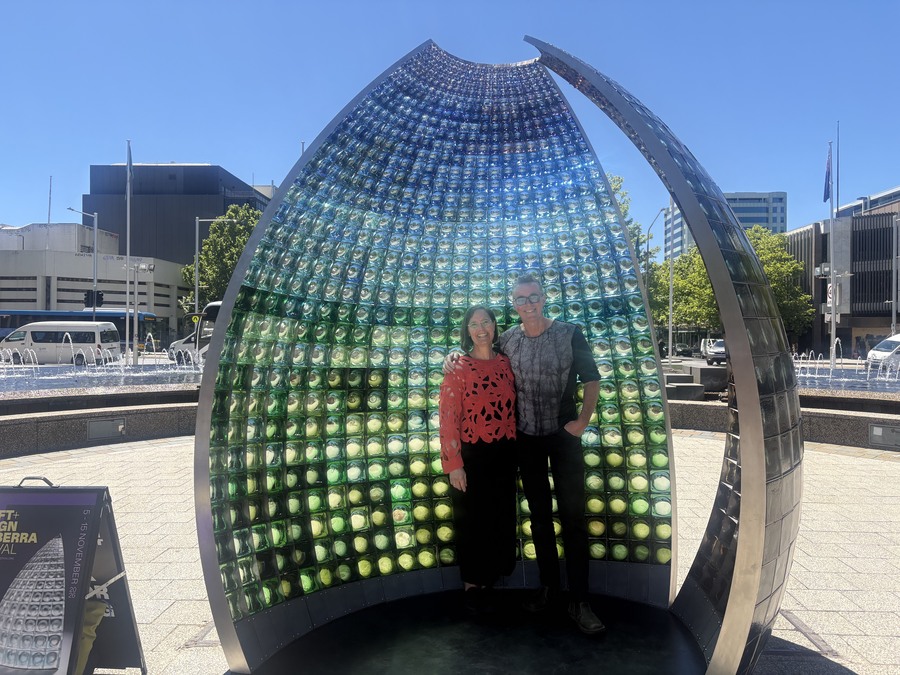
Media and members of the public welcomed the return of the Craft + Design Canberra Festival on Thursday morning as Civic Square came to life with public art installations, reports arts editor HELEN MUSA.
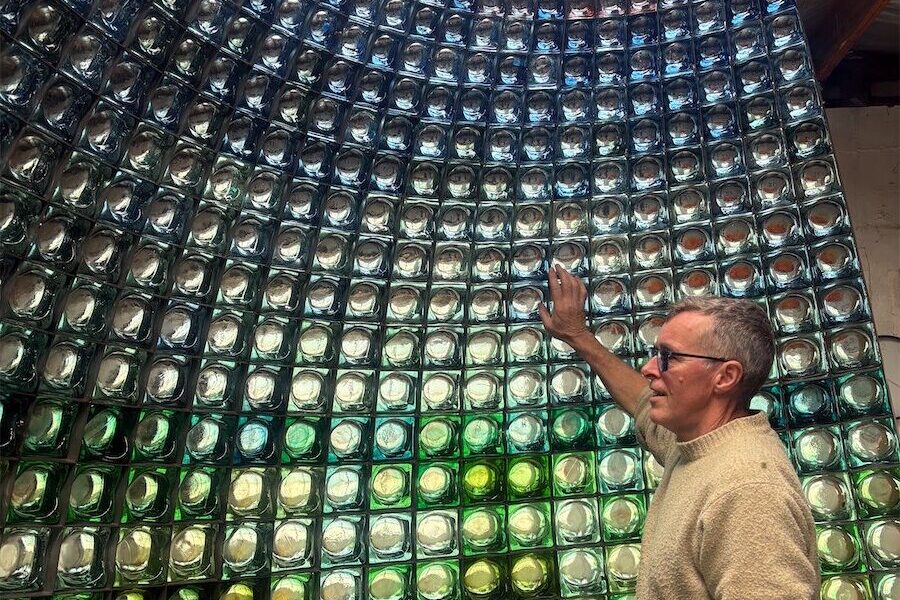
Queanbeyan glass artist Matt Curtis has spent decades exploring the possibilities of glass, but his newest work, Salvaged Light, is also a challenge to the way we think about waste.
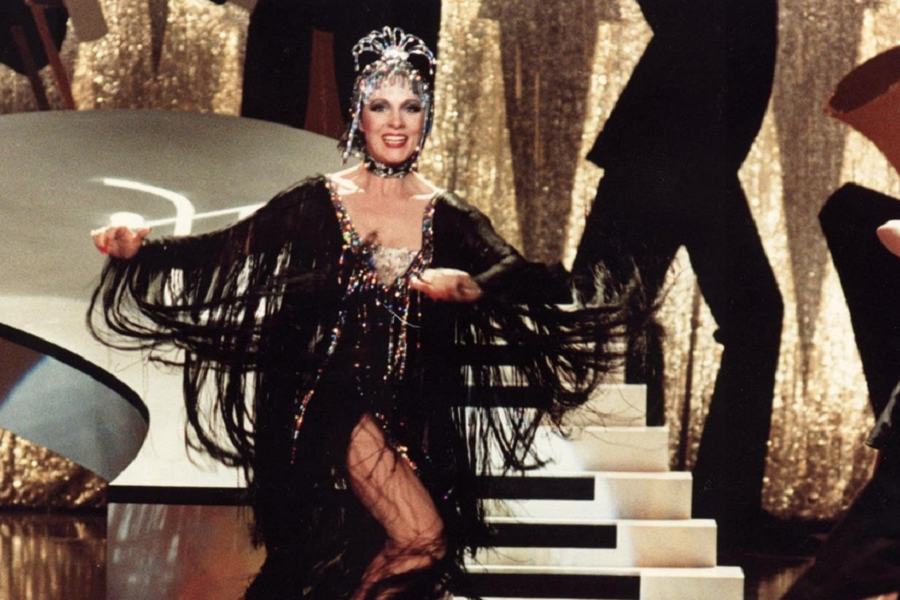
There's a dose of Hollywood nostalgia, a former arts minister's estate auction and a taste of ancient Greek winemaking in arts editor HELEN MUSA's latest "Artsweek".


Leave a Reply