Craft writer MEREDITH HINCHLIFFE traces the laborious renovation of the feted, though fated, Hanna Cabinet and the role a Canberra company had in saving it after being damaged by floodwater.
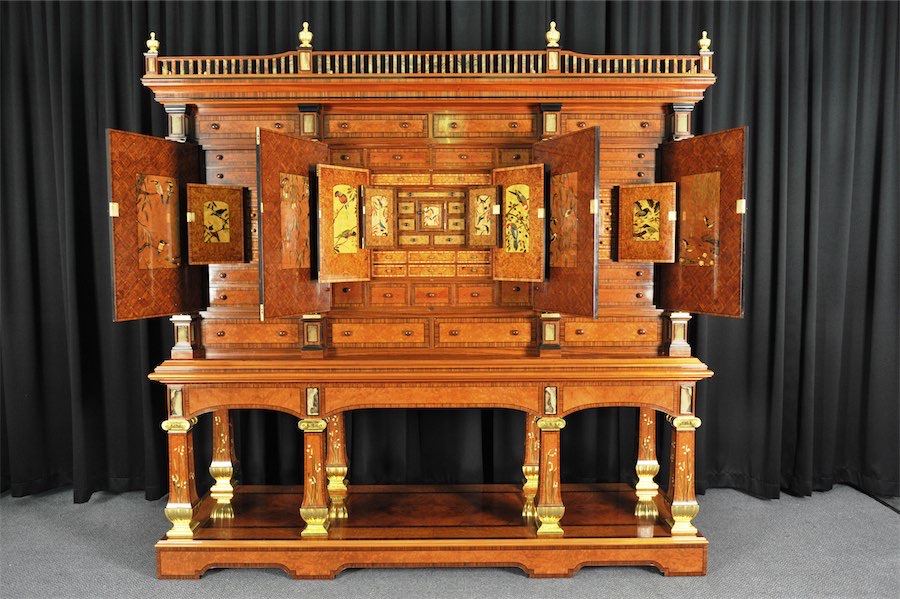
Many readers will remember the Hannah Cabinet that filled the front gallery at Bungendore Wood Works a few years ago, a six-year labour of love for its maker Geoff Hannah.
The Cabinet was returned to Hannah’s home town Lismore where, after major fund raising and with assistance from the maker, it became the centrepiece of the regional gallery.
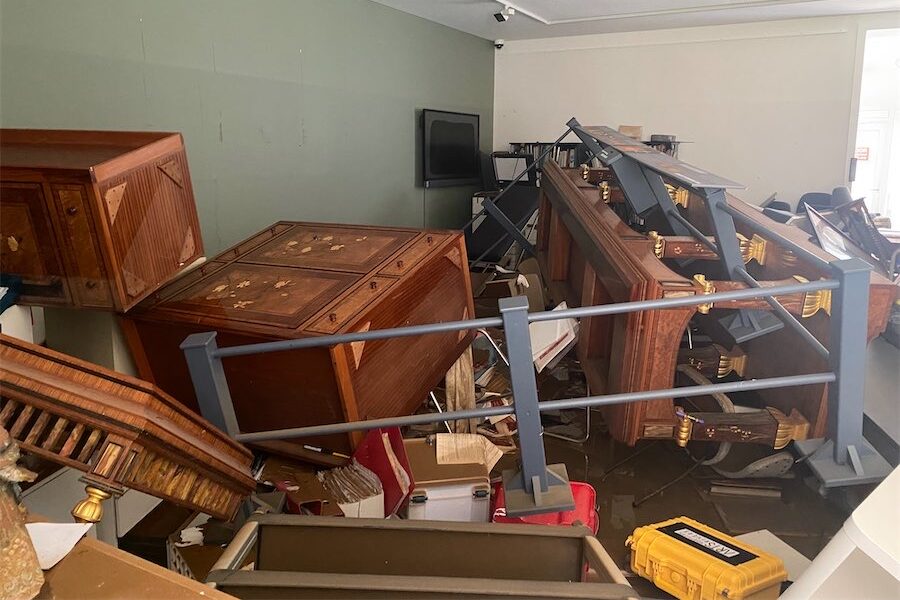
But on February 28, 2022, after heavy rain, the Lismore river reached its highest on record (14.4 metres) and caused catastrophic damage all over the district.
The cabinet had been placed on the third floor, the highest position. But the water reached it and knocked it over completely.
The cabinet had originally been made in Lismore by Hannah and after major fundraising and with assistance from the maker, it became the centrepiece of the gallery’s collection.
Five days after the flood, International Art Services brought the pieces in climate-controlled trucks to Patinations Furniture Conservation Services in Canberra, where it was held at 2°C for several weeks to stop the mould. Nevertheless, there were marks from mould which spread over the timber pieces.
Greg Peters from Patinations in Fyshwick explained that it was full of silt, sewage, tan bark, mud and other rubbish.
The drawers – and there were many – acted as wine barrels, holding the water. The gilding and veneers were peeling off while most of the stone in the door fronts and on the drawer fronts survived.
Fortunately, Hannah had listened to Peters give a talk at Bungendore Wood Works, where he encouraged furniture makers to use animal glue and French polishing, rather than PVC and polyurethane and had followed this advice, so the joints and finishes could all be replaced. Everything was taken apart and rebuilt. The cabinet had been made to break into six parts, and this has made the conservation and restoration a little easier.
Hannah, now living out of Armidale, NSW, is overseeing the process of conservation and recovery. The timber is being re-French polished, and re-gilded.
Peters expects that less than five per cent will ultimately remain unsaved, but that the average viewer will not notice this.
“The final piece will reflect the flood,” he tells me.
When I visited Patinations, the centre top section of the cabinet was undergoing the transformation process.
Once finished, it will go back to Lismore where the time-consuming French polishing will begin.
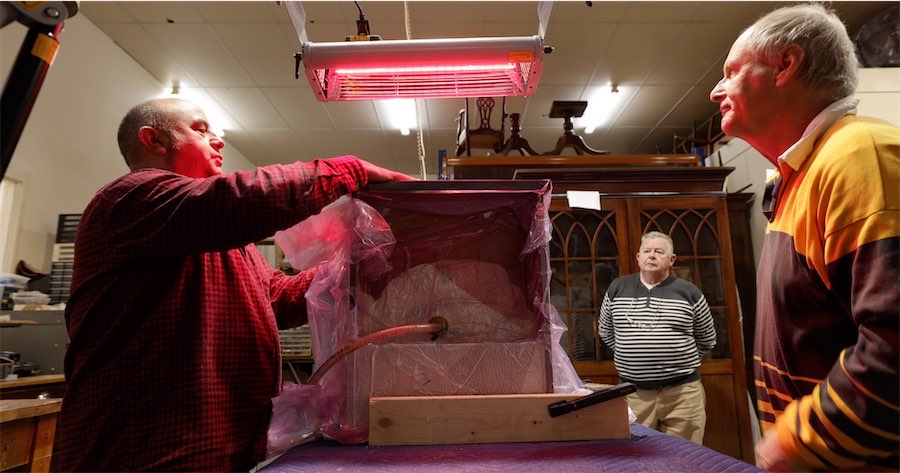
“The process of conservation is a mix of traditional 18th and 19th century techniques and state-of-the-art conservation,” Peters says.
“Vacuuming will suck the moisture out and heat lamps dry the timber. There is considerable staining around all the holes where screws were used, and we are removing all the marks, too.”
It has been a massive and expensive undertaking to return it to its original state. There has been insurance money, but also conservators have made a huge contribution.
Staff at Patinations have worked on it almost solely since the parts arrived in Canberra in March 2022. While they will be finished soon, Peters anticipates work will not be completed in Lismore until late next year.
News all day, every day at CityNewsQBN.com.au.





Leave a Reply