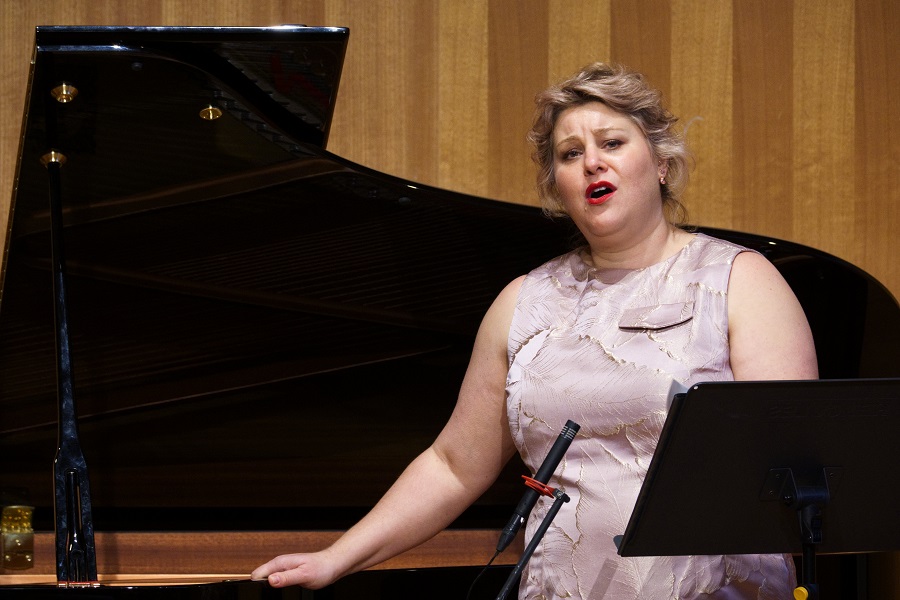
Music / Art Song Canberra presents Eternity, Sonia Anfiloff and Alan Hicks, Wesley Music Centre. August 2. Reviewed by DAVID WHITBREAD
Soprano Sonia Anfiloff went to Melba High School and chose music by Dame Nellie Melbas personal composer, Sir Landon Ronald, for her first song cycle.
The five delightful songs were a grand opener, exultant and romantic in the best of English art song tradition. They demonstrated Sonias pleasingly agile and true dramatic voice, her sparkling diction and her exceptional control.
This was a recital with both performers on top of their game, as art song must. Pianist Alan Hicks ever supportive and masterful accompaniments never overshadowed Sonias voice, even when it went to her warm lower register in gentle moments.
Eternity was a theme wending its way through all works on this always interesting program. Lyrics from poets like de la Mare, Yeats, Shelley, Blake, Longfellow and others were set to music by the likes of Roger Quilter, Amy Beach, Cecil Armstrong Gibbs, Benjamin Britten, Liza Lehmann and Australian Linda Phillips.
But perhaps the most exciting discovery was the magnificent song settings of English composer Rebecca Clarke. Incredibly diverse art songs explored all emotions across the seven selections here. In the best art song, the lyrics are as important as the music – and Anfiloff explained that the composer can often lend a different reading to the words according to how they colour them. This is why the collaboration between voice and piano must be equal.
Rebecca Clarke used various texts and many different techniques, from conversation between soloist and accompanist, to almost cinematic atmospherics on the piano with voice punctuation or storytelling. That was particularly so in piano showpiece Tiger Tiger. But also, in Binnorie – A ballad, one of those crazy long Scottish poems with many tragic and histrionic moments that closed the first half. Its over the top melodramatic form allowed both performers to lead us through diverse moods, including a really impressive fortissimo, having given us a heads up that none of these poems ends happily.
By contrast, the second half opened with another work by Clarke called The aspidistra which drew out-loud laughs from the audience for both its funny words by Claude Flight and the perfectly judged performance.
Happily, both performers had clearly prepared extensively and offered well informed performances of both familiar and unknown works.
The afternoon culminated in Erich Wolfgang Korngolds five-song cycle on Immortality (Unvergänglichkeit), around which the program had been built. This major work in the German tradition is very much in Korngold’s rich musical language with moving harmonies and lovely romantic melodies. It demonstrated both performers range, in technique and volume control. Anfiloff’s rich lower register in Stronger than death and Hicks’s incredibly busy piano rippling in The river flows.
What a colourful and constantly entertaining program. The comfortably full audience at Wesley Music Centre clearly enjoyed it.
News all day, every day at CityNewsQBN.com.au.



Leave a Reply