
Two cultural icons of the 20th century – Marilyn Monroe and Stephen King – have been assessed through their books. In Monroe’s case, the books she read or owned; in King’s, the books he wrote early in his career. COLIN STEELE reviews them.
Gail Crowther’s Marilyn and her Books (Corsair, $34.99), published to coincide with Marilyn Monroe’s 100th birthday, reveals the literary side of Monroe through the books in her personal library and her literary contacts.
Caroline Bicks, in Monsters in the Archives: My Year of Fear with Stephen King (Hodder & Stoughton, $34.99) spent a year in King’s extensive archive located in his house in Maine, analysing his early novels Carrie, Salem’s Lot, The Shining, Night Shift and Pet Sematary.
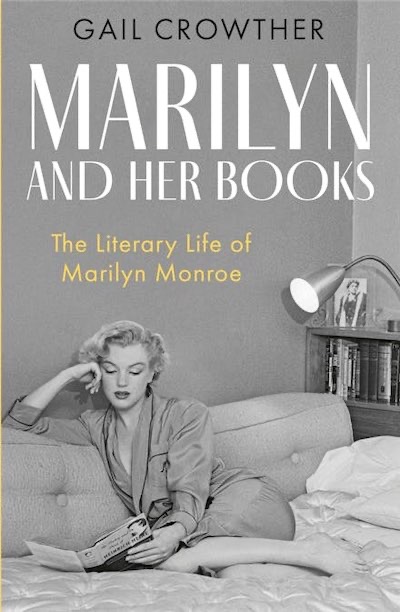
Monroe, who died in 1962, did not graduate from high school but was always keen on self-education, which included reading. Monroe’s character Lorelei Lee in the 1953 comedy musical, Gentlemen Prefer Blondes, famously said: “I can be smart when it matters, but most men don’t like it”. That comment segues to Crowther’s chapter, “Why is Marilyn Monroe’s reading ability doubted?”
Crowther notes, Monroe suffered from a “poisonous cocktail of patriarchy, industry decisions, cultural stereotypes, social expectations and Marilyn’s unwitting complicity”.
Reading, for Marilyn, “was a safe space”, enabling her to be “somewhere away from the judgements and assumptions” made about her dumb-blonde image.
Crowther lists, in an appendix, Monroe’s 400 books, which were sold in a 1999 Christies auction. Crowther also lists books that Monroe had read or owned, but were not included in the sale.
Authors in her library included DH Lawrence, Albert Camus, Jean-Paul Sartre, WB Yeats and Sean O’Casey.
Crowther notes: “The scope of Marilyn’s personal library and the number of genres it contained was impressive. She read literature from all around the world, America, England, France, Germany, but certainly favored Russian novels.
“She enjoyed poetry, politics, psychology, plays, biographies, science, short stories, cookbooks, horticulture, contemporary novels, children’s books, religion, crime, adventure, art, pets, music, reference, and self-help”.
Owning a book doesn’t necessarily mean that one has read it, but the Monroe marginalia and annotations in some of the books reflect her close reading.
Crowther notes Marilyn’s copy of Tennessee Williams’, A Streetcar Named Desire (1947), “contained annotations and notes as she studied the play closely”.
Crowther makes parallels between Monroe and Blanche DuBois ,”a moth that is fluttering too near the flame”.
There are numerous photos of Monroe reading, including a 1955 photo of Monroe reading James Joyce’s Ulysses, which was wrongly interpreted as a publicity stunt.
Crowther, however, indicates that Monroe owned a rare 1934 edition of Ulysses and Monroe was much taken with Molly Bloom.
Crowther pads out the book with chapters like, “How did Marilyn’s reading compared to that of her contemporaries”, such as Marlon Brando and Elizabeth Taylor. Nonetheless, Marilyn and her Books reveals Monroe was “definitely smart”.
STEPHEN King, now 78, who has global sales of more than 400 million books, studied American literature at the University of Maine.
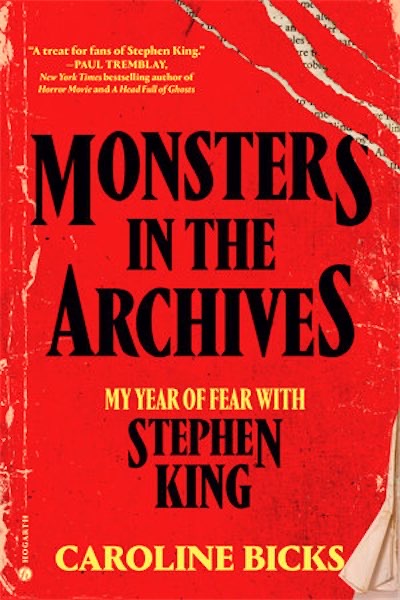
Caroline Bicks, a Shakespeare scholar, was appointed the inaugural Stephen E King chair in literature at the University of Maine in 2017. However, Bicks was told not to contact King, but four years after her appointment, she received a phone call from “Steve King”.
She subsequently commented: “I couldn’t believe it. The man responsible for terrifying generations of readers – including me – was so … nice”.
Bicks used her sabbatical year to examine King’s manuscripts of his early books with their handwritten marginalia, in-text edits, correspondence with copy editors and proofs.
Bicks juxtaposes detailed textual analysis of the books with more general biographical data gleaned from her conversations with the King, both in person and via email.
Bicks reminds readers of King’s early writing failures. In the early 1970s, the Kings were living in a trailer, with King, a high school instructor, drinking heavily, while his wife Tabitha worked nights in a fast food outlet. King wrote five unpublished novels before Carrie was accepted by a publisher in 1974, the paperback rights selling for $400,000. Within a year, Carrie had sold more than a million copies.
Bicks, who makes numerous Shakespearean plot and character cross references, for example, links to Lady Macbeth in Carrie, includes lots of fascinating King tidbits. Salem’s Lot, was originally titled Second Coming, but Tabitha rejected the title saying it “sounded like a sex manual”, while King thought Jack Nicholson was miscast in Stanley Kubrick’s film of The Shining. An essential guide for King fans.
News all day, every day at CityNewsQBN.com.au.


Leave a Reply