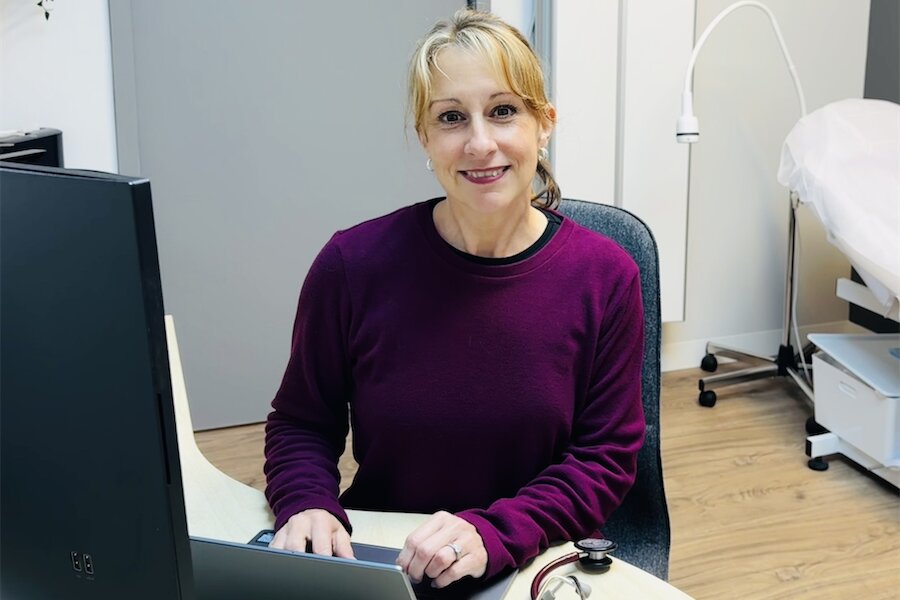
Nurse Practitioner of the Year Kate Reed-Cox is changing how people approach end-of-life care. She talks to DHWANI PATHAK.
For Nurse practitioner Kate Reed-Cox, some of the most important conversations in healthcare are the ones people often find hardest to have.
In palliative care, she believes those conversations should happen early, when there is still time to understand what matters to a person and help them prepare for what lies ahead.
“It is about getting to know the person, understanding what matters to them,” says Kate.
That approach has now earned her national recognition as the 2026 Nurse Practitioner of the Year from the Australian College of Nurse Practitioners.
She has worked clinically in palliative care since 2011, after beginning her nursing career in critical care.
“This is a huge career milestone for me,” she says.
For Kate, some of the most important lessons have come from seeing what works, as well as what does not.
The positive experiences, she said, have often involved being able to work with patients and their families early, rather than waiting until a crisis develops.
“It’s not about chasing a tail and trying to catch up with the symptom,” she said.
“It’s about looking at the patient, really understanding where they are in their trajectory, what they’re experiencing physically, but also socially, emotionally and mentally.”
That means understanding what is important to each individual, including their cultural and religious priorities and the people they consider family.
“It’s not always the people you’re related to by blood relation,” she said.
Kate said early conversations can help people understand what to expect and give them the tools to manage their illness and remain out of hospital where possible.
Despite working closely with death and serious illness, Kate said palliative care was a profession she loved.
“I really do love it because I have the ability to be involved in people’s lives at a very crucial time,” she said.
There are difficult moments, she said, and she still sheds tears.
But the people she meets and the carers supporting them also keep her grounded.
Her work has also taken her beyond the clinical setting.
She spent 12 months as a director within the ACT Health Voluntary Assisted Dying Implementation Taskforce, helping prepare the community and health professionals for the ACT’s voluntary assisted dying scheme.
“An important part of that work was ensuring voluntary assisted dying was understood as an end-of-life choice alongside palliative care, rather than an alternative to it,” she says.
She now brings those conversations into her private palliative care practice in Deakin.
“People might just see me for their palliative care needs, but I’ll always talk to them about their end-of-life choices,” she said.
For Kate, palliative care remains important regardless of whether someone is eligible for voluntary assisted dying.
“If someone has suffering that is being dealt with on a day-to-day basis, they are given all the tools they need to do that,” she said.
Her work also reaches across the Pacific.
Since 2023, Kate has worked with the Solomon Islands National Referral Hospital in Honiara to help build palliative care capacity.
“What began as a scoping exercise has grown into work with local palliative care champions, dedicated beds and plans for an inpatient palliative care consult service,” she says.
Kate’s Pacific work is now expanding to Fiji and Vanuatu, alongside a DFAT-funded partnership on palliative care and cervical cancer.
“It’s really important that we, as a developed country within the Pacific, provide development and strategic support as our responsibility as a good global neighbour,” she says.
Outside work, Kate spends time with her husband, children and close friends, plays soccer and enjoys four-wheel driving and exploring the region.
“I have my family, I have my friends, I have my own interests outside of work,” she said.
“That keeps me very much grounded.”
News all day, every day at CityNewsQBN.com.au.





Leave a Reply