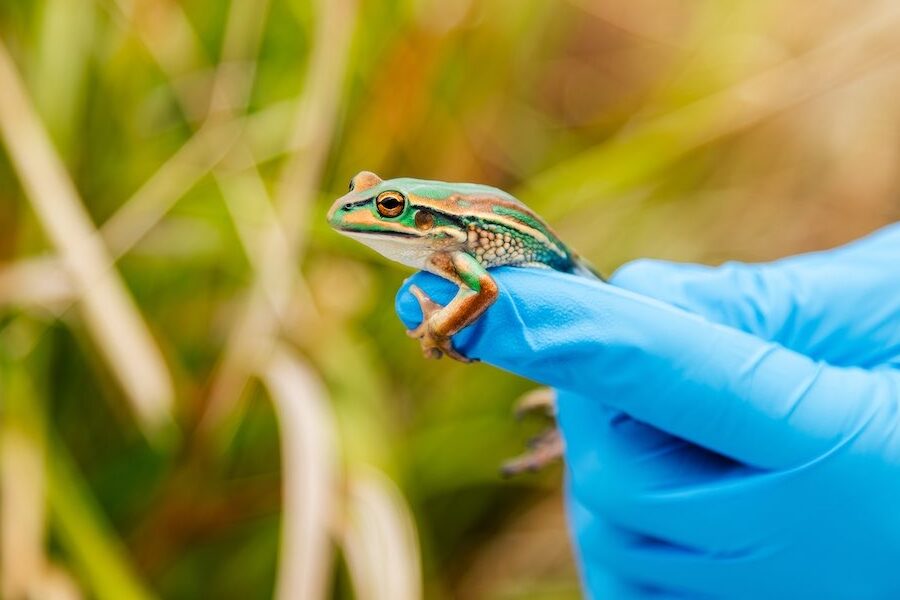
Locally extinct green and golden bell frogs have been returned to Mawson Ponds after disappearing from the region in the early 1980s.
Researchers at the University of Canberra have released the first cohort of green and golden bell frogs, marking a pivotal step in a four-year project tackling the deadly chytrid fungus, a pathogen responsible for the decline and extinctions of hundreds of amphibian species worldwide.
Led by Associate Professor Simon Clulow and Professor Richard Duncan from UC’s Centre for Conservation Ecology and Genomics, together with Dr Ben Scheele from the ANU, the project is a world-first landscape-scale intervention designed to counter the deadly chytrid threat.
The project received close to a million dollars in ARC Discovery Project funding as well as support from the ACT Government.
“Our approach has been two-pronged,” Dr Clulow said. “First, we developed habitat interventions around wetlands that combine salted satellite ponds with hotspot structures to create conditions that suppress the fungus but are ideal for the frogs.
“At the same time, we bred the green and golden bell frogs in captivity and immunised them against the fungus – these frogs will now be released into the specially modified wetland habitats, marking a return to the region after almost 50 years.”
Citizen scientists and community volunteers have helped install hotspot structures across ACT wetlands.
Following the release of the frogs, the research team plans to expand community engagement through activities such as reporting frog sightings and monitoring population establishment.
News all day, every day at CityNewsQBN.com.au.





Leave a Reply