The Russian invasion of Ukraine has led several European governments to consider or actually reinstate military conscription. Should Australia be among them, asks ROSS FITZGERALD and DICK WHITAKER.
Conscription has always been a highly contentious matter in Australia.
An early example is the introduction in 1911 by the federal ALP government of compulsory military training for all males between 12 and 26 years of age.
This occurred under prime minister Andrew Fisher. This was a direct result of an Australian visit by British Field Marshal Horatio Herbert Kitchener (1850-1916) who recommended that Australia should adopt a higher state of military readiness.
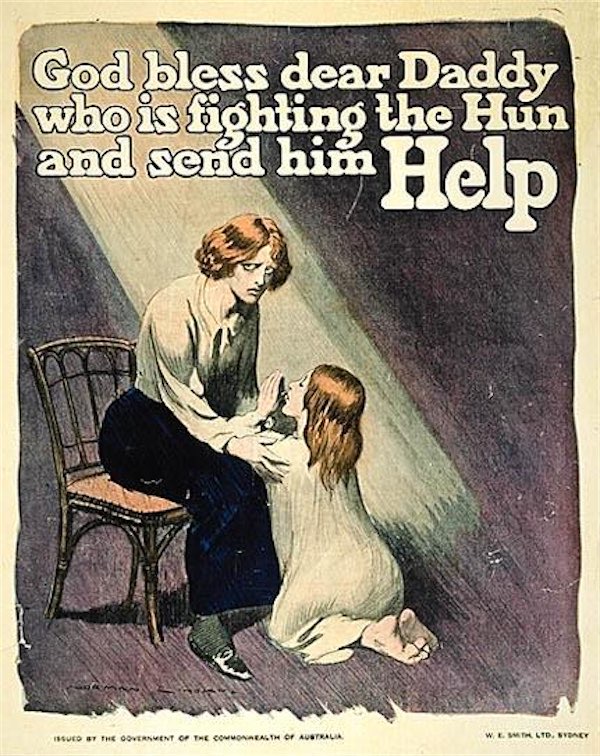
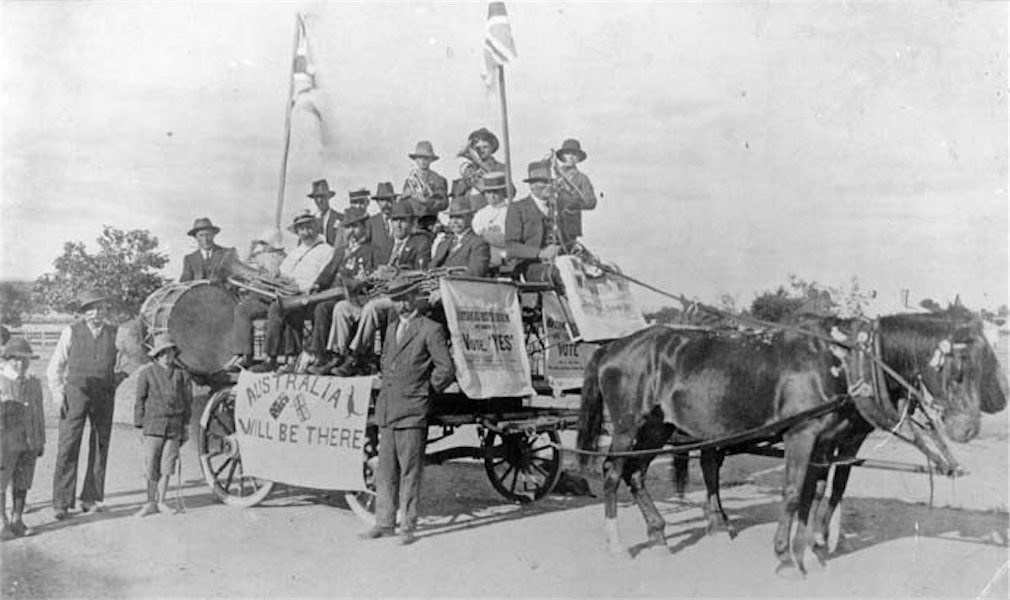
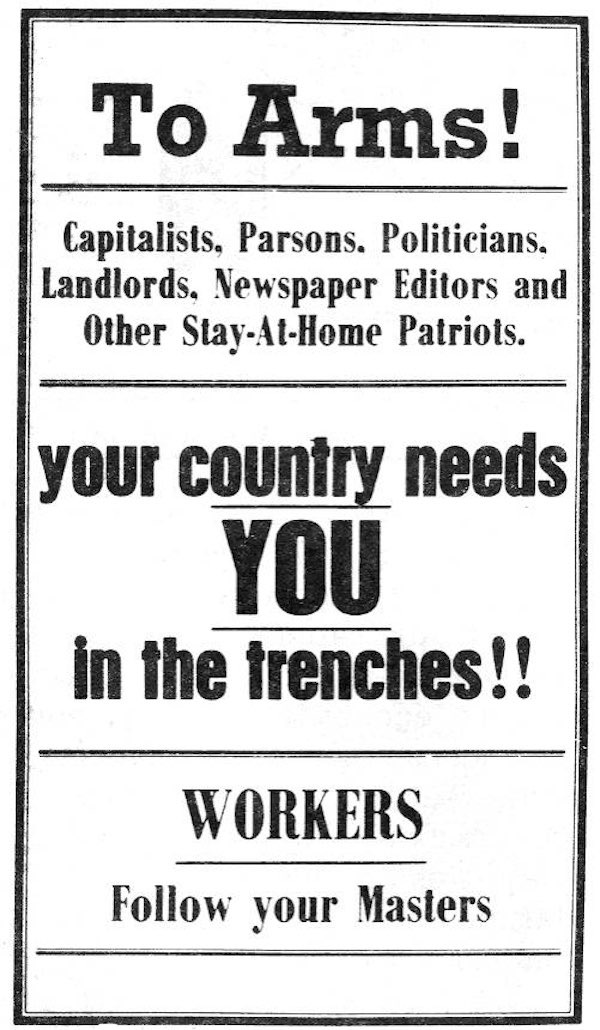
However, it was World War I that brought conscription on to the front page when ALP Prime Minister WH (Billy) Hughes launched two national referenda, one in 1916 and the other in 1917 in an effort to introduce compulsory military service for Australian men.
This included combat duty on the front line, notably the Western Front in France and Belgium where trench warfare was the norm.
This situation occurred because of falling enlistment rates, with the demand for soldiers during World War I increasingly outstripping supply.
Both referenda were rejected by the Australian people. The 1916 vote was a narrow win for the “NO” campaigners, (49 per cent to 51 per cent) but in 1917 the result was a larger wind for the NOs, (46 per cent to 54 per cent) as casualties rose and the war became more unpopular.
The issue became increasingly sectarian, with the Catholic Archbishop of Melbourne, the Irish-born Daniel Mannix, who claimed that the conflict was “just a sordid trade war”, being a fervent “NO” proponent.
The defeat of the referenda led to Billy Hughes’s expulsion from the Labor party and the political scene in Australia became bitterly divided.
As a result of this situation all Australian soldiers who fought overseas during World War I were volunteers.
During World War II, unmarried men were required to undertake three months military service. Initially restricted to Australia and its territories such as Papua New Guinea, this was known as the CMF – the Citizens Military Forces. In 1943 their role was expanded and they eventually served alongside the regular volunteer force – the Australian Imperial Force (or AIF).
It was conclusively demonstrated that the CMF performed well against the Japanese in the Pacific theatre.
The birth of the so called ‘nashos’
Often known as “chockos”, a derogatory term meaning chocolate soldiers, this belied the strong and honourable combat history of the CMF.
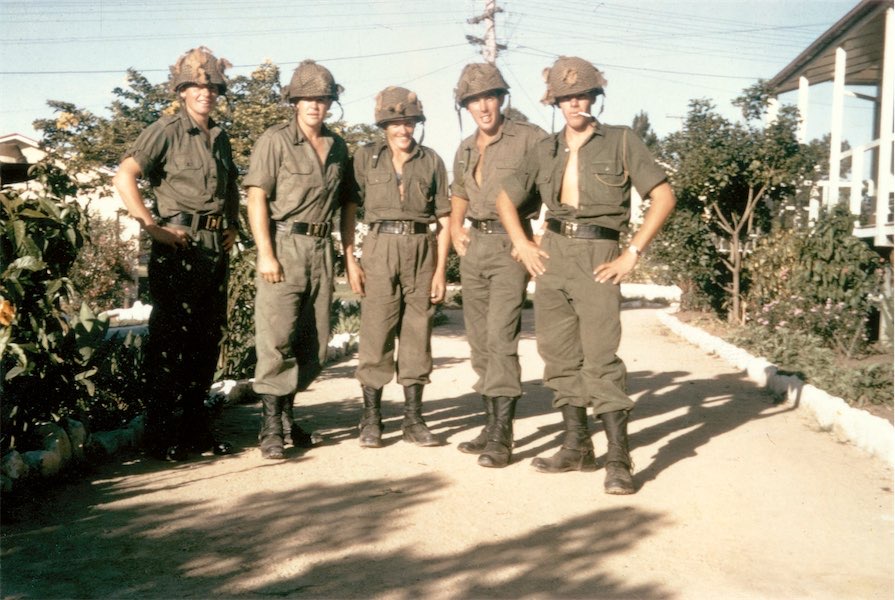
World War II, war the term “conscription” was replaced by “national service”, a cosmetic change that led to the birth of the so called “nashos”, a term used during the Vietnam War era when 20-year old conscripts were required to become combat soldiers in a real “shooting war”. National service meant a two-year stint in the army including the possibility of a combat role in Vietnam.
This situation arose as a result of a general public disinterest in the Vietnam war (1962-1975 ) where it was impossible for the Australian government to raise the required number of soldiers to support the US effort in combating the rise of Communism in southeast Asia.
The “domino theory” was a powerful political motivator in Australia. The Communists were on the march southwards from Asia towards Australia, so the theory went, and if we did not stop them in Vietnam it would be Malaysia next, and then, falling like dominoes, Borneo, Indonesia and New Guinea.
In summary, if we did not stop them in Vietnam we would eventually have to fight them in Australia.
Ultimately some 63,000 young men were called up between 1965 and 1972 and 15,380 served in Vietnam. One hundred and eighty four national servicemen were killed in action and 880 were wounded.
Towards the end of the war the opposition to sending conscripts to Vietnam had become very strong, with several large public demonstrations taking place in capital cities and organisations such as Save our Sons gaining considerable support.
SOS became political dynamite
Up until that time, those who opposed conscription were widely depicted as “long hairs” and “Communists”, particularly in the media. But Save our Sons (SOS), a movement mainly consisting of middle-aged women, changed that idea. The fact that law-abiding mothers were becoming involved in active anti-war street demonstrations was shocking and SOS became political dynamite and a deep embarrassment to the government.
The war had grown generally unpopular by 1972, to such an extent that the then Labor Opposition Leader Gough Whitlam made the ending of conscription one of his key election issues.
It certainly did play a significant part in producing a change of government. Since then successive political parties have steadfastly avoided any plans for the reintroduction of national service.
But perhaps it was not national service, as such, that was the basic problem, but more the way it was implemented.
The ‘lottery of death’
The selection system, involving the drawing of numbered marbles from a lottery barrel, provided random dates and all 20-year-old men whose birthday fell on those dates were called up.
The Leader of the Opposition in 1965, Labor stalwart Arthur Calwell, described this system as the “lottery of death”.
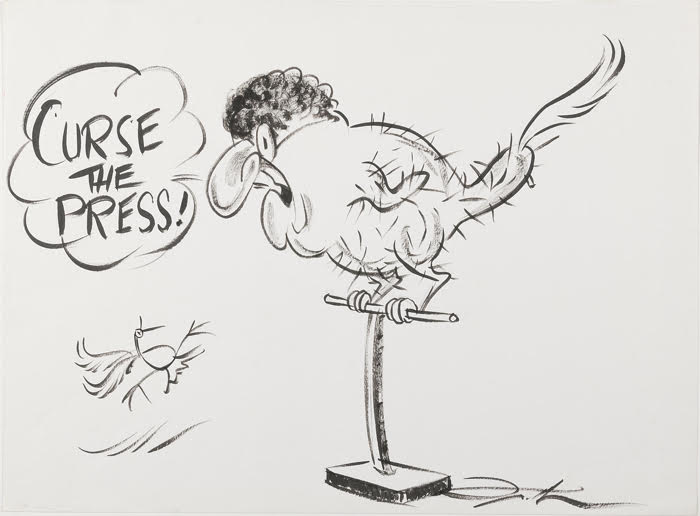
Then there was the fact that conscripts were sent to serve in Vietnam. It’s bad enough when an Australian soldier is killed in an overseas war, but when a national serviceman is killed in action there is often a major backlash that can swing votes against the government.
At the moment, despite Communist Chinese expansionism, Australia does not appear to be under any direct or imminent external military threat, although the general international environment has unquestionably become more hostile over the last decade.
The Russian invasion of Ukraine, which began in February 2022, has led several European governments to consider or actually reinstate military conscription, and the constant jostling for the position of “Top Gun” between the superpowers of the US, Russia and China has spilled over into our region in the form of several awkward confrontations with China.
In one incident, in early 2025, a Chinese naval task force sailed around Australia and conducted live fire exercises off Sydney, allegedly without the customary warning.
In another, in October, a Chinese military jet released flares close to a patrolling Australian jet over the South China Sea.
Several countries have reacted
Amid all these rising global tensions, particularly those generated by the Ukraine and Gaza situations, several countries have reacted.
Germany recently considered a general call up but this was instead reduced to a system of voluntary service. However if the military numbers do not build to the desired level a nationwide conscription program may be implemented.
Ukraine introduced conscription in 2014, and Latvia in 2024. Serbia brought back compulsory military service in 2025 and Croatia will institute their conscription process this year.
Scandinavian countries already have various forms of compulsory military service in place, including participation by women.
Battling the war within
But at the same time many Australians believe that we are also facing an internal threat – the war within – that is being waged upon us by a section of our young.
There is a strong public perception of rising crime being committed by disaffected youth, and many believe that some type of national service, with its attendant discipline and highly structured environment may assist here.
Could a national service scheme be devised that would assist us with both the external and internal situations without dynamiting our political stability?
At least two of our senior political figures have publicly discussed the issue in recent times.
In 2022 former Liberal prime minister Tony Abbott advocated a period of national service for school leavers, and current ALP Defence Minister Richard Marles, also in 2022, asked young Australians to consider military enlistment to help overcome the current shortage of troops.
Perhaps there are ways of instituting a system that avoids the highly contentious issues and is still of considerable benefit to both the individual and to the nation.
Various schemes have been suggested over the years and this is one possibility – a hybrid that would likely avoid some of the more problematic issues.
A call up for all young adults, say 20-year-olds, could be instituted – men and women – with the requirement for three month’s military service. The inductee would have a choice of various electives and these could be chosen from the following areas:
- The Army – a basic training course
- Community work – Meals on Wheels, shopping and gardening for the elderly, work in nursing homes, Salvation Army, Vincent de Paul.
- Council work – bushland regeneration
- State Emergency Services (SES)
- Rural Fire Services (RFS)
If Australia is ever involved in armed conflict there would be no requirement for a conscript to become involved unless he or she volunteered and this would require leaving the national service scheme and joining the regular Army.
“Points” could be attached to these activities depending on government priorities, and after a certain number was amassed, the conscript would be entitled to a subsidised home loan.
Such a scheme would be of considerable benefit to the nation. We would develop a large number of young people with basic military training that could be of great assistance in the event of mobilisation. Work in the SES and Rural Fire Services for example could improve our responses to civil emergencies.
A considerable amount of useful community work would be undertaken – work which is presently “on hold” because of the lack of people power.
Finally, such work would be of great benefit to the individual. Apart from the character building and discipline that comes from involvement in work of this type, unique networking opportunities arise from the mix of people that comes with national service.
Would it work?
Cost could be a major issue and the analysis required would have to be properly and professionally undertaken by Treasury. But it would be important for this to be a cost/benefit analysis, rather than cost alone.
A final thought from American President John F Kennedy, on January 20 1961 : “Ask not what your country can do for you – ask what you can do for your country.”
Ross Fitzgerald AM is emeritus professor of history and politics at Griffith University. His most recent book is Chalk and Cheese: A Fabrication, coauthored with Ian McFadyen.
Dick Whitaker is a widely published author and lecturer in meteorology and Australian history. He was a national serviceman who served two years in the Australian Army 1969-1970.
News all day, every day at CityNewsQBN.com.au.




Leave a Reply