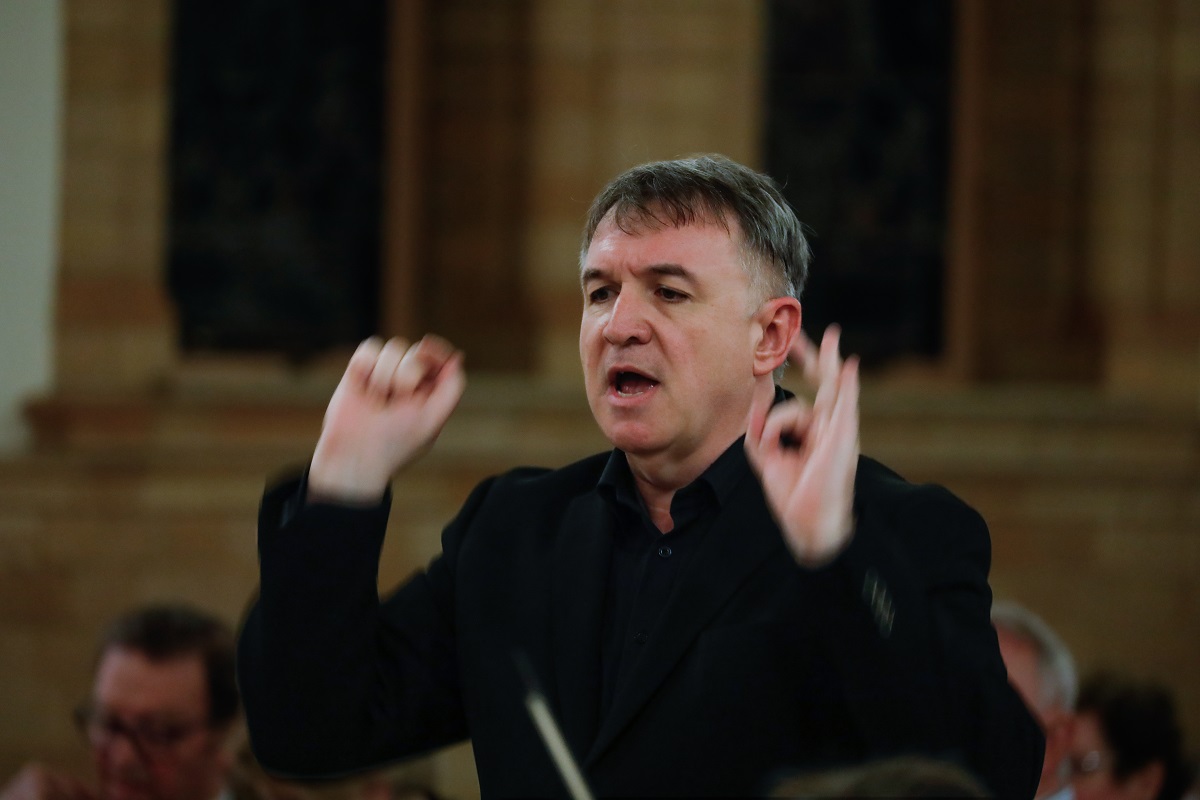
Music / St John Passion, JS Bach, Canberra Bach Ensemble. At St Christopher’s Cathedral, Manuka, March 17. Reviewed by SARAH BYRNE
This is a challenging review to write, because Bach’s St John Passion is another of those great works of art
that is both an undisputed masterpiece, and also deeply problematic.
One sees why it would be irresistible to produce this glorious music on its 300th anniversary; that seems like an unmissable opportunity.
On the other hand, in the current geopolitical climate, the text is a bold choice.
While the program offers detail on the history of the work’s production – much like several of the gospels themselves, later versions are arguably more canonical than earlier versions of a lost original – no mention is made of the text’s anti-semitism, although in recent years it has become commonplace to attempt to address this. The program even reprints a recent translation co-authored by Bach scholar Michael Marissen, without any reference to the fact that Marissen has written and spoken extensively on the
problem (though his book on Anti-Judaism and the St John Passion is listed in a bibliography).
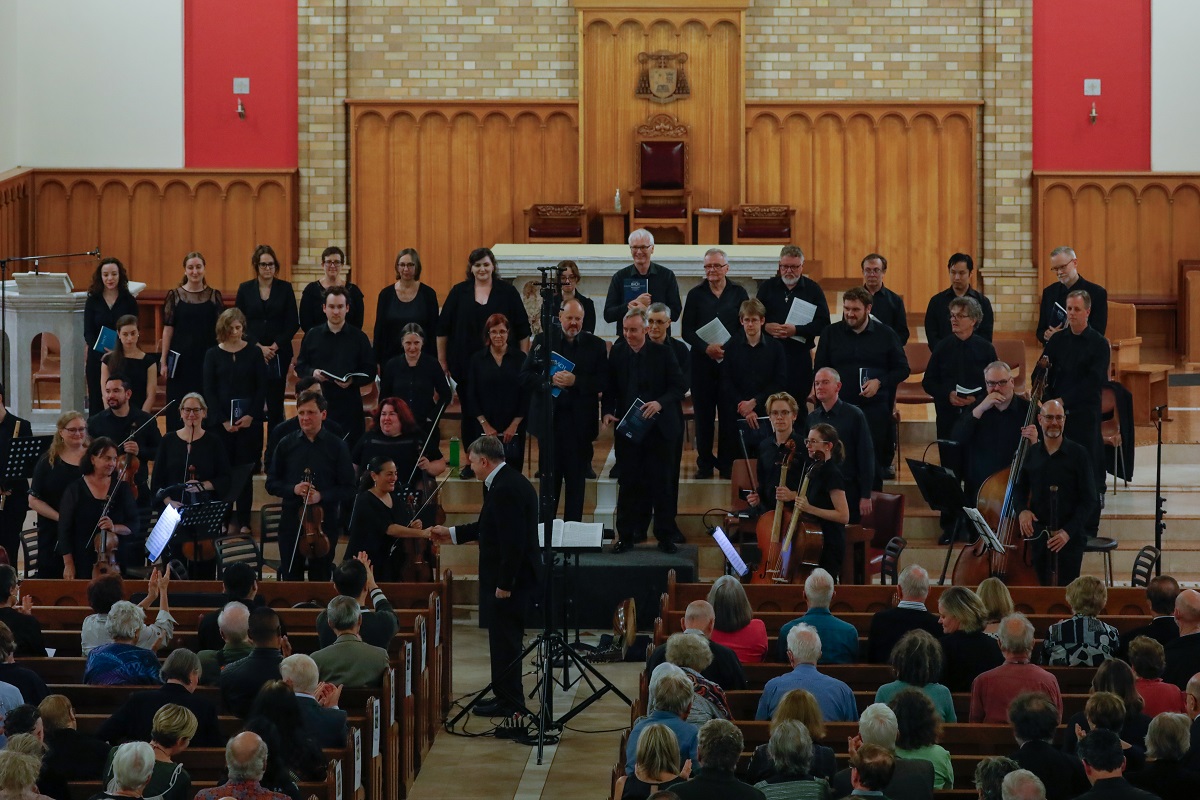
Happily, though, the music itself is magnificent, and Andrew Koll’s production is a triumph. The choir was soaring and spirited, and from the moment Richard Butler utters his first words, it was clear we were in the presence of something very special.
Butler with deep experience in chamber and ecclesiastical music, and anchors the whole piece as St John the Evangelist, the effective narrator.
Rarely have I heard a tenor of such beauty and clarity; his voice is mesmerising; sparkling in his upper register; rich in his lower register, and always dynamic (and that run in verse 18!).
The other soloists do not let down the side – operatic baritone Sitiveni Talei is resonant and moving as Jesus; and bass Andrew Fysh is thrilling and resonant as Pilate. Christopher Watson (tenor), Greta Claringbould (soprano) and Maartje Sevenster (alto) also performed their smaller parts beautifully, although the latter struggled a little with volume in Part 1. Claringbould (like Sevenster, a Canberra local) in particular has a beautiful voice of remarkable purity and precision.
Also outstanding was the Canberra Bach Ensemble orchestra, in a nuanced and virtually flawless performance, visibly responsive to and engaged by Koll’s thoughtful conducting.
It was especially wonderful to hear passages played on traditional instruments including the viola d’amore (Stephen Freeman and Odette Bruinzeel), violone (David Flynn), viola da gamba and lute (both Shaun Ng) and a particularly enjoyable run for two transverse flues (Jennifer Brian and Dante Costa).
Despite its two-and-a-half-hour length, the piece never flagged, and nor did my attention; the time flew past. A glorious performance – if only one can look past the text.
News all day, every day at CityNewsQBN.com.au.



Leave a Reply