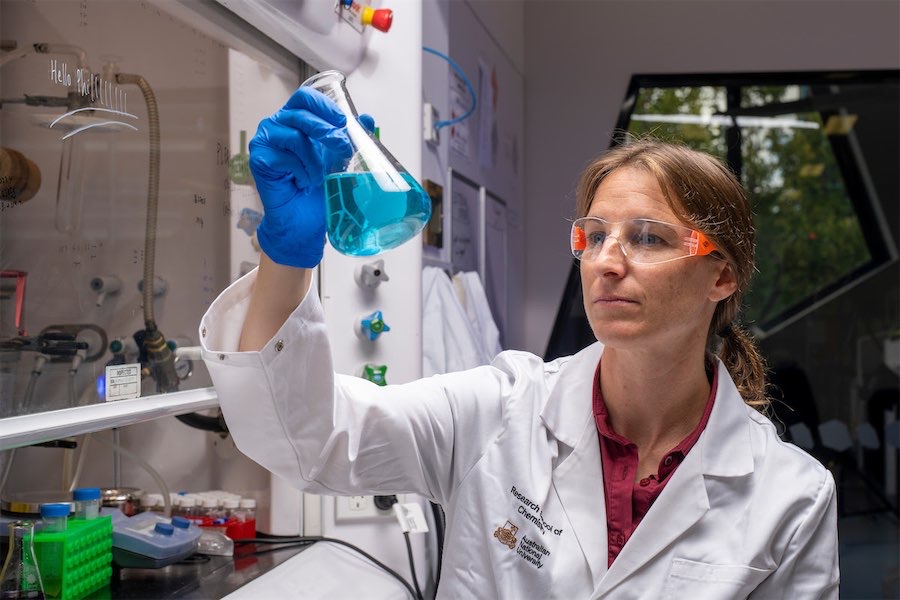
An ANU chemist has been awarded an $8 million fellowship to help tackle some of the globe’s most pressing health challenges.
Prof Lara Malins, from the ANU Research School of Chemistry, is one of two Snow Medical Research Fellows for 2024. Her research will include looking at antimicrobial resistance and cancer, and advancing new life-saving medical therapies.
Prof Malins said she aimed to unleash the therapeutic capacity of peptides, or short chains of amino-acids, a “largely untapped reservoir” when it comes to medicinal chemistry.
“As structural relatives of proteins, peptides are biological powerhouses, but while our understanding of them is growing, clinical progression has been limited due to the challenges in synthesising and optimising them in the lab,” she said.
“The specific compounds we’ll be looking at have considerable potential as next-generation medicines – including peptide-based cancer therapies.
“This investment from the Snow Medical Research Foundation will help fuel the drug discovery pipeline and ultimately, enhance our ability to treat human disease.”
Prof Malins said she would also use her fellowship to continue work on new antimalarials and antibiotics.
“Nearly 100 years after the discovery of penicillin, we’re on the brink of a ‘post-antibiotic’ era, with rising levels of bacteria resistant to even our last resort antibiotics,” she said.
“Studies suggest that global antimicrobial resistance will lead to approximately 10 million deaths and an economic cost of $US100 trillion per year by 2050. To avoid repeating the cycle of antibiotic development and resistance, we need to look at new avenues.”
The second 2024 Snow Fellow is Associate Prof Loic Yengo, from the University of Queensland.
With a commitment totalling $224 million, the philanthropic Snow Medical Research Foundation supports the development of outstanding biomedical research leaders and their teams, driving innovation and excellence in healthcare solutions for the future.
News all day, every day at CityNewsQBN.com.au.





Leave a Reply