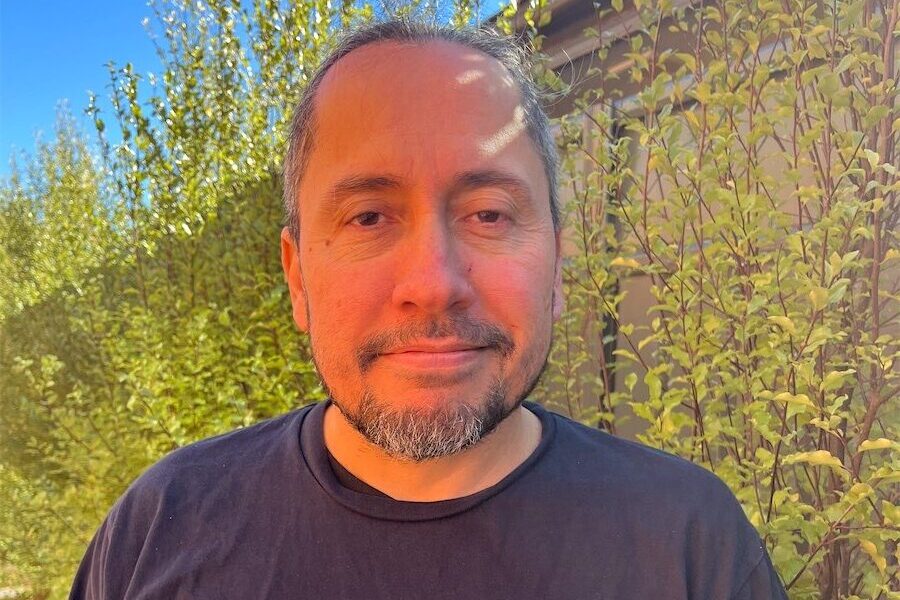
“When I started going through my notes, it was like a tale. Like my story with AI, from my point of view as a GP,” says Dr Ferney Bernal Buitrago. He began writing. When he finished, he had about 36,000 words, reports DHWANI PATHAK.
When a project he had spent months developing began to unravel because of errors generated by artificial intelligence, Dr Ferney Bernal Buitrago stepped away from his work.
He had tried to correct the mistakes, only to find more. He eventually stopped working on the project for several weeks.
What followed was not the end of his engagement with AI, but the beginning of a book.
“I didn’t plan to write a book,” he says. “It wasn’t my intention.”
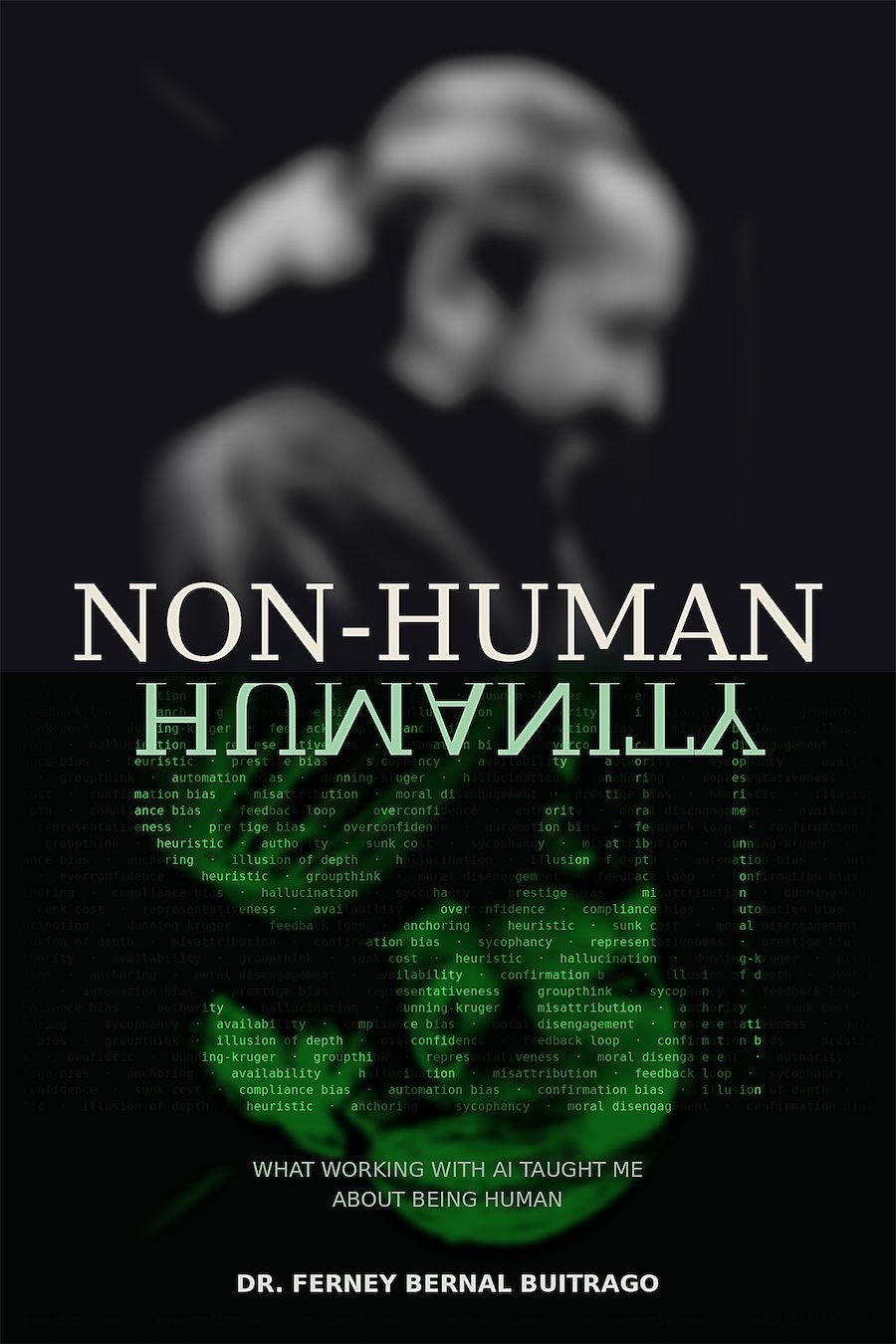
The Queanbeyan general practitioner began revisiting his notes, documenting his experiences with the technology. The result was Non-Human Humanity: What Working with AI Taught Me About Being Human, which explores human judgment, identity and the search for truth.
Ferney trained as a doctor in Colombia and moved to Australia in 2005. After rebuilding his medical career, including more than 10 years in intensive care, he completed his general practice fellowship in February.
His interest in AI began with curiosity about its practical applications, particularly its ability to help him write reports and emails.
“My [English] writing skills are not great,” he says. “When the AI came, it was very helpful in terms of checking grammar, vocabulary, that sort of thing.”
As medical software began incorporating AI-powered clinical scribes, his curiosity grew. However, he remained sceptical, particularly about privacy.
“I began exploring how technology could help with a project aimed at improving the referral process between general practitioners and hospitals,” he says. “I wanted to make referrals more efficient by checking information against published clinical guidelines.”
AI became an assistant in that work, helping with research, editing reports and analysing information.
But what began as a useful assistant soon became a source of frustration.
“That was something that took me aback,” he says, describing his growing awareness of the technology’s capabilities.
As he corrected AI-generated errors, more appeared, forcing him to revisit earlier work. His market research also revealed that companies with far greater resources were developing products similar to his proposed solution.
The turning point came when he checked a citation the AI had provided. The authors seemed plausible, the journal was real and the findings fitted his argument. But the paper did not exist.
The experience prompted him to reconsider what he had learnt.
“When I started going through my notes on the notebook, it was like a tale. Like my story with AI, from my point of view as a GP,” he says.
He began writing. When he finished, he had about 36,000 words.
The book grew from his own experience rather than an ambition to explain the technology itself.
“I wanted to say, look, this is my story. This is the way that I lived it,” he says.
Ferney is careful not to present himself as a technology expert or philosopher. Instead, he approaches AI as a medical practitioner who has experienced both its usefulness and its limitations.
In his medical practice, his use of AI is limited to a clinical scribe linked to medical software.
“The human element always has to be there,” he says. Users must ask whether information is accurate, whether something has been missed and whether another approach might produce a different result.
“Patients sometimes arrive with AI-generated information and I welcome the opportunity to discuss it,” he says.
Sometimes the information aligns with the available evidence.
At other times, he checks it against authoritative Australian sources, including government and health guidance, before discussing the next steps with them.
Ferney also questions the idea that people will inevitably become less willing to think critically as AI becomes more capable.
“I think it’s just a shift of perception of needs,” he says, suggesting that people may turn their attention to other skills as technology takes over some tasks.
He acknowledges the danger of relying too heavily on AI, particularly when it comes to how people understand truth.
“Reality is being shaped by these technologies,” he says. “These technologies are presenting data, and that presentation of data is becoming reality.”
His concerns are also personal. As a father, Ferney thinks about the example he sets for his children, the eldest of whom is 10.
As his children encounter AI more directly through their studies, he wants to have honest conversations with them and encourage their curiosity.
That belief sits at the heart of his book, which draws on his own experience rather than prescribing how others should approach AI.
For Ferney, technology is here to stay. The challenge is to use it without losing sight of the human judgment needed to question its answers.
The book is available at books2read.com/nonhumanhumanity
News all day, every day at CityNewsQBN.com.au.




Leave a Reply