‘Each week, I write, and rewrite, the panel outlines, dialogue and scene descriptions. None of that is AI.’
As we proudly salute five years of the innovative KEEPING UP THE ACT comic strip, its mysterious creator – Shush Capital – reveals how the strip is technically assembled and the intense human creativity behind it.
This week marks the fifth anniversary of Keeping Up the ACT. While many enjoy my weekly strip, others regard it as “AI slop” and “cringe”.
I am a professional writer, and my use of technology for my artwork comes down to one simple necessity – I’m not a professional artist. Yeah, righto, you don’t have to all yell a loud Billie Eilish “duh”.
“Why don’t you employ a real bloody artist, then?” demanded one correspondent, recently.
“It’s a labour of human love assisted by a travail of tetchy technology.”
After laughing myself clean off my chair, I replied that I’d love to! A real artist would probably push back on the ridiculous amount of dialogue I cram into each panel and make the strip look a hundred times better.
But as my fellow dollarinaires at CityNews will tell you, local print media is not the money earner it once was. What I get paid for KUTA barely covers my technical costs, let alone enough to put a grain of rice in a starving artist’s belly.
Not that I’m complaining (ED: It sounds like you are). I doKUTA for love, not money, and because nobody else produces local political satire. Well, apart from our local MLAs, that is.
If any professional cartoonist fancies working for something-approaching-free, get in touch. I’d love to hear from you.
Until then, it’s just me, my computer and my punk DIY ethos.
But let’s get one thing straight. I don’t tell ChatGPT: “Do this week’s strip,” and a pile of AI slop is extruded on to the CityNews page.
Each week, I write, and rewrite, the panel outlines, dialogue and scene descriptions. None of that is AI.
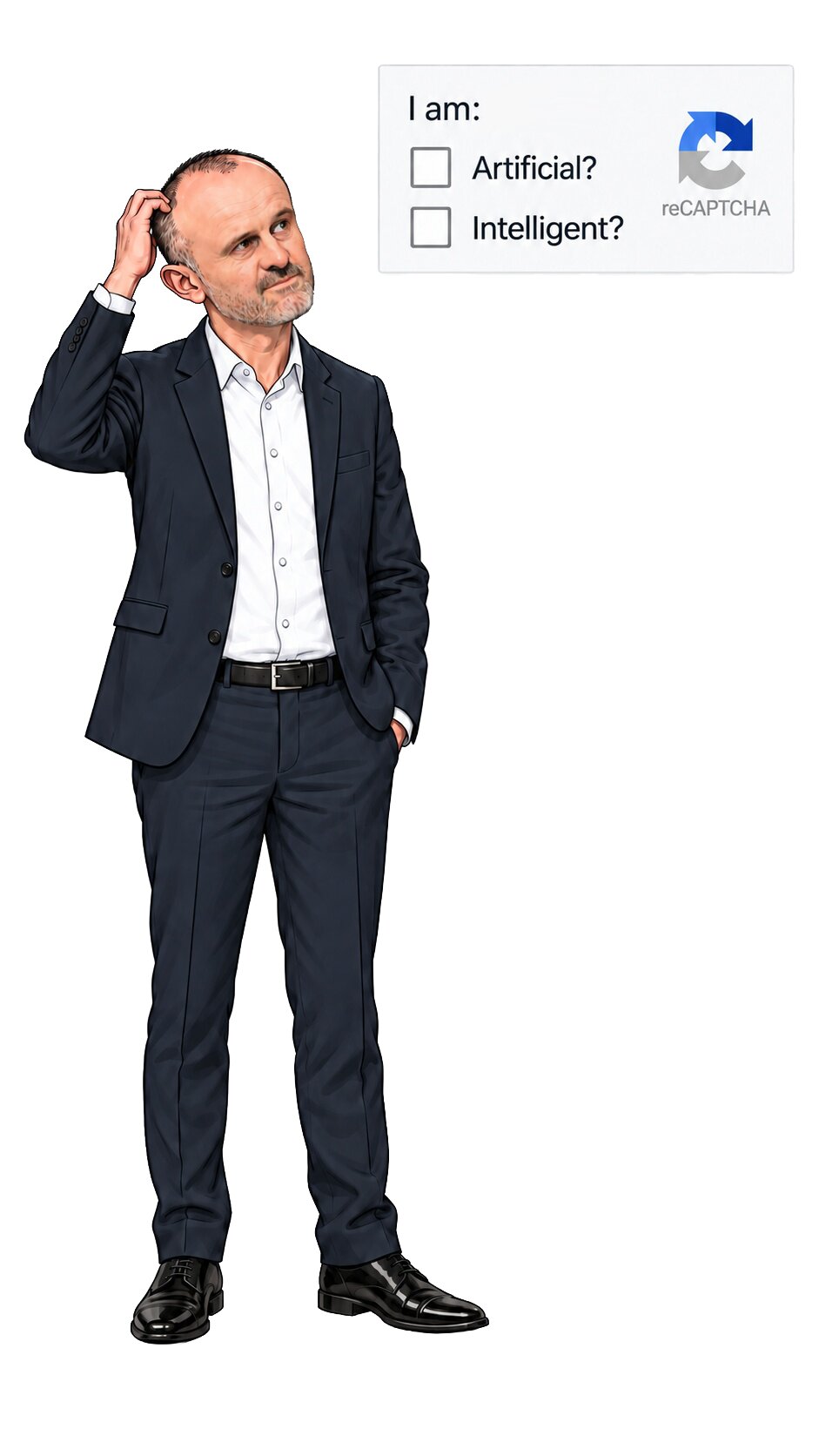
Then I create the six-to-eight panel artwork. Before AI, I used to combine 3D-rendering, Photoshop manipulation of licensed images, font design and hand drawing; using more than 12 different programs.
I still use many of those techniques today, but increasingly turn to AI to finesse my cacky artwork.
However, AI rarely gets things completely right, leaving me to spend hours fixing its peculiar hallucinations.
Recently, I spent ages working on a background crowd where I had to manually fix extra fingers, wonky heads and, inexplicably, three unwelcome Donald Trumps.
When the artwork’s done, I assemble everything in a comic program, layering the figures and backgrounds, adding speech balloons, headings and captions. Then I produce separate web and print promos.
It’s a labour of human love assisted by a travail of tetchy technology.
Once upon a time, being “a whizz with technology” such as Photoshop earned admiration. Today, being “a whizz with AI” earns accusations of cheating.
To me, the distinction is arbitrary. Both are tools, both require skill, and both can produce rubbish in the wrong hands.
Sure, you can switch off your brain and let AI do everything. You’ll get the slop everyone complains about. And give over too much, your own extinction (only according to those working in AI).
But direct it, challenge it, refine it, swear at it, and bend it to your will? That’s you in control.
“But it’s not authentic!” cry the purists.
That hoary old complaint has been around since Michelangelo was in nappies, finger-painting the Sistine nursery.
The Old Masters routinely employed apprentices to execute the bits they couldn’t be arsed to do themselves. I’m sure Michelangelo would have embraced AI for the Sistine Chapel – “Hey Gemini, knock me up 30 rando clouds so that I can get back to perfecting Adam’s transcendent stare.”
Indeed, Andy Warhol made an industry out of delegating his art. He didn’t call his studio The Factory for nothing.
The point is that authentic art isn’t necessarily about wielding every brush, chisel or mouse.
Keeping Up the ACT may lack the analogue artwork that I’d love, but every digital image is shaped by the artistic ideas in my head that I do my best to translate on to the printed page.
And when that translation goes awry, I guess you could call it a glorious mess. But a glorious human mess is a thing to be celebrated over lazy, one-click slop.
Still, many will ignore all of this and reflexively post “cringe” or “TLDR” in the comments. To me, that’s today’s real creative laziness.
Editor’s note: I’d like to personally congratulate KUTA on taking the simple ethos of “Making fun of ACT politics” to a brilliant, biting weekly comment on the political life of the territory. The quality of the artwork and the innovative thought behind it is something to behold. Five years on, I continue to be proud to publish it; fifty years on, I suspect it will be an important reference to the city’s social history – Ian Meikle.
"While smart glasses offer genuine benefits in daily life, they also raise a challenging question: How do schools maintain fair examinations when AI becomes almost invisible?" Letter writer DONALD THOMAS raises an interesting issue.
Meet new columnist HAMOUDI AL-SAGHIR, a remarkable young Syrian refugee with a terrible story of survival. In his first column, he shares a glimpse of his confronting past and his youthful optimism as he thrives at studying law at the ANU.
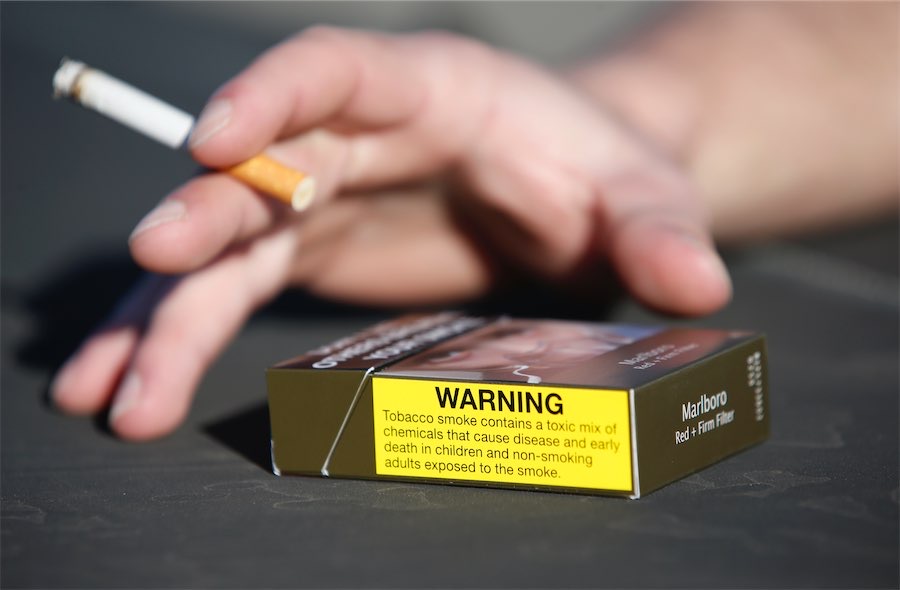
Almost one in five Australians who smoke report going without essentials because of the cost. CORAL GARTNER and ARA CHO explain why cheaper cigarettes aren't necessarily the answer.




Leave a Reply