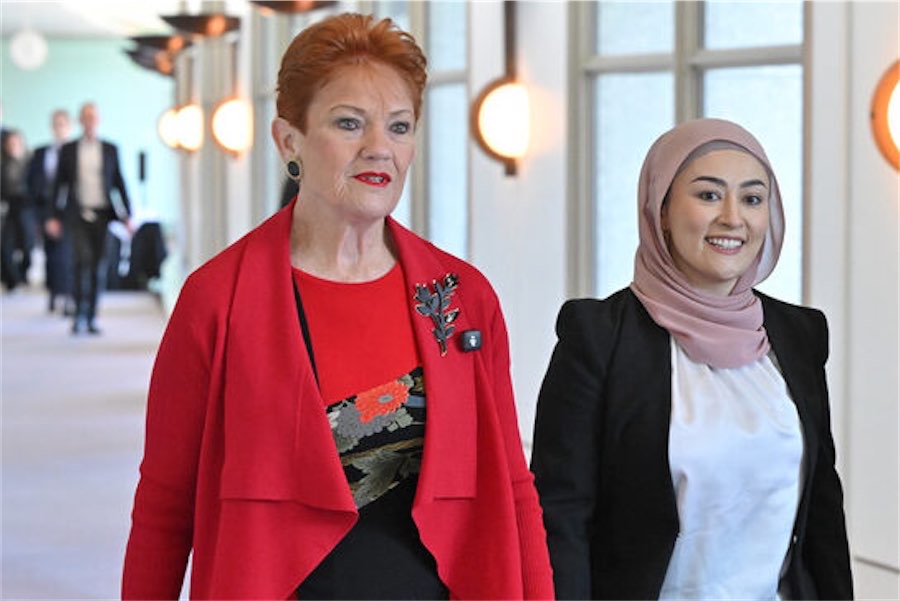
“The PM has used his power to alter staffing numbers based purely on political objectives. It is one of the more concerning uses of executive power in modern times because of the impact it has on our democracy,” writes political columnist ANDREW HUGHES.
Perhaps one of the more incredible political images of 2026 was last month with Pauline Hanson and Fatima Payman standing beside each other at a presser agreeing about an issue close to each: staffing numbers in their offices.

Why does this even matter, you might say? Because this is about the use of executive power, the effectiveness of our democracy, and equal representation of us as voters.
This issue kicked off in 2025 when Labor was returned to power, and the prime minister with the weight of 94 lower house members of parliament and 29 senators decided to use his executive power to change the staffing numbers of those not in the Opposition (they were changed in 2022).
Recent figures put Labor at 507 and the Coalition 100. The Greens 17, David Pocock has 2, One Nation 5. Let those numbers sink in.
That discrepancy has grown nearly every year of the Albanese government. And that is simply because the prime minister has used his power to alter these staffing numbers based purely on political objectives. It is one of the more concerning uses of executive power in modern times because of the impact it has on our democracy.
Why can the prime minister do this? Because he was given the power when the Member of Parliament Staff Act 1984 was passed and gave the PM of the day (then a one Robert James Lee Hawke) the power to do so.
Despite multiple reports and individuals calling for reforms to this power, for obvious reasons, it still remains to this day the sole discretion of the prime minister.
Don’t underestimate this effect on our democracy. That the prime minister of the day can influence the perception of the effectiveness of those who oppose them by not staffing their offices to an appropriate level is a significant advantage.
Think about it like this: if you see a non-government policy and think, “Why didn’t they research that better? Or think about it more thoroughly?” then the likely answer is the staffer who worked on it was doing 27 other things at once, while trying to answer other enquiries from numerous stakeholders and individuals, while trying to be normal and have a life somewhere.
Recent research conducted in NZ and the UK has highlighted the toll this has had on staffers: they are exposed to some of the most toxic working conditions in our society.
Most can’t be in personal relationships with the hours worked, and for those who are, most often miss nearly all personal gatherings and events. Most stay in the job just for one term due to the stress and conditions.
It is unnecessary and review after review of workplace culture on the hill has recognised workload as being a critical factor that needs urgent review. You’d think a Labor government would be better at representing workers but, hey, here we are.
The effect for us is policy that is often short of being able to pressure a government effectively, and yes often written short of detail because of just how short staffed non-government offices are. We don’t have an effective government without an effective opposition and cross bench.
For us here in Canberra, Senator David Pocock has raised this issue numerous times. Why? Because the ACT is already poorly represented compared to other jurisdictions. Labor seemed to have walked away from having four senators in the territories due to political reasons.
We are then hit with a second penalty because we expressed our democratic right to elect a non-government MP who only has two staff allocated to him. Think about all the work he does, just relating to the ACT. Labor members of Parliament nearly have double that number each.
So equality of representation does not really exist. I could believe the government if an independent authority set numbers based on a fair assessment of workloads of staff. You know, the whole eight-hour day thing so people can have families, recreation time, and nights and weekends for themselves.
Sometimes we focus on the more retail or touch points of democracy when we think about its effectiveness: elections, campaigning, policies, and who represents us.
But sometimes those issues are not fair to begin with, and while it seems such a small issue in the grand scheme of things, staffing numbers reveal so much about just how healthy, and equal, our democracy really is.
Dr Andrew Hughes lectures at the ANU Research School of Management, where he specialises in political marketing.
News all day, every day at CityNewsQBN.com.au.


Leave a Reply