“More than a year after its walloping at the last election, the Coalition’s policy machinery looks positively anaemic; a policy vacuum,” writes political columnist ROBERT McMAHON.
It’s often said the hardest job in Australian politics is that of opposition leader. You have to convince the country you can govern with few of the resources to show you can.

So the maxim runs: oppositions rarely win elections, governments lose them.
The federal opposition is currently doing dizzy little to disprove that adage, giving a convincing impression of having little chance of wresting power from Anthony Albanese at the next election.
While it would be all too easy to attribute this malaise to the unpopularity of the former Dutton opposition or the sapping distraction of the rise of One Nation, the Ley-cum-Taylor opposition has done little to re-build credibility with the Australian electorate.
Oppositions are not merely mechanisms for attacking the government and holding it to account. They are meant to be alternative governments. They are institutions where ideas are initiated and developed, rationales thrashed out, arguments refined and funding costs honed.
Absent the burden of governing, oppositions are meant to be policy factories with shadow ministers as their foremen.
Yet, more than a year after its walloping at the last election, the Coalition’s policy machinery looks positively anaemic; a policy vacuum. Major announcements have been sparse, and where policy has emerged, it has often been framed at the level of aspiration and short on actionable detail.
Key examples exist in the Opposition’s commitment to reduce immigration to take the pressure off housing.
While this seems entirely sensible, subsidiary questions quickly emerge: how many immigrants are the “right” number and why? What impact on one of our most successful export earners, tertiary education? And what effect on industries such as the aged-care sector and primary production so dependent on migrant workers?
The second major policy pronouncement by the Opposition that springs to mind is that to eliminate taxation “bracket creep”.
I would warrant the readers of these pages are a savvy lot, probably in the top quartile of a savvy city. But I would also bet many here don’t know what “bracket creep” means and why the Opposition has committed to its eradication and how it will fund its ginormous cost to do so.
All credit to the opposition for its recent policy announcement to tackle the tobacco black market by, heaven forfend, dropping federal excise; but presently the opposition has less the seeming of an alternative government and more a large advocacy group urging how things should be – absent the burden of ever needing to implement its exhortations. This is hardly a recipe for building community confidence.
By contrast, consider the lead-up to the 2007 election. Kevin Rudd’s Labor opposition did not wait for the Howard government to falter. It invested in the appearance and substance of policy development through its Council for the Australian Federation apparatus, churning out serious domestic policy initiatives.
Ultimately, that perception mattered enormously. Rudd was able to project himself as John Howard 2.0; an “always have been” fiscal conservative.
While the subsequent Rudd government’s response to the GFC revealed a different reality, Rudd’s Opposition-based policy work and narrative combined to present an image of “we’re ready”.
The second challenge for the Coalition is more strategic: it has failed to engage with the political reality of the contemporary parliament.
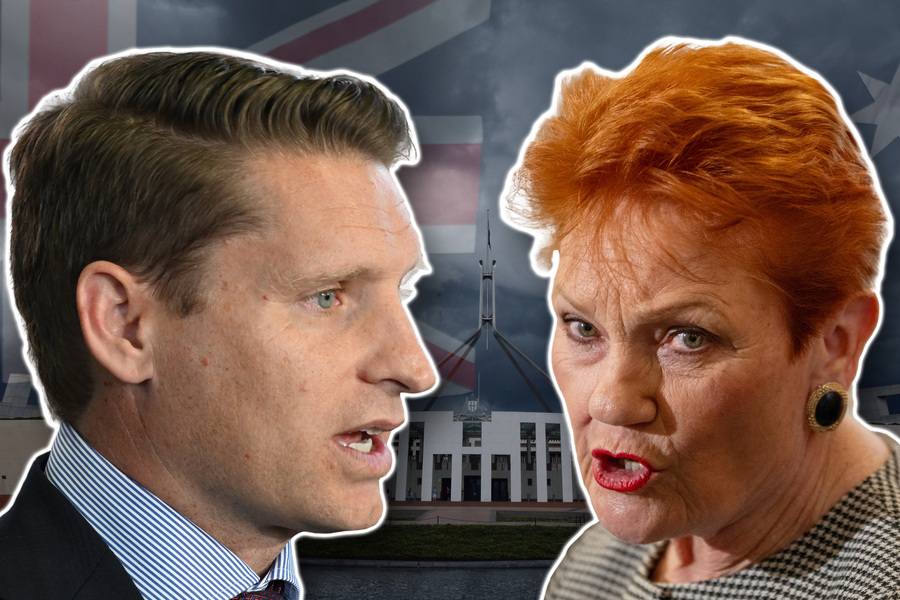
The persistence of the teals and the rise of Pauline Hanson’s One Nation have fractured assumptions of Australian political authority.
The House of Representatives is no longer simply a dichotomous contest between Labor and the Coalition.
Increasingly, governments and oppositions must navigate a parliament where independents and minor parties are highly influential and, in the Senate, hold the balance of power in increasingly fractured blocs.
Yet the Coalition has made little effort to identify areas of common policy ground with either the teals or One Nation in pragmatic opposition to the government.
Some within the Coalition would doubtless regard such engagement as unacceptable; an admission of political impotence. But a disciplined opposition, pragmatic and sure of its own ideology, would prosecute issue-based alliances where mutually beneficial: for example, on government accountability and integrity, productivity reform, regional policy, defence estate, or areas of CGT or taxation reform.
The purpose would not be power-sharing but to show voters the Coalition can work constructively within the new parliamentary realpolitik.
The Coalition’s challenge is therefore not simply defeating Labor. It must show voters not only what it would do, but how it could govern. Until it does, it will remain exactly what it is now: an opposition, not a government-in-waiting.
Dr Robert McMahon PSM is a visiting fellow at the Australian National University, adjunct professor at the University of Canberra, and a former assistant secretary of the Department of the Prime Minister and Cabinet.
News all day, every day at CityNewsQBN.com.au.


Leave a Reply