By Nick Wilson
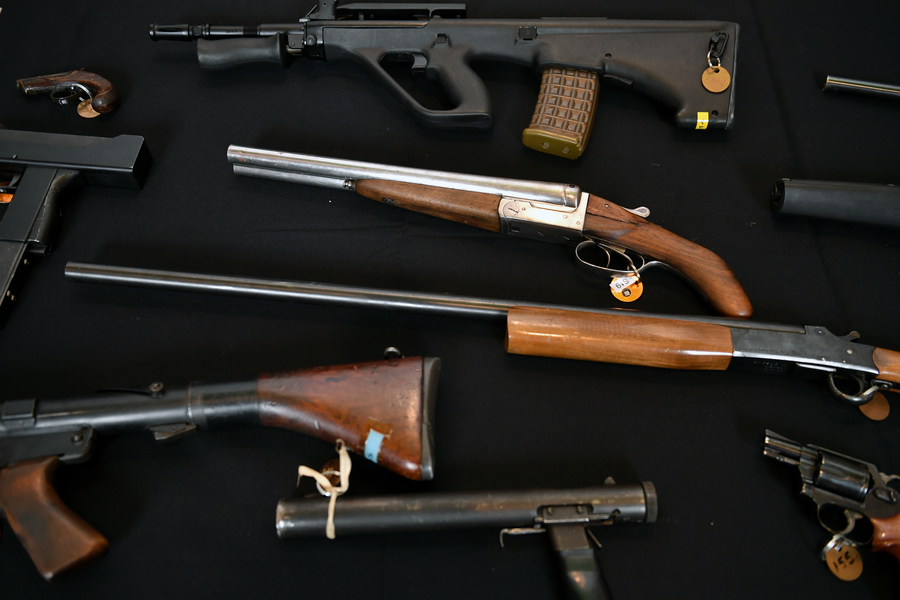
A gun buyback announced after the Bondi terror attack comes with a high price tag but inaction would be costlier, the prime minister has said as the first state signatory comes on board.
Tough national gun control laws were proposed after the 2025 Bondi massacre, during which a father-and-son duo killed 15 people in a shooting spree, in a bid to reduce the number of firearms in Australia.
NSW Premier Chris Minns is the first – and potentially only – state leader to sign up to the federal government’s beleaguered national buyback, the largest such scheme since the Howard-era program that followed the 1996 Port Arthur massacre.
The state will compensate people for surrendering guns no longer allowed under tighter restrictions, splitting the costs with the federal government.
But the broader national plan has run into opposition from several states and faces a fresh challenge in federal parliament.
The Nationals have tabled a bill in the Senate to repeal Labor’s federal firearms crackdown and abolish the proposed national buyback.
Leader Matt Canavan called the reforms a “knee-jerk and unnecessary piece of legislation that was never properly consulted on” as the rural party accused the government of unfairly targeting law-abiding gun owners.
Those concerns were echoed by One Nation leader Pauline Hanson, who insisted the Bondi attack was the result of individual bad actors.
“It wasn’t the guns, it was the people behind the guns that are responsible for the Bondi massacre,” she told News24 on Sunday.
Announcing the NSW-federal agreement alongside Prime Minister Anthony Albanese on Sunday, Mr Minns said he was prepared to fight March’s state election on the issue.
“We’re not changing our position and voters ought to know that when they cast their ballot,” he said.
The total cost of the buyback was not known as the scheme was demand-driven, but the bill for taxpayers would likely be in the hundreds of millions of dollars, the premier added.
“It’s expensive, but it’s a price worth paying,” he said.
Mr Albanese said failing to act to rein in growing numbers of firearms in the community would come at a greater cost.
“We know what the cost of inaction is,” he said.
“We’ve seen it, tragically.”
NSW introduced revised gun ownership limits in the days after the Bondi attacks, reclassifying some types of weapons, boosting background checks and reducing firearms licence terms from five years to two.
The state also capped the number of firearms allowed per person at four, or 10 for primary producers and sporting shooters.
Under the NSW-commonwealth agreement, compensation will be paid from November 2 for firearms returned in line with the restrictions, with a flat fee for associated ammunition.
An estimated 274,000 registered firearms could be affected across the state, involving 50,000 licence holders.
The scheme will be administered in two phases.
Compensation is fixed by gun type under the first phase, beginning at $450 for air rifles and capping out at $1000 for revolvers and centrefire rifles.
Grants of up to $25,000 will be available for eligible businesses and dealers, with one-off licence fee relief of $500 per gun dealer.
The second phase, commencing in early 2027, will focus on higher-value weapons, with a maximum compensation of $10,000 per gun.
The federal government will split the administration costs with NSW while fully funding the destruction of surrendered firearms.
The agreement is the first to be reached with any state after Queensland and Victoria rejected the proposed buyback scheme.
The Northern Territory has ruled out contributing any money for a buyback, while South Australia has not announced any progress since giving “in principle” support in January.
The ACT and Tasmania have agreed to the deal but funding negotiations are ongoing.
Western Australia completed its own buybacks in January but has signalled willingness to participate in the federal scheme.
News all day, every day at CityNewsQBN.com.au.




Leave a Reply