By arts editor HELEN MUSA
A former Kambah volunteer firefighter who once earned his Duke of Edinburgh Gold Award is now helping bring the stories of Ukraine’s LGBTQIA+ soldiers to international audiences from his base in Berlin.
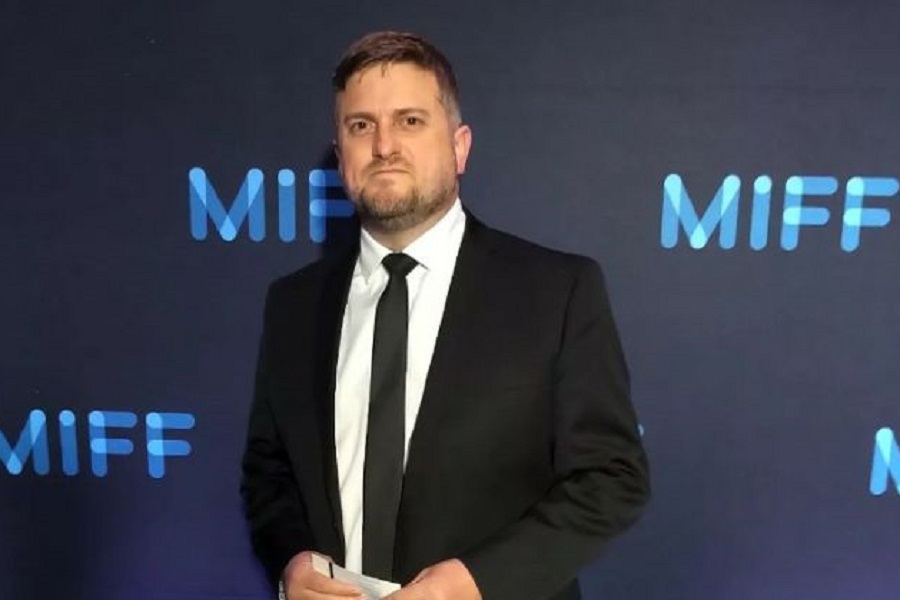
Canberra-born film producer Karl Hillbrick, raised in Kambah and educated at Trinity Christian School and Lake Tuggeranong College, is one of the producers of Our Colors Never Fade, a powerful documentary about LGBTQIA+ Ukrainians who have taken up arms, become medics and risked their lives since Russia’s full-scale invasion in February 2022.
Hillbrick, now based in Berlin, is back in Canberra to promote the film, which screens in a special function at Palace Cinemas on Thursday. He is particularly chuffed that it was nominated for Best Documentary Feature at the 34th Raindance Film Festival in London in June.
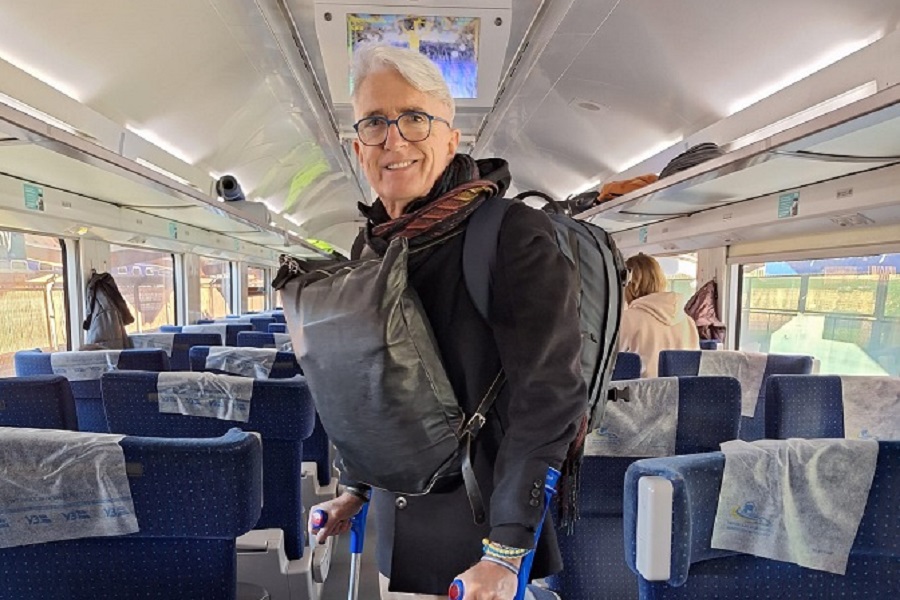
Also in Canberra is the director, Berlin-based Boston filmmaker Jim McSherry, who is gay and moved to Berlin five years ago. For McSherry, the film grew from a sense of anger after he encountered a list of categories whom Russian forces had reportedly marked for execution.
“Every time I see my film, it’s emotional for me, it just stirs up a whole lot,” McSherry tells me when I meet him for coffee at the Ovolo.
An entrepreneur who had made two films years earlier, McSherry had studied at university in France and holds Irish citizenship. Looking for fresh fields after Covid, he decided that moving to Europe made sense.
Then he came across the list.
“I became infuriated,” he says. “I felt the world was not aware of this.”
He was also struck by the absence of LGBTQIA+ people from much of the public picture of Ukrainians fighting for their country.
“I hadn’t seen LGBTQI people fighting at the front before that time, people fighting for their country and as much as anyone else heroes,” he says.
He became convinced he was the right person to share a different light on the community.
McSherry assembled a creative team despite having relatively few contacts in Ukraine, but was fortunate to meet Artem Lysak, a Ukrainian former producer and “fixer”, a term he uses positively to describe someone who knew how to get things done and, crucially, how to keep the film crew safe.
Reporters Without Borders supplied combat gear for the team, although, fortunately, they never had to put it on.
“We were lucky,” McSherry says, noting that many of the places they visited during filming are now once again in contention.
He was the only non-Ukrainian to enter Ukraine for the e-filming, and has also relinquished the rights to the film in favour of the NGO Heal Ukraine Trauma.
It was only later that he met Hillbrick, who lives a short bicycle ride from him in Berlin. Their skills proved complementary. Hillbrick himself experienced the dangers of working in Ukraine at close hand. He went to Lviv and had a near miss with a Shahad drone.
Together they have embarked on a series of targeted screenings and unveilings of the film, which will move to Sydney after Canberra.
The film makers were determined that the people whose stories they had recorded should be among the first to see the finished film. After post-production was completed, they showed it to those who had been interviewed, including Eva, one participant who has since died.
The documentary tells the stories of Ukrainians from remarkably different backgrounds who found themselves caught up in the war, from a beekeeper and bat biologist to a theatre director and a former 2D animator who became a drone builder.
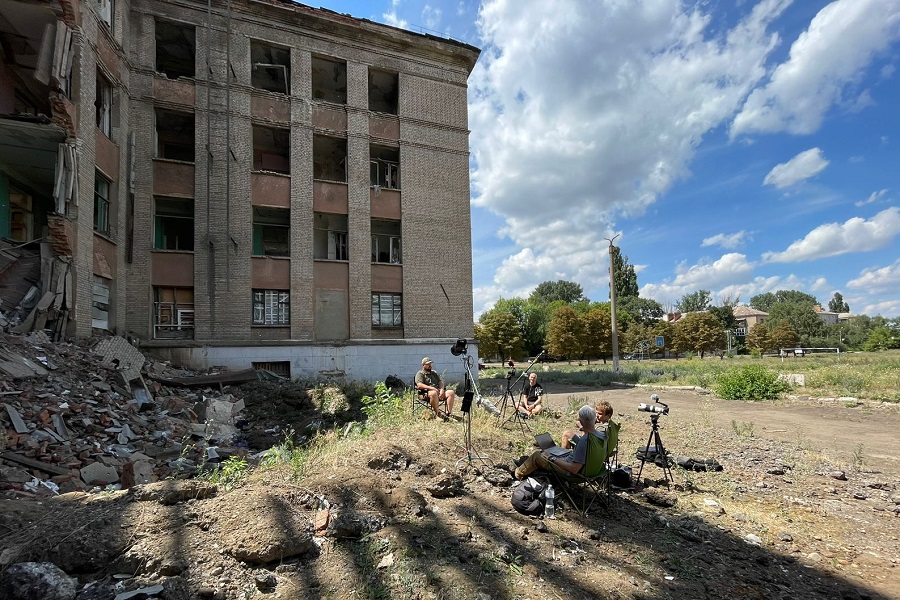
The film combines personal interviews with extraordinary frontline footage, using televisions balanced precariously in bombed-out locations and on military training grounds to mark major moments in the war.
Among those featured is theatre director Oleksandr, who served alongside his partner before they decided to separate because of the possibility that one might have to deal with the other’s death or serious injury.
The documentary does not shy away from the brutality of the war, taking viewers through the fighting at Hostomel airport, the siege of Mariupol and the atrocities at Bucha, while also using raw smartphone footage recorded by Ukrainian troops during the fighting.
But the film’s second battle is closer to home.
It examines the prejudice LGBTQIA+ Ukrainians continue to encounter, including the difficulties faced by same-sex partners who have no legal recognition or guaranteed rights when a loved one is wounded or killed.
Olya, a self-taught sniper, describes how her girlfriend was sometimes prevented from visiting her while she recovered from a battlefield injury.
Some LGBTQIA+ soldiers wear unicorn patches identifying them as members of the community, while others prefer not to disclose their sexuality and simply concentrate on fighting.
The film also looks at Russia’s long history of state-sponsored homophobia and concerns that LGBTQIA+ people were among vulnerable groups targeted for persecution following the invasion.
At its heart, however, Our Colors Never Fade is about ordinary people who became extraordinary under the pressure of war.
The film’s final sequence, showing the funeral of Artur, a gay soldier who had been a musician and cabaret performer, brings home its central message: war does not discriminate.
Our Colors Never Fade, Palace Cinemas, August 13.
News all day, every day at CityNewsQBN.com.au.



Leave a Reply