By Liz Hobday in Melbourne
Every dog has its day at the theatre, with some four-legged visitors familiarising themselves with a renowned Australian arts centre.
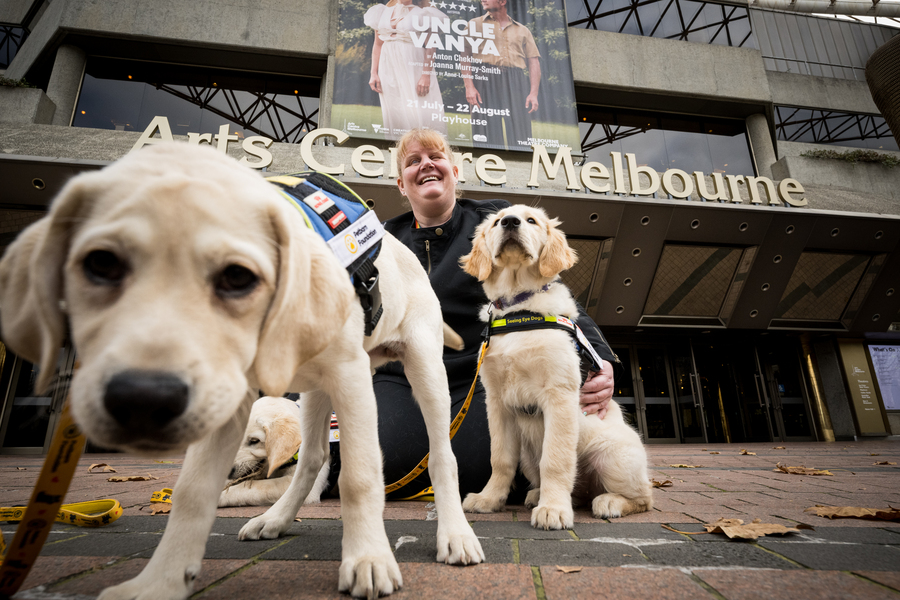
Puppies Lula, Kayla and Kosha visited Arts Centre Melbourne on Tuesday to check out the venue as part of a national appeal to train 24 animals for Vision Australia’s seeing-eye dogs program.
The puppies are just over three months old and will start learning to become seeing-eye dogs about age one.
Part of their extensive training program is learning to relax and lie down – and that includes under a theatre seat.
“Let’s face it, most of them fall asleep,” said Arts Centre Melbourne’s Deb Wells, who has low vision.
“So if you ever hear snoring in the theatre and it’s not your neighbour, maybe it’s coming from under a chair.”
A canine companion can help people with blindness and low vision not only in everyday life but at the theatre and other cultural events.
A trained seeing-eye dog costs about $52,000 and takes about two years to raise, with demand exceeding supply.
The 2025 appeal raised $1.5 million and took the total to 210 dogs provided by the fundraising effort in the past 12 years.
Another accessibility measure offered at many theatres is audio description, with patrons wearing a headset and tuning in to a live description of the action onstage.
Vision Australia has almost 50 volunteer describers around Australia and has provided descriptions for more than 120 performances across 26 venues so far in 2026, with up to 30 audience members tuning in each time.
A national survey of arts participation run by Creative Australia found people with disabilities were less likely to attend arts events and more likely to experience difficulties getting to those events.
Wells is a lifelong theatre lover and used to attend shows with her family in Canberra as a child.
“From when I was very little to now would be a huge contrast,” she said.
“They’re much better at accessibility these days, and trying to improve all the time.”
Major works at the Arts Centre’s Ian Potter State Theatre include wheelchair positions available on all levels for the first time.
Blind Citizens Australia’s submission to the next national cultural policy has called for enforceable accessibility standards for publicly funded arts activities and increased spending on audio description and other measures.
News all day, every day at CityNewsQBN.com.au.


Leave a Reply