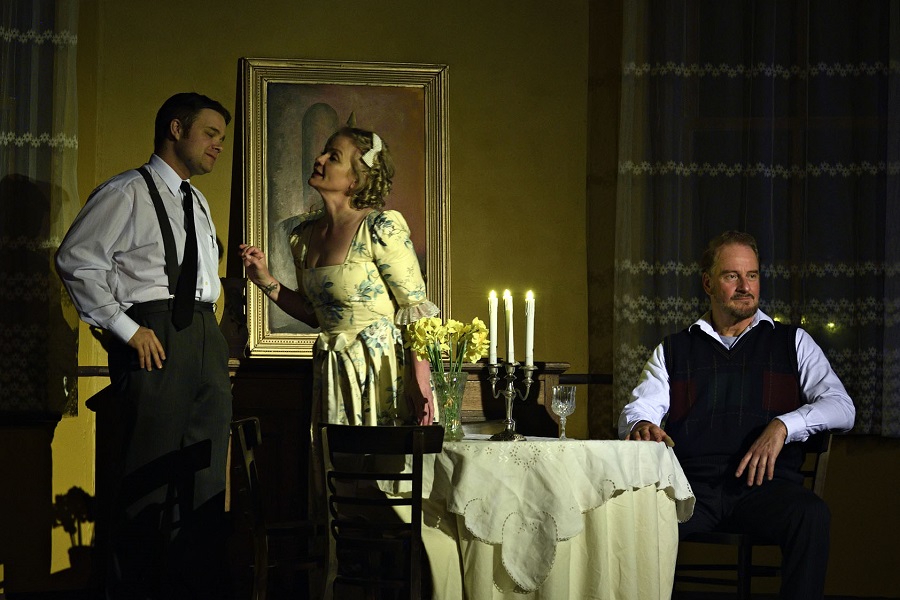
Theatre / The Glass Menagerie by Tennessee Williams, directed by Geoffrey Borny, until August 8. Reviewed by JOE WOODWARD
A play about a simple moment that might be in anyone’s memory delved deeply into complex relationships that, with a little imagination, might well still be relevant today.
This Tennessee Williams play directed with very clear definition by Geoffrey Borny depicts family narcissism that can destroy and belittle its children; such depictions are not simply historical. Borny’s production for Canberra Rep draws this out by advancing very clear characterisations and shaping of the work. It is then unfortunate that poor lighting choices blurred some of the genuinely powerful elements of the production.
Rob de Fries played the memory of a young man whose affection for his sister stayed with him over a lifetime. His opening moments and use of Laban-style gestures set up the play for an audience experience of living room memories and all that stays in one’s psyche; sometimes for a lifetime!
Victoria Tyrrell Dixon played the matriarchal centre of the household who lovingly destroys all around her; yet does so in a centred and socially blinded way with no personal insight into her actions. It is a great role of twentieth century theatre that Dixon carries very effectively.
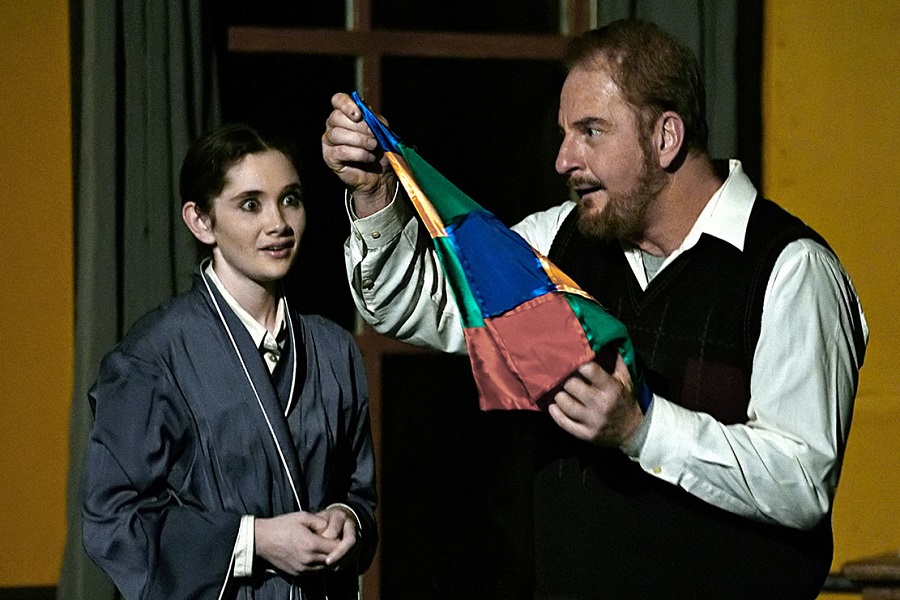
Jamie Johnston plays the sister. The performance of Laura is significantly remarkable in the physical sustaining of pent-up denials, frustrations, self-loathing and any sense of personal self-worth. Young actors might take a few lessons in this physical holding of powerful emotions from Johnston.
John Whinfield’s understated and effective development of a memory converted into a real-life figure displayed a mastery in subtle shifting of engagement throughout a vital scene in the second act. This is a particularly difficult role because of the reliance on very subtle shifts in the engagement with the other character. He manages this very well.
Study the use of gesture in the production. Anyone with even a glimmer of theatre knowledge could marvel at the way meaning was created through constant and very deliberate use of gestures. Laban efforts to suggest inner lives and inner motivations and influences in the action provided a connection for the audience that went well beyond the seemingly trivial language text that focused the play. Not much seemed to happen; yet a whole universe of experience was evoked through strong physical characterisations.
So, what undermined the work?
Lighting is more than allowing the audience to see what is happening. In this production, lighting was totally from the front; it washed out the substance of character grounding and sculpture, particularly in the opening scenes while the actors worked very hard to advance the plot. Actors were shadowed from the waist up on some scenes. At other times they were in areas with no lighting at all.
But worse still was the simple throwing up of a light from the front on the main scenes in the living room areas. Hopefully, the company will address this.
Poor lighting subverted a potentially powerful production that is still very worthwhile for audiences to see and experience something of high significance for theatre and from a director who really understands and appreciates the cultural and historical value of the play.
News all day, every day at CityNewsQBN.com.au.


Leave a Reply