Opera / The Drover’s Wife, libretto by Leah Purcell with George Palmer, Sydney Opera House, until August 15. Reviewed by HELEN MUSA
This opera was like nothing else I’ve ever seen on the stage of the Joan Sutherland Theatre at the Sydney Opera House.
That is partly because it is the first First Nations opera to be staged there, but also because the spare tale made famous by Henry Lawson in his original story The Drover’s Wife has become an unusual vehicle for, let’s face it, grand opera.
The packed house on opening night affirmed the public interest in this production, which is directed by theatre-maker, playwright, actor and author Leah Purcell, and was originally premiered at the new Glasshouse Theatre by Opera Queensland in May this year.
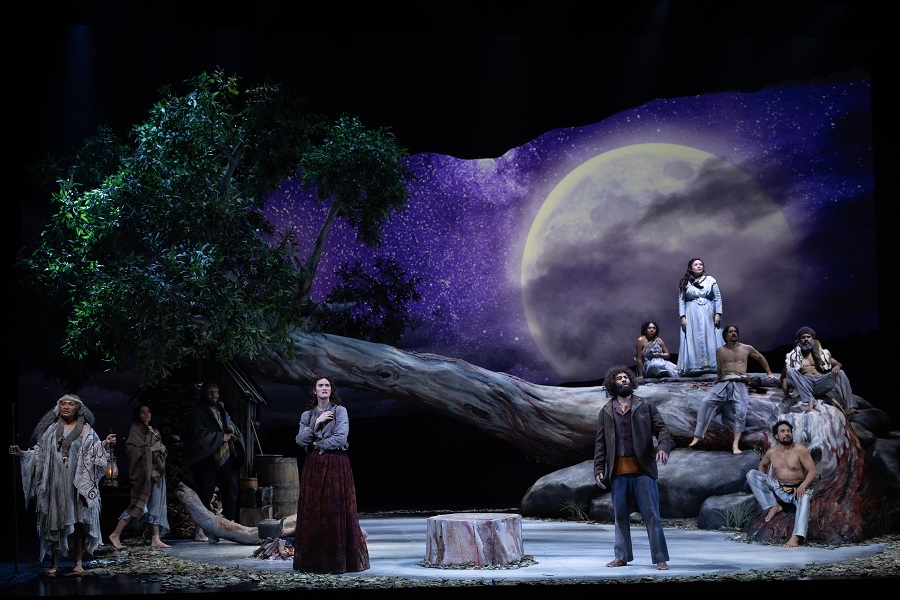
The dour Henry Lawson story is transformed into an almost rhapsodic ode to Country. Isabel Hudson’s remarkable set is dominated by a giant fallen snow gum hovering over a rural hut, while upstage a diagonal window opens and closes, revealing through Craig Wilkinson’s videoscope Country itself, sometimes the forest, sometimes hills and, above all, the stars, especially the nighttime Milky Way.
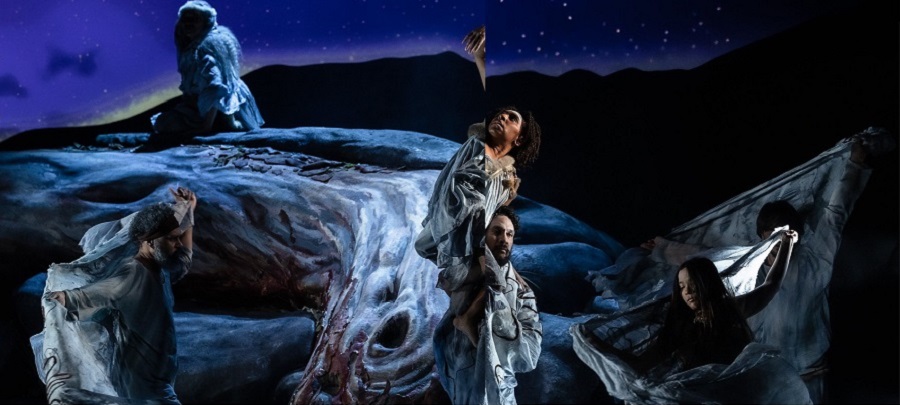
The action is enhanced by a small ensemble of dancers choreographed by Yolande Brown, who speak in moment to the spiritual resonance of the land and its people, although this did prove intrusive at times.
The music by George Palmer, whose idea this operatic version was, is captivating, often melodramatic and sentimental, but also filled with pregnant pauses and moments of tenderness, was sensitively conducted by Tahu Matheson. There are beautiful arias, notably the wife Molly’s (Nina Korbe) lullaby to her dead baby daughter, and a tender recollection by Molly’s ghostly father Jock (John Longmuir) of the girl with whom he once fell in love. This is reprised as an even more touching duet in Act 2 between Longmuir and Shauntai Abdul-Rahman as Black Mary.
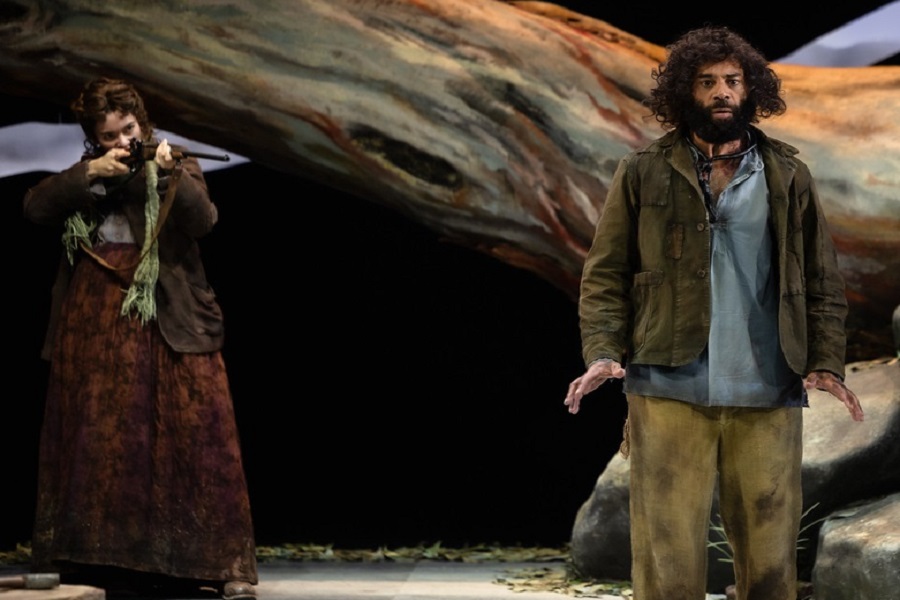
A different tone is struck in the stranger Yadaka’s (Marcus Corowa) aria of self-affirmation, in which he declares to Molly’s young son Danny (Nick Smith) that he is truly a man.
The three main characters, Molly the wife, Yadaka the stranger and Danny the son, are equally well delineated, more so than is usual in opera, and as I gradually became accustomed to the strange convention of full operatic singing for casual, slangy words, I was thoroughly absorbed.
Dramatically, this is a clever libretto. The menacing overtones of the libidinous, swaggering Swaggy (Barry Ryan) and the unknown menace of Yadaka change as the plot develops and Yadaka forms a strong bond with Danny, becoming almost a fatherly role model, totally unlike his own father. That is where the Act One curtain falls, but there is far more to come, in one of the bloodiest scenarios I have ever witnessed in opera.
In this version, Molly begins to understand, initially to her shock, that she has Aboriginal ancestry, but there is little time to relish the magnificence of her heritage in the high country of the Snowies before the violent, racist white reality closes in on the protagonists.
Purcell and Palmer pull no punches in Act Two, which quite frankly shocked me. No amount of sugar-coating in the kind-of-affirmative ending can mask the reality the plot exposes, and I wondered whether the authors might have done better simply to finish abruptly, in the grand operatic manner, without attempting to extricate Danny and his mother from the harsh reality of their situation.
And yet, confronting as The Drover’s Wife is, this is a significant achievement for the Queensland Performing Arts Centre, Opera Australia and Oombarra Productions, who commissioned it.
What a pity it closes so soon.
News all day, every day at CityNewsQBN.com.au.


Leave a Reply