By arts editor HELEN MUSA
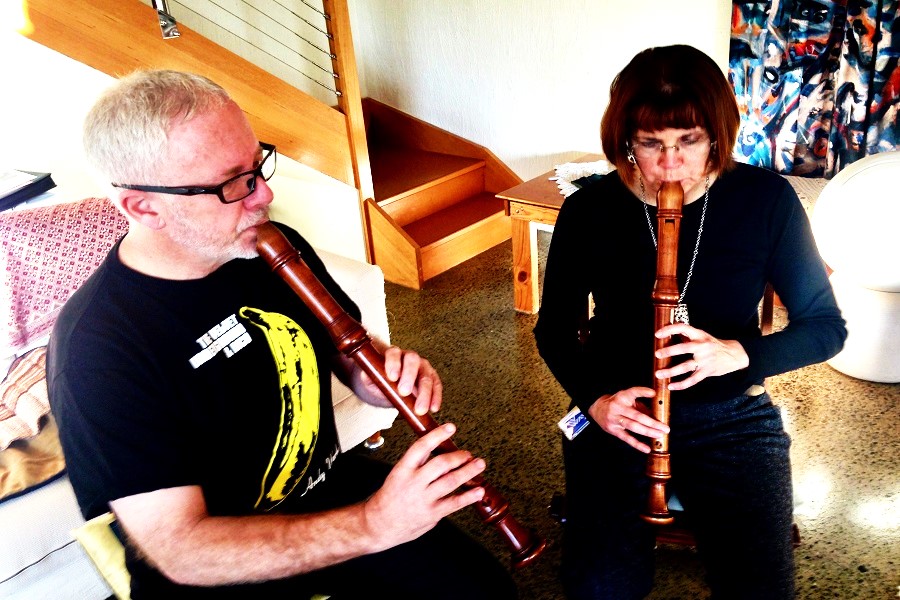
Two of Australia’s top recorder players, Robyn Mellor and Rodney Waterman, have embarked upon a project to show off the surprising variety of music for the recorder repertoire in Woodsong, a concert at Wesley Music Centre.
The title is a nod to the fact that most recorders are made of wood, but there’s nothing wooden about the program. Between them, Mellor and Waterman will play at least 10 different hand-crafted instruments in music spanning 500 years, from love songs and French Baroque dance suites to contemporary Australian works, African-inspired music and even jazz.
“There won’t be much talking,” Mellor tells me, although it’s possible they’ll explain some of the more unusual instruments. The focus will be on the very finest of recorder playing.
In Canberra, Mellor directs both Polifemy, an a cappella women’s vocal ensemble, and the recorder quartet Blocksounds, which is presenting the concert. Waterman, a Melbourne recorder specialist, studied in Australia, Italy and the Netherlands and has long explored South American music and jazz alongside the classical repertoire.
The two musicians have been making music together for more than four decades.
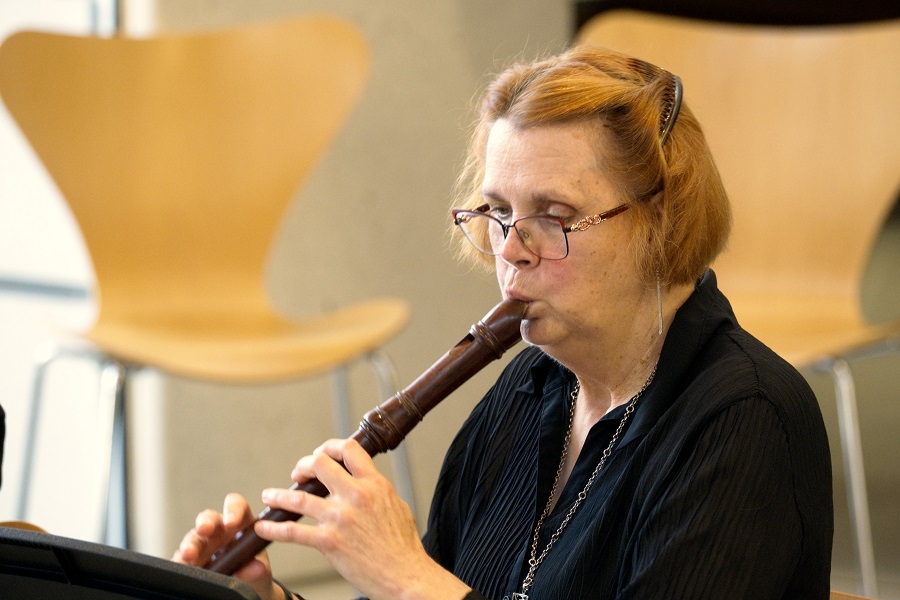
When I catch up with Mellor, she recalls their first meeting in 1983, when she was a young music student in Perth and heard about an early music festival in Canberra organised by poet Rodney Hall, himself an accomplished recorder player.
“I hopped on a bus in Perth and got off in Canberra, 3600 km,” she tells me.
There she met fellow students Rodney Waterman from Melbourne and Nicholas Horn, whom she would later marry and who is now a music critic for CityNews.
Her aim had simply been to learn more about recorder music to support her university studies.
“It was just one of those things,” she says. “From that time on our paths kept running into each other.”
While Waterman’s interests broadened, Mellor headed to the Royal Conservatoire in The Hague to immerse herself in early music.
“Every time we met, we played,” she says.
It irks Mellor that so many articles and reviews about the recorder begin with a joke about primary schools.
“Come to a concert and hear professionals playing,” she urges, pointing to Canberra’s thriving recorder community, from Sally Melhuish in Salut! Baroque to her own ensemble, Blocksounds.
“So much good music has been written since 1900 for the recorder,” she says. “There’s been a huge revival of recorder playing in England and Germany. The 20th-century repertoire is really good, with top composers writing for the instrument.”
The recorder, as we know it, dates back to 14th-century Europe. Essentially an end-blown wooden instrument, it has a sound quite unlike the reed-blown oboe.
“You blow directly into the instrument, so you are, in a sense, part of the instrument,” Mellor explains. Its vocal quality made it one of the premier instruments of the French Baroque.
People often think only of descant and treble recorders, but Mellor delights in the larger instruments, particularly the contrabass, and happily talks me through the different historical designs and how their construction affects the sound. One of her favourites is the distinctive Ganassi recorder, recognisable by its flared bell.
Nor is the recorder confined to the concert hall. Mellor and Waterman once performed outside the National Carillon while its bells rang out music by the celebrated blind Dutch recorder player Jacob van Eyck.
“We lucked out with the weather. It was sunny and lovely,” she says. They’re more than ready to do it again.
For Woodsong, the pair will traverse an astonishing range of repertoire. Waterman will even pick up the lute. The program includes music by Johann Joachim Quantz, French chansons and dances, works by Spanish Renaissance composer Diego Ortiz and the vibrant, polyrhythmic African-inspired music of German composer Sören Sieg.
The instruments themselves will also take centre stage, including a duet on matching tenor recorders made by the specialist Osaka maker Takeyama.
Bringing the concert right up to date, they’ll perform works by Australian composer Lance Eccles and, reflecting Waterman’s enthusiasm for jazz and the bass recorder, music by American composer Pete Rose.
The result promises to be a reminder that the recorder is versatile, expressive and sophisticated.
Robyn Mellor and Rodney Waterman in Woodsong, Wesley Music Centre, August 1.
News all day, every day at CityNewsQBN.com.au.


Leave a Reply