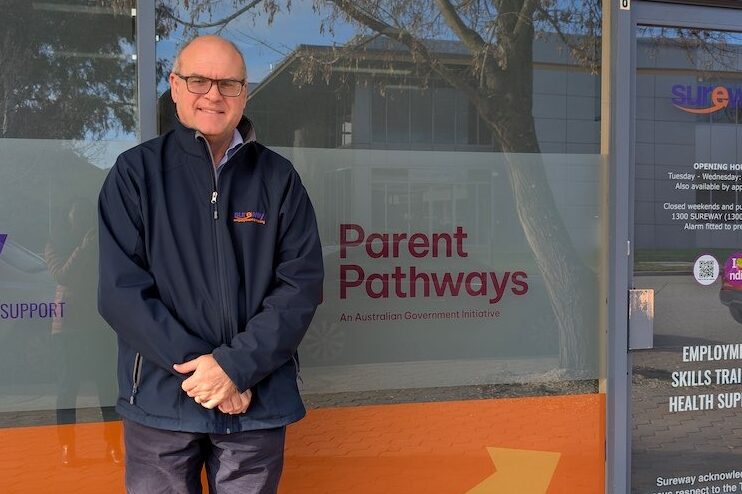
Mentor Andrew Kazar… “Every meeting you have is personal because people are sharing information about them, their lives and themselves.” Photo: Dhwani Pathak
A mentor-led program is helping parents tackle barriers, access services and take practical steps toward their goals, but many families are missing out, reports DHWANI PATHAK.
A conversation is often where the work begins for mentors in the Parent Pathways program. For mentor Andrew Kazar those conversations are the core of the service.
“Every meeting you have is personal because people are sharing information about them, their lives and themselves,” he says. “Getting an insight into their lives makes every encounter personal.”
Parent Pathways is a free, voluntary Australian Government service designed to support eligible parents of children under six as they consider their next steps.
“This is an excellent program,” Kazar says, but awareness remains a challenge, with many parents missing out simply because they don’t know the program is available.
“It’d be great if more people knew about this service.”
With the help of a qualified mentor such as Kazar, parents and carers can receive flexible, personalised support to assist with future goals.
From those conversations, the work becomes practical.
Mentors help identify barriers and connect parents to the services that can address them. That might be training, financial counselling, community support or employment pathways.
The key is not doing everything directly, but knowing where to go.
“We were able to… refer them to experts who are able to get people out of those situations,” Kazar said, describing cases where families were dealing with ongoing financial stress.
In one example, support helped lift the burden of a loan that could have taken years to resolve.
“We had a participant with a loan of more than $16,000 for a car she no longer had,” Kazar said. “That is a tremendous stress for someone to carry.”
“We were able to, not us, do the work directly, but through our referrals, refer them to the experts who are able to get people.”
“The referrals they need to be able to clear the way for a pathway that provides some bit more certainty,” he said.
The impact is often built on small steps. But those steps matter.
“It’s often the small things, like a laptop or driving lessons, that we might consider minor, but for someone seeking help, they can feel significant and sometimes even insurmountable,” Kazar says.
The service is designed to be flexible. There is no set pathway and no single outcome.
Some parents are focused on studying.
A recent example involved a mother working to rebuild her career.
“There is a family that I have worked with,” Kazar says.
“She was a teacher in the country that she came from and she wants to become a teacher here.”
That meant improving her English to meet local requirements.
“We recommended her to English classes to help improve her workplace English skills,” he said.
“She is doing a lot of English study at the moment, reading, writing, to get up to the level of becoming a teacher here.”
The support extended beyond study.
Kazar said mentors were able to connect her with financial help through a local charity.
“We were able to… go to one of the local charities who were able to contribute $450 so she could send her child on a camp,” he said.
“She’s a mother of five, so studying, trying to better herself, and we supported her with… the expenses of a single mother of five.”
For Kazar,a mentor with Sureway, that outcome matters.
A chance conversation led to stronger links with Canberra’s Afghan community.
Kazar said it created new referral pathways through community networks and local organisations, helping more parents access the service.
Others are looking toward employment. Many are working through a mix of financial pressure, caring responsibilities and limited access to support.
Mentors stay alongside them as those needs shift.
Kazar brings more than 17 years of experience working with migrants, refugees and asylum seekers. That background shapes how he approaches the role, particularly when working with families facing language barriers or unfamiliar systems.
“If you meet someone who you can see there is knowledge that you have or information that you have that can help them, it’s important to share that information so that they can get on with their lives,” he said.
“Life is hard enough without all these other things happening.”
The service relies on building trust and making systems easier to navigate.
For many parents, it is the first time they have had a single point of contact guiding them through multiple services.
Federal MP Helen Haines' condition has improved, a spokesman for The Alfred Hospital in Melbourne says, after she was critically injured when a car struck her outside her electoral office.




Leave a Reply