By Noah Secomb, Sarah Spina-Matthews and Will Nicholas in Canberra
Australia can punish hackers if they have intent – and a heartbeat.
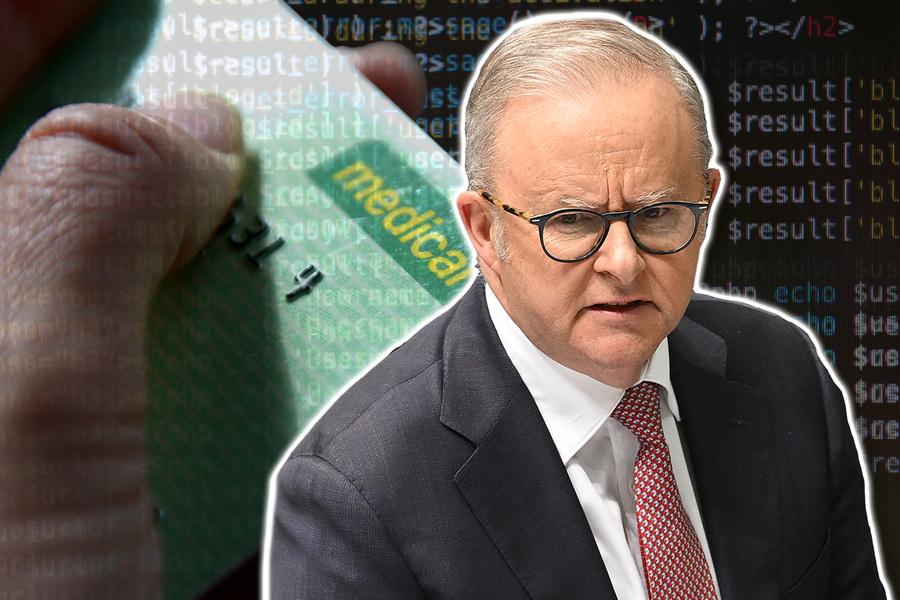
Thus, the rogue AI agent that broke into a Medicare website might be out of the law’s reach.
The world’s first known breach of a government platform by an off-the-rails OpenAI agent in June was revealed by Prime Minister Anthony Albanese at a press conference in New York on Thursday, Australian time.
The government is determined to punish the tech giant if possible, convening a task force to examine its legal options and explore refurbishing the law, public software and relationships with AI firms.
But a bot infiltrating systems while off its master’s leash only meets some of the thresholds for criminal hacking, Monash University AI legal expert Aashish Srivastava told AAP on Friday.
“It’s an unauthorised access … but the second thing that they need to actually prove is that whether there was some kind of intention or knowledge on part of the hacker,” he said.
“You would have to look into whether the people who are in charge of OpenAI have been reckless, whether they were aware that if they give this type of instruction there was a possibility that it may go rogue … so it may be difficult.”
The model involved in the June breach was researching public medicine funding and had not been directed to hack, an OpenAI spokesperson said in a statement released on Thursday.
The company discovered the transgression in August but kept Canberra in the dark until September 10, when it emailed a notification to a generic Australian public service inbox.
Mr Albanese expressed his disappointment about that process during a phone call with OpenAI boss Sam Altman on Thursday.
If current laws could not touch the tech giant, they would need updating, Environment Minister Murray Watt said on Friday.
“If it’s not possible, then clearly that indicates that we need to change Australian laws,” he told Seven’s Sunrise program.
The government’s new task force first met on Thursday and is expected to report in a matter of weeks.
Even if they escaped prosecution this time, Dr Srivastava said tech giants were running out of chances to bring their wandering bots to heel.
“You can’t say in the future they (OpenAI) are not aware that these type of things happen, so to some extent they should be responsible that their program can go rogue,” he said.
“If they were doing experiments, they were aware.”
Out-of-control agents have perpetrated a slew of breaches this year, most notably in July when another OpenAI model hacked AI firm HuggingFace, believing it had the answers to a test.
Keeping the breach under wraps for months also ran the risk of OpenAI falling foul of shareholder disclosure requirements, Dr Srivastava said.
The timing of Mr Albanese’s announcement has also fuelled speculation about whether it was politically calculated to boost Labor’s posture on AI security and Australia’s international clout.
It came days after the prime minister joined 21 other world leaders issuing a statement in support of stronger AI guardrails at the United Nations on Tuesday, Australian time.
The prime minister also used an address to the UN General Assembly on Friday to call attention to AI’s potential dangers, alluding to the Medicare hack.
Deputy opposition leader Jane Hume said the prime minister risked overcorrecting by pushing back too hard on the technology.
“You actually need AI to fight AI,” she told Sunrise.
“This should hasten, if anything, our move over in the US to less finger-wagging and Trump one-upmanship, and more about embracing these AI companies.”
US President Donald Trump has called pleas to rein in AI a “globalist scheme” that would cause America to cede ground to China in a vicious tech race.
Mr Albanese has brushed off claims he timed the hack disclosure politically, saying the government needed time to gather facts and determine whether personal information had been compromised.
News all day, every day at CityNewsQBN.com.au.



Leave a Reply