“In our capital, blessed with Walter Burley Griffin’s design of a garden city, green spaces are being replaced by concrete, glass, metal and other building materials promoting the Urban Heat Island effect,” writes BEATRICE BODART-BAILEY.
OUTCOME-focused planning is essential. We can’t live without it. Our forebears did it millions of years ago to secure their food supply. It is part of the human condition.
As the word “planning” implies working towards a goal, the uninitiated might wonder why the ACT government speaks of “outcome-focused planning” when discussing the new Planning Bill. The reason is that outcome-focused planning is convenient, for this concept permits changing previously agreed plans if the expected outcome cannot be reached.
Outcome-focused planning validates actions by the ACT government that otherwise would suggest inconsistency.
Take the demolition of large areas of public housing in central areas of Canberra. The plan was, so the public was told, to sell the land to developers with the requirement of including public housing in their rebuild. However, an appropriate inclusion of public housing in redevelopments did not materialise, resulting in a severe shortage of government-supported accommodation. One must conclude that since the initial plan of requiring developers to include public housing did not produce high enough offers, the plan was changed.
That is, the requirement for the inclusion of public housing was dropped to produce the financial gain envisaged. Jon Stanhope and Khalid Ahmed have shown how the funds were allocated to other expenditures, such as the tram (CN August 25). Maybe another example of outcome-focused planning.
Since the plan can be changed at any time, it is imperative that at least the outcome is clearly defined and consistently observed. The government’s “Planning Bill – Policy Overview” (March, 2022) specifies: “An outcomes focus goes beyond the built form and considers the broader policy outcomes that can be achieved through the planning system, such as wellbeing, health, recreation, employment, housing and environment outcomes.”
The problem is that this description of the outcomes to be achieved is anything but specific. Common sense tells us that people of different age and physical condition, interests, financial means, etcetera will have vastly different ideas about a “good outcome” regarding these topics.
But even more problematic is the fact that all these various desirable outcomes listed by the government rely on one pre-condition that gets no mention in the Planning Bill. That is, the maintenance of temperatures in our city that do not challenge the human body’s threshold for survivability.
It is well established that in the heat of summer, cities with high-density, high-rise structures have considerably higher temperatures than the surrounding countryside. Hard surfaces, such as concrete, metal and glass absorb and store the heat of the sun, acting like a radiator not only during the day, but also at night. This process is known as the Urban Heat Island (UHI) effect and recognised as the greatest cost and threat to the world’s cities.
Cities lacking the space for sufficient vegetation mitigating the heat are trialling new solutions:
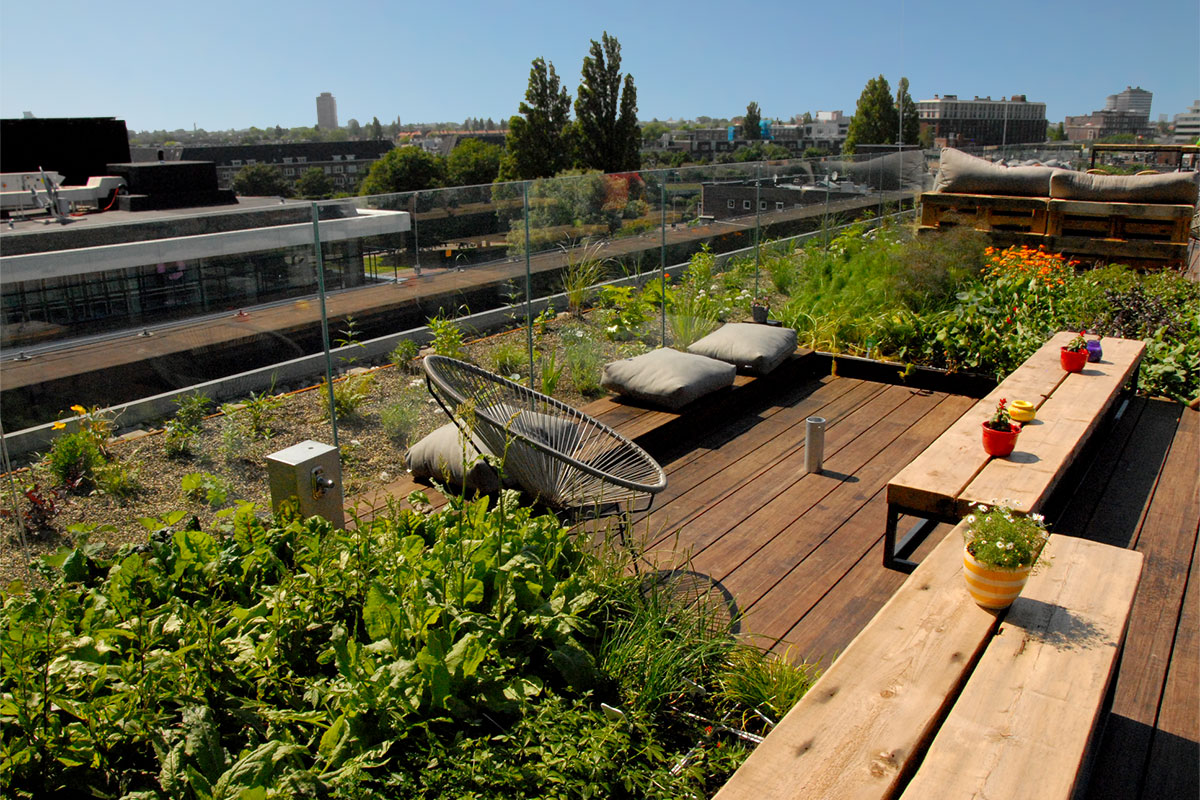
- Amsterdam is not only building rooftop gardens, but rooftop parks with trees, often linked by bridges to make long walks possible.
- Paris sprays fine mist to cool the air and signposts “cool rooms” to escape from scorching temperatures.
- Munich is exploring how to bring back to the surface the rivers that once cooled the city.
- Tokyo, Singapore and Bogota, vertical gardens including trees, cover tall buildings, absorbing not only greenhouse gases but also the wastewater of the occupants, while cooling the structures in the process.
Meanwhile in our capital, blessed with Walter Burley Griffin’s design of a garden city, green spaces are being replaced by concrete, glass, metal and other building materials promoting the Urban Heat Island effect.
Projects that will substantially alter the face of Canberra – be it the tram supporting the 70 per cent infill policy, a massive stadium and convention centre in Civic or the demolition of hospital buildings constructed barely 45 years ago when a new, third hospital would be of much greater value to expanding suburbs – are discussed without any reference to the “urban killer”, namely the heat these projects will create once the El Nino weather pattern with scorching temperatures returns. The fact that temperatures in Canberra vary up to 10 degrees depending on the density of buildings, appears already in a CSIRO heat mapping report for the summer of 2016-17. Unfortunately, no follow-up is available.
Climate change has been declared a health emergency by the Australian, American and British Medical Associations. The CSIRO warns that between 2020-50, heat-related deaths will grow by over 60 per cent across Australian capital cities, and estimates that records of death attributed to excessive heat are underestimated at least 50-fold.
In Europe, heat waves between July and August 2022 resulted in more than 20,000 heat-related deaths. Even in England, known for its cool summers, 638 more deaths than normal were recorded on the hottest day.
When deaths from covid climbed in Europe, we closed the country. The virus came, nevertheless. But this time, urban planners and politicians can make the difference.
Urban planning today will determine life and death in the future. The importance of being earnest when engaging in outcome-focused planning is more essential than ever.
It surely cannot but lead to the conclusion that the only acceptable outcome of outcome-focused planning is stopping the Urban Heat Island effect in our city.
Historian Beatrice Bodart-Bailey is an honorary professor at the ANU School of Culture, History and Language and an emeritus professor of the Department of Comparative Culture, Otsuma Women’s University, Tokyo.
News all day, every day at CityNewsQBN.com.au.


Leave a Reply